How to Create a Social Media Style Guide for Your Brand: The Beginner's Guide to 2026
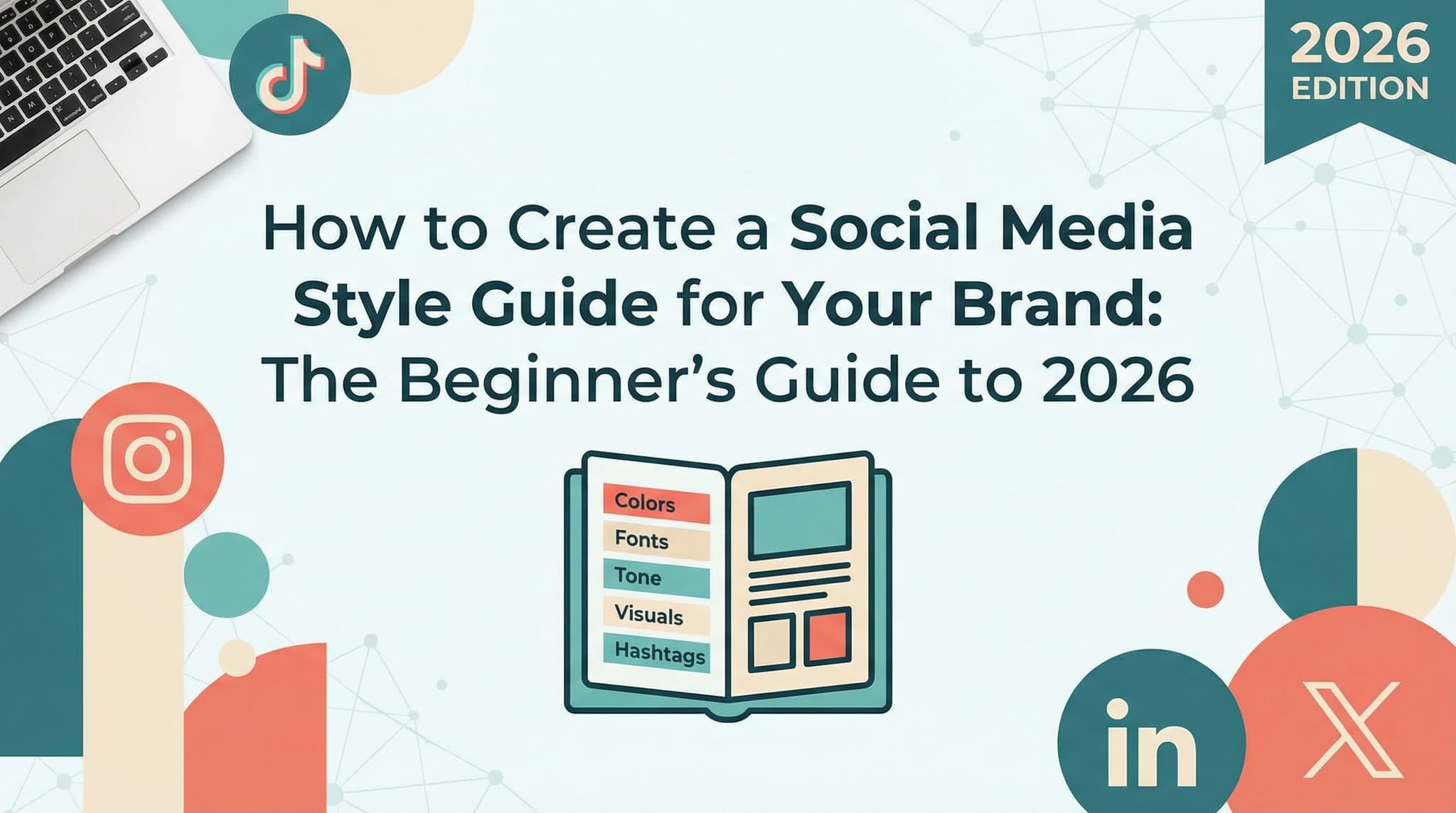
You know that feeling when you post something on Instagram, then realize your LinkedIn caption sounds completely different, and your TikTok feels like it's from a totally different brand? Yeah, that's what happens when you're flying without a style guide. And honestly, most small business owners and solopreneurs don't even realize how much this inconsistency is costing them in terms of brand recognition and trust.
Here's the thing: a social media style guide isn't some stuffy corporate document that sits in a Google Drive collecting digital dust. It's actually a living, breathing reference tool that helps you maintain consistency, save time, and build a recognizable brand that your audience connects with. Think of it as your brand's personality handbook—a place where you document how your business talks, looks, and shows up across every platform.
In this guide, I'm going to walk you through creating a social media style guide that's tailored for small businesses and solopreneurs. We'll cover everything from defining your brand voice to handling tricky situations like negative comments, plus platform-specific strategies for Instagram, TikTok, LinkedIn, Twitter, and Facebook. By the end, you'll have a clear roadmap for building a cohesive, professional social media presence that actually converts.
Section 1: Defining Your Brand Identity and Voice
Before you can create a style guide, you need to understand who your brand actually is. This is the foundation everything else sits on. Too many small business owners skip this step because it feels abstract or unnecessary, but I promise you—getting crystal clear on your brand identity makes everything that comes after infinitely easier. You'll make faster decisions, create better content, and attract the right audience.
Think about the brands you love. Why do you love them? Usually it's because they feel consistent, authentic, and like they understand you. That doesn't happen randomly. It happens because someone sat down and deliberately defined who that brand is and how it communicates. You're about to do exactly that for your business.
1.1: Define Your Brand Voice and Tone Across All Social Platforms
Your brand voice is how you sound. Your tone is how that voice shifts depending on the context. This distinction matters more than you might think. You could have a friendly, approachable voice that becomes warmer and more personal when you're responding to a customer, or more professional when you're sharing industry insights.
Start by asking yourself some honest questions: If your brand were a person, what would they be like? Are they funny or serious? Formal or casual? An expert who educates, or a friend who gets you? Do they use exclamation marks and emojis, or do they prefer clean, minimalist communication? Are they sarcastic, inspirational, practical, or playful?
Let me give you a real example. A fitness coach's brand voice might be motivational and energetic, but their tone when responding to someone who didn't meet their goals this week would be supportive and understanding, not pushy. A productivity app's voice might be straightforward and practical, but their tone in a funny meme about procrastination could be lighthearted and relatable.
Write out 3-5 adjectives that describe your brand voice. Then, for each adjective, write a sentence or two about what that actually means in practice. For example: "Approachable:" We use conversational language, avoid jargon, and talk like we're having coffee with a friend. We ask questions and genuinely want to know what our audience thinks. This applies to all platforms, though Instagram Stories might feel slightly more casual than LinkedIn articles.
Document specific examples of how your voice sounds in different situations. What do you say when you're sharing a win? What do you say when something goes wrong? How do you handle a customer question versus a funny observation about your industry? These examples become your reference point when you're creating content or training team members.
1.2: Establish Visual Identity Guidelines Including Color Palettes, Fonts, and Imagery Style
Your visual identity is the first thing people notice about your brand. Before they read a single word, they're seeing colors, fonts, and images. This is why consistency here is absolutely crucial. When people see your brand colors, they should immediately think of you—the way they think of Coca-Cola's red or LinkedIn's navy blue.
Start with your color palette. You don't need dozens of colors. Actually, the most recognizable brands usually stick to 2-3 primary colors and maybe 1-2 accent colors. If you already have a logo, pull your colors from there. If not, think about what colors represent your brand personality. A wellness brand might use calming greens and soft blues. A creative agency might use bold magentas and deep purples. An eco-friendly business might use earth tones and natural greens.
For each color, document the exact hex codes, RGB values, and CMYK values. This might seem overly technical, but when you're posting on different platforms or working with a designer, these exact specifications ensure your brand colors look the same everywhere. Include color usage guidelines too: which color is your primary, which is secondary, and where should accent colors appear?
Next, choose your fonts. Again, less is more. Pick one primary font for headlines and one for body text. These should work across web, social media, and print. Make sure they're web-safe or that you have the licenses to use them on social platforms. Document font names, sizes, and weights for different uses. For example: Headlines use Montserrat Bold at 24px, body text uses Open Sans Regular at 14px.
Finally, define your imagery style. This is often overlooked but makes a huge difference. Do you use photography or illustrations? Stock photos or original content? Bright and colorful or moody and dark? Close-up shots of people or wide lifestyle images? Minimalist or busy? Create a mood board with 8-10 images that represent your visual style. This becomes your reference when you're selecting images for posts or working with a photographer or designer.
1.3: Create Templates and Posting Schedules for Consistency Across Channels
Templates are your secret weapon for maintaining consistency while saving time. Instead of starting from scratch for every post, you have a framework that already includes your branding, fonts, and layout. This is especially powerful for visual content on Instagram, TikTok, and Pinterest.
Create templates for your most common content types. If you regularly share tips, create a template with your colors, fonts, and layout pre-designed. If you share customer testimonials, build a template for that. Quote graphics? Template. Before-and-after images? Template. The goal is that anyone creating content for your brand can grab a template and fill in the text or image without having to think about design.
Tools like Canva Pro, Adobe Express, or Figma make this incredibly easy. You can create templates within these tools, and team members can duplicate them and customize the content. This ensures brand consistency even if multiple people are creating content.
For posting schedules, document when you'll post on each platform and what type of content goes where. For example: Instagram Stories every morning at 9 AM, Instagram Feed posts 3x per week (Monday, Wednesday, Friday at 2 PM), LinkedIn articles every other Thursday, TikTok videos 2x per week (Tuesday and Thursday at 6 PM). This schedule should be realistic for your capacity. It's better to post consistently 2x per week than to commit to daily posting and burn out after a month.
Section 2: Content Strategy and Engagement Guidelines
Now that you've nailed down who your brand is and how it looks, it's time to talk about what you actually say and how you interact with your audience. This is where a lot of small business owners get stuck because they're not sure what to post or how to handle tricky situations. A solid content strategy and clear engagement guidelines take the guesswork out of it.
The beautiful thing about creating these guidelines now is that you're essentially creating a decision-making framework for your future self. When you're tired, busy, or second-guessing yourself, you can look at your guidelines and know exactly what to do. It removes the mental load and keeps you moving forward consistently.
2.1: Set Guidelines for Hashtag Usage, Caption Length, and Content Pillars
Hashtags, captions, and content pillars might seem like small details, but they're actually fundamental to how your audience discovers and engages with your content. Let's break each one down.
Hashtags: Create a master list of 15-25 hashtags that are relevant to your brand, industry, and audience. These should be a mix of popular hashtags (10K-100K posts) and niche hashtags (under 10K posts). Popular hashtags get you visibility, but niche hashtags get you the right audience. Document which hashtags work best on each platform and whether you should use them in captions or comments. For Instagram, you might use 20-30 hashtags (they're more effective there), while on Twitter, 1-3 is usually better. Create a few different hashtag combinations for different types of content so you can grab the right set quickly.
Caption Length: Different platforms have different sweet spots. Instagram captions can be longer (100-150 words works great), but Twitter demands brevity (under 280 characters). TikTok captions should be punchy (1-2 sentences), while LinkedIn allows longer, more professional captions (150-300 words). Document your preferred length for each platform and why. For example: "Instagram captions are 80-120 words because our audience engages with storytelling, but we keep them readable by using line breaks and emojis strategically."
Content Pillars: These are the main themes or categories of content you create. Most brands have 3-5 core pillars. For example, a business coach might have: Educational content (tips and frameworks), Client wins (testimonials and case studies), Behind-the-scenes (personal stories and day-in-the-life), Industry news (trends and insights), and Community (user-generated content and audience features). Document what percentage of your content should fall into each pillar. This prevents you from talking about the same thing every day and keeps your feed diverse and interesting.
Create a content calendar template that shows your pillars. When you're planning your week or month, you can quickly see if you're balanced across all pillars or if you're leaning too heavily on one. This simple visual check prevents content monotony and ensures you're serving all your audience segments.
2.2: Develop Rules for Engaging with Followers and Handling Negative Comments
Engagement is where your brand voice really comes alive. It's also where things can go sideways if you don't have clear guidelines. What do you say when someone comments? How quickly should you respond? What happens if someone leaves a negative comment? What if someone asks a question you don't know the answer to?
First, establish response time expectations. Ideally, you want to respond to comments within 24 hours, but the faster the better. If you can respond within 1-2 hours, you're showing that you actually care about your audience. Document this expectation and build it into your schedule. If you're a solopreneur, maybe you check comments twice a day (morning and evening). If you have a team, maybe someone monitors comments throughout the day.
Create templates for common engagement scenarios. What does a response to a genuine compliment look like? A question about your product or service? A comment from someone sharing their own experience? A tag or mention? Having these templates doesn't mean your responses are robotic—they're just starting points that ensure consistency and professionalism.
Now, the tricky part: negative comments. First, distinguish between constructive criticism and trolling. If someone has a legitimate concern or complaint, thank them for the feedback, acknowledge their concern, and offer to take the conversation to DMs to resolve it. This shows your audience that you actually care about customer satisfaction. If someone is just being mean or spammy, you have a few options: delete and block (for serious abuse), don't engage (for minor trolling), or respond with kindness and professionalism (sometimes kills negativity with kindness). Document your policy for each scenario.
Create a crisis response guide for bigger issues. If something goes wrong—you make a mistake, a customer has a serious complaint, or misinformation spreads—what's your process? Who approves the response? How quickly do you address it? This might sound overly formal for a small business, but having a plan means you're not panicking when something actually happens. You're thoughtful and measured instead of reactive and emotional.
2.3: Document Do's and Don'ts for Brand Representation and Content Types
This is where you get really specific about what's on-brand and what's not. Create a clear list of dos and don'ts that anyone creating content for your brand can reference. This is especially important if you have team members or if you're planning to hire someone to help with social media in the future.
Do's might include: Use your brand fonts and colors, share customer stories and wins, ask questions to encourage engagement, use your brand voice consistently, post original photos and videos when possible, respond to comments and DMs, celebrate your community, admit mistakes and show how you're fixing them, include a call-to-action in most posts.
Don'ts might include: Don't use filters that distort your brand identity, don't share other people's content without credit, don't engage in controversial topics unrelated to your mission, don't post when you're angry or emotional, don't ignore negative feedback, don't oversell or be salesy in every post, don't use slang or memes that don't match your voice, don't make claims you can't back up, don't post the same content across all platforms without customizing for each.
Be specific about content types you want to avoid. If you're a luxury brand, maybe you don't do memes. If you're a B2B company, maybe TikTok dances aren't appropriate. If you're a mental health professional, maybe you avoid overly personal content that blurs professional boundaries. Document these decisions and the reasoning behind them. This prevents misalignment and keeps your brand integrity intact.
Section 3: Platform-Specific Guidelines, Operations, and Measurement
Here's where things get tactical. While your core brand voice and visual identity stay consistent, how you show up on Instagram looks different from how you show up on LinkedIn or TikTok. Each platform has its own culture, algorithm, and audience expectations. Ignoring these differences is like wearing a tuxedo to a beach party—technically you're dressed, but you're missing the point.
In this final section, we're covering the operational side of your social media: how to manage approvals and content calendars, how to measure what's working, and how to leverage user-generated content and employee advocacy. These are the systems that keep everything running smoothly and help you prove that your social media efforts are actually driving results.
3.1: Include Platform-Specific Guidelines for Instagram, TikTok, LinkedIn, Twitter, and Facebook
Let's talk about how your brand shows up differently on each major platform. This is crucial because while your voice stays consistent, the format, tone, and content type should adapt to where you are.
Instagram: Instagram is visual-first and community-focused. Your guidelines should specify: Feed post frequency (we recommend 3-4 per week), caption length (80-120 words), use of hashtags (20-30), Stories frequency (daily or 5-6x per week), Reels strategy (1-2 per week), and engagement priorities. Instagram thrives on beautiful visuals, so emphasize original photography and high-quality design. Captions can be longer and more personal here. Include CTAs like "What do you think?" or "Tag someone who needs to see this." Document your approach to Reels specifically—these get the best reach on Instagram right now, so they deserve their own strategy.
TikTok: TikTok is where you can be more playful, trendy, and raw. Perfectionism kills TikTok engagement. Your guidelines should emphasize: Authenticity over polish, trending sounds and hashtags, shorter captions (1-2 sentences), posting frequency (2-4x per week), and willingness to experiment. TikTok's algorithm favors video completion time, so shorter videos often perform better. Don't be afraid to show personality, make mistakes, or be imperfect. If your brand can authentically exist on TikTok, it's a goldmine for reaching younger audiences and going viral.
LinkedIn: LinkedIn is professional, thought-leadership focused, and longer-form. Guidelines should cover: Post frequency (2-3x per week), caption length (150-300 words), content focus (industry insights, thought leadership, company culture, professional development), tone (professional but personable), and engagement approach (meaningful comments on others' posts, not just promoting your own). LinkedIn rewards posts that start conversations, so ask thoughtful questions. Share unique insights from your industry. Show company culture and behind-the-scenes moments, but keep them professional. LinkedIn's algorithm also prioritizes native content (posted directly) over external links, so share insights directly on the platform rather than just linking to your blog.
Twitter: Twitter moves fast and rewards real-time engagement and personality. Guidelines should specify: Tweet frequency (1-3x daily), character limit (stay well under 280 characters for clarity), use of hashtags (1-3), engagement style (respond quickly, join conversations, retweet relevant content), and tone (can be more casual and witty than other platforms). Twitter is where you can be opinionated, funny, and participate in trending conversations. Document how you'll engage with industry conversations and what topics are relevant to your brand. Twitter is also great for customer service—people expect quick responses to DMs and mentions.
Facebook: Facebook has evolved significantly and now serves a different audience (often slightly older demographics) with different content preferences. Guidelines should include: Post frequency (3-5x per week), caption length (100-150 words), content types (mix of educational, entertaining, and community-focused), use of video (Facebook prioritizes video heavily), and community management approach (monitor the comments section actively). Facebook Groups can be incredibly valuable for building community, so consider whether a group makes sense for your business. Facebook's algorithm prioritizes posts that generate conversation, so ask questions and encourage comments.
3.2: Establish Approval Workflows and Content Calendar Management Processes
If you're a solopreneur, this might feel like overkill, but I promise it's not. Even if you're the only person creating content, having a clear process for planning, drafting, reviewing, and scheduling keeps you organized and ensures nothing slips through the cracks. If you ever hire help or bring on team members, you already have a system in place.
Create a simple approval workflow. Here's what a basic version looks like: Idea or concept is created → Draft is written and designed → Content is reviewed for brand alignment, accuracy, and tone → Content is scheduled in your calendar tool → Content is published according to schedule → Analytics are reviewed. Document who's responsible for each step. If you're solo, it's you for all of them, but be intentional about it anyway. Build in a review step where you step away from the content for an hour or a day, then come back to it with fresh eyes. This catches typos, awkward phrasing, and off-brand elements you might have missed while creating.
For your content calendar, use a tool that works for you. Spreadsheets work fine, but dedicated social media tools like Buffer, Later, Hootsuite, or Meta's Creator Studio offer more functionality. Your calendar should include: Date and time of post, platform, content type, caption, hashtags, image or video, content pillar, and assigned approver. Color-code by platform or content pillar so you can see at a glance if you're balanced across your content strategy.
Plan your content in batches. Instead of creating one post a day, dedicate one day a week (or month, depending on your frequency) to planning and creating all your content for that period. This is way more efficient than context-switching constantly. When you're in "creation mode," you're more creative and productive. Batch your photography too—take multiple photos in one session, then use them across multiple posts. This saves time and ensures visual consistency.
Build in flexibility. Your calendar shouldn't be so rigid that you can't respond to trends or current events. Leave some open slots for timely, spontaneous content. If something relevant to your industry is trending, you want to be able to jump on it. Real-time engagement and relevance matter on social media.
3.3: Define Metrics and KPIs for Measuring Social Media Success and Create Guidelines for Employee Advocacy and User-Generated Content
You've been posting consistently, following your guidelines, and building community. But how do you know if it's working? Define the metrics that actually matter for your business. Vanity metrics like follower count are nice, but they don't tell you if social media is driving real business results.
Key metrics to track: Engagement rate (likes, comments, shares as a percentage of your audience size—this matters more than raw numbers), click-through rate (if you're driving traffic), conversion rate (are people actually becoming customers?), audience growth rate (are you attracting new people?), reach and impressions (how many people are seeing your content?), and share of voice (how much are you being talked about compared to competitors?). Different platforms provide different data, so familiarize yourself with each platform's built-in analytics.
Set specific KPIs (Key Performance Indicators) for each platform based on your business goals. If you're a coach trying to fill your program, your KPI might be "10 qualified leads per month from social media." If you're building a community, it might be "20% month-over-month follower growth." If you're establishing thought leadership, it might be "2 speaking opportunities booked per quarter from social media visibility." Make these goals specific, measurable, and tied to business outcomes, not just vanity metrics.
Review your metrics monthly. Look at which content performs best and why. Which platforms drive the most engagement or conversions? What time of day does your audience engage most? What topics get the most interaction? Use these insights to refine your strategy. Your style guide should evolve based on what you're learning. If you discover that your audience engages way more with behind-the-scenes content than polished product photos, adjust your content pillar percentages and guidelines accordingly.
Employee advocacy: If you have a team, encourage them to share company content from their personal accounts. This expands your reach dramatically because their networks are different from your company's followers. Create guidelines for how employees should share: They should use their own voice (not sound like the company), they should disclose they work for you if it's not obvious, they should share authentic content they actually believe in, and they should never share confidential information. Provide them with pre-approved content to share and make it easy with a simple link or image they can grab.
User-generated content (UGC): Your customers and community members are your best marketers. Create a system for collecting, curating, and sharing UGC. This might be as simple as creating a branded hashtag and encouraging people to use it, or reaching out to customers and asking permission to repost their content. Document your UGC policy: How do you credit creators? Do you get permission before reposting? Do you message them first? What types of UGC align with your brand? UGC builds community, provides authentic social proof, and gives you fresh content without having to create everything yourself. It's a win-win.
Create a simple process for collecting UGC. Monitor your branded hashtag regularly. Set up alerts for mentions of your brand. Reach out to people who've created content featuring your product or service and ask if you can repost it (most people are thrilled). Keep a folder or spreadsheet of UGC you can use. This becomes a goldmine of authentic, engaging content that your audience trusts more than polished marketing content.
Creating a social media style guide is one of the smartest investments you can make in your brand's growth. It's not a one-time project that you check off your to-do list and forget about—it's a living document that evolves as your business grows and as you learn what resonates with your audience. The templates, guidelines, and processes you establish now become the foundation that lets you scale your social media efforts without losing your brand identity or burning yourself out.
The beautiful part is that you don't need to have everything perfect before you start. You can begin with the basics—your brand voice, core colors and fonts, and a simple content calendar—and build from there. As you post consistently and track what works, you'll refine your guidelines based on real data and feedback. In six months, you'll look back and realize how much more intentional and cohesive your social media presence has become, and how much easier it is to create content when you have a clear framework to work from.
Whether you're managing everything yourself or planning to bring on team members down the road, having these guidelines documented saves you countless hours of decision-making and keeps your brand voice strong across every post, every platform, and every interaction with your audience.
If you want a low-lift way to apply these ideas, Aidelly helps you keep your social content consistent without extra busywork. Now that you've built a solid foundation with your style guide, the real magic happens when you can actually implement it consistently across all your channels—and that's where things can get tricky without the right tools. Aidelly makes it simple to bring your style guide to life by helping you create and schedule engaging content effortlessly while maintaining that consistent brand voice you've worked so hard to define, all from one intuitive dashboard. Ready to turn your style guide into real, consistent results? Get started at aidelly.ai.Compare Social Scheduling Tools
Evaluating software for your content workflow? Use our buyer guides and comparisons to compare scheduling, approvals, analytics, and AI workflow fit.
Share this article
Related Articles
How to Write Social Media Captions That Boost Engagement: A Beginner's Guide for 2026
Struggling to get engagement on your social media posts? The secret isn't always about posting more often—it's about writing captions that actually connect with your audience. In this comprehensive guide, we'll break down the exact tactics that work in 2026, from crafting compelling hooks to timing your posts perfectly. Whether you're managing Instagram, TikTok, or LinkedIn, you'll discover actionable caption formulas, real before-and-after examples, and the psychology behind why certain approaches drive more likes, comments, and shares. No expensive tools required—just proven strategies that work.
Feb 3, 2026
Read more
Social Media Profile Optimization Guide 2026: The Complete Beginner's Blueprint for Maximum Growth
Your social media profile is your digital first impression—and you typically get less than three seconds to make it count. Whether you're a freelancer building credibility, a small business owner launching your first campaign, or a student establishing a professional presence, optimizing every element of your profile directly impacts follower growth, engagement rates, and conversions. This comprehensive guide breaks down the psychology behind profile optimization and walks you through a proven framework that treats your profile as a conversion funnel. From crafting a keyword-rich bio to leveraging platform-specific features, you'll discover actionable strategies that require no technical skills but deliver measurable results.
Feb 4, 2026
Read more
How to Run a Successful Social Media Contest or Giveaway in 2026: A Beginner's Guide to Viral Campaigns Without Breaking the Bank
Ready to grow your followers without dropping thousands on ads? Social media contests and giveaways are one of the most cost-effective ways to boost engagement, build your audience, and create buzz around your brand. But here's the thing—most beginners mess them up. They skip the planning, ignore legal requirements, pick the wrong prizes, and end up with a bunch of followers who never actually buy anything. This comprehensive guide walks you through every step of running a profitable contest, from setting crystal-clear objectives to measuring real ROI. You'll learn platform-specific strategies, legal compliance templates, budget examples, and a 30-day implementation timeline that actually works.
Feb 4, 2026
Read moreReady to never miss a post again?
Tell Aidelly what to post. It drafts, schedules, and publishes across 9 platforms while you focus on your business.