How to Schedule Social Media Posts for Maximum Engagement in 2026: A Data-Driven Strategy Guide
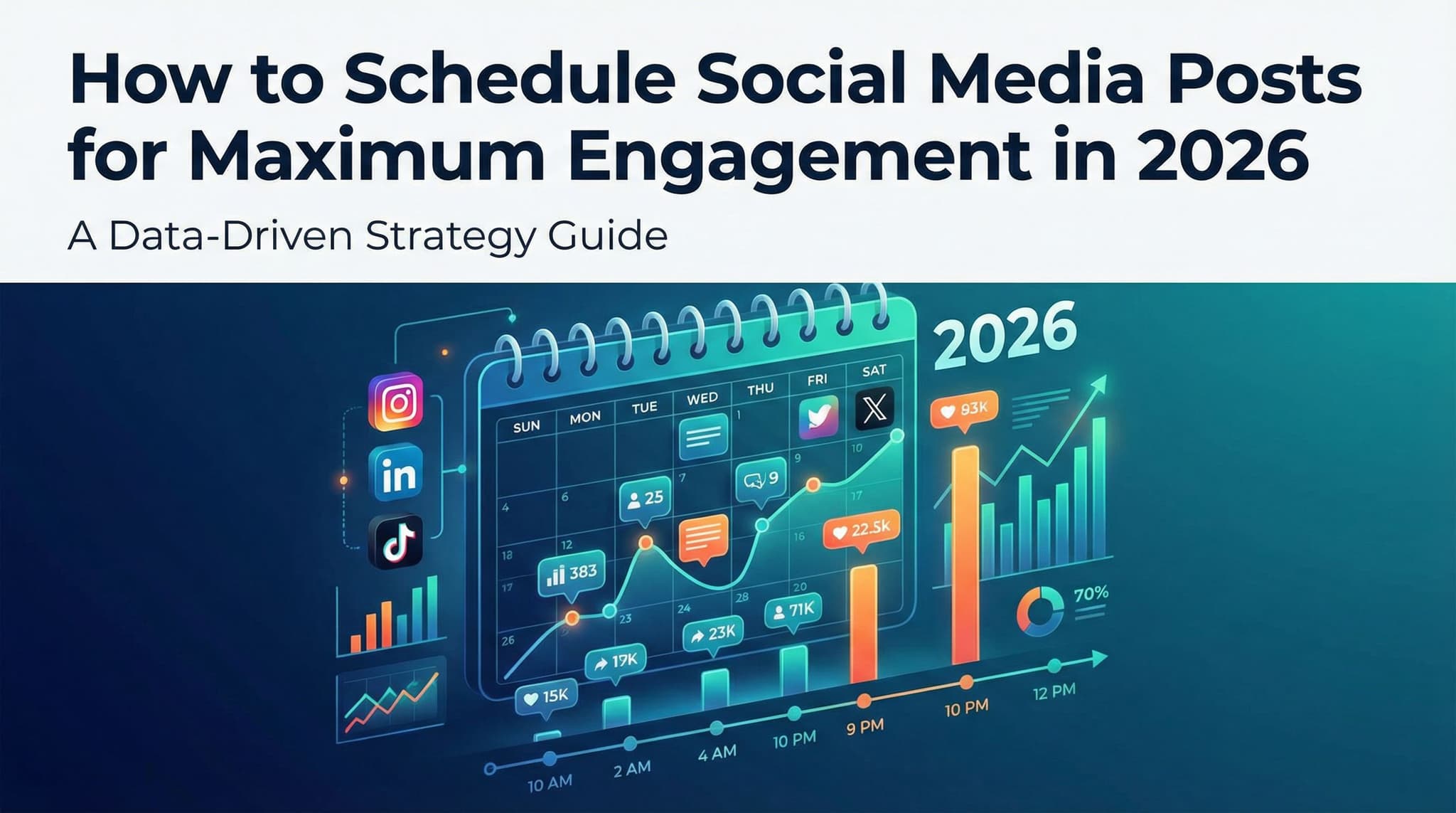
Here's something that happens more often than you'd think: a business owner spends hours crafting the perfect Instagram post, hits publish at 2 PM on a Tuesday, and watches it disappear into the algorithm void while their audience is sleeping or deep in work meetings. Meanwhile, their competitor posts the exact same type of content at 7 PM and gets triple the engagement.
The difference isn't luck or better content. It's timing.
In 2026, social media algorithms reward consistency and strategic posting more than ever before. But here's the nuance that most generic "best time to post" articles miss: there is no universal best time. Your audience's peak activity window might be completely different from another business in your industry, especially if you're serving global markets or niche communities.
This guide isn't about following outdated best practices from 2024. Instead, we're going to walk through a data-driven framework for discovering your specific audience's optimal posting times, implementing sophisticated scheduling strategies, and continuously refining your approach based on real engagement metrics. Let's dive in.
Section 1: Understanding Your Audience and Leveraging Platform Analytics
The foundation of any smart posting schedule is understanding who your audience actually is and when they're actually online. This sounds obvious, but most businesses never dig deep enough into their analytics. They glance at a vanity metric or two and move forward with assumptions rather than data.
Your audience insights live in the native analytics tools built directly into every major social platform. Instagram Insights, LinkedIn Analytics, TikTok Creator Center, Twitter Analytics, and Facebook Analytics all provide granular data about when your followers are most active. The trick is knowing how to read this data and what it actually means for your posting strategy.
Beyond just identifying peak hours, you also need to consider the global nature of modern social media audiences. If you're serving customers across multiple time zones—whether that's US East Coast and West Coast or international markets—your scheduling strategy needs to account for these geographic variations. A single post scheduled for 9 AM might hit perfectly for your East Coast audience while completely missing your West Coast followers who are still sleeping.
1.1: Diving Deep Into Native Platform Analytics
Let's start with what's actually available in your platform's native analytics. Instagram Insights shows you exactly when your followers are online by day of week and hour. You'll see a breakdown like "Monday: 2 AM to 11 PM with peaks at 7-9 AM and 6-8 PM." This is gold. It tells you not just when people are online, but when engagement typically happens.
LinkedIn Analytics operates differently because LinkedIn's audience behavior is distinct—professionals checking during commute times (7-9 AM, 5-7 PM) and mid-lunch (12-1 PM). TikTok's analytics show when your followers are most active, but TikTok's algorithm is unique in that consistency matters more than perfect timing because the platform prioritizes watch time and completion rates regardless of when content goes live.
To access these insights effectively: First, make sure you have a business or creator account (not a personal account). Then, navigate to your analytics section and look specifically for the "Followers activity" or "Audience insights" tab. Most platforms will show you a heat map or bar chart indicating activity by day and hour. Screenshot or document these patterns—they're your baseline data for scheduling decisions.
The key insight here is that you're looking for patterns, not single data points. One person engaging at 3 AM doesn't mean you should post at 3 AM. Look for consistent peaks across multiple weeks or months. If you see a spike every Tuesday at 9 AM, that's significant. If engagement is random, that tells you something too—perhaps your audience is geographically dispersed or uses social media unpredictably.
1.2: Managing Multiple Time Zones for Global Audiences
Here's where it gets complex and where most scheduling strategies fall apart. If you have customers or followers across multiple time zones, a single scheduled post at one time will always be suboptimal for someone. A post at 9 AM Eastern Time is 6 AM Pacific Time and 2 PM in the UK. You're maximizing engagement for one region while potentially missing others entirely.
The most effective approach for truly global brands is to schedule multiple posts of the same content at different times to hit each major time zone. If your analytics show that your audience is split between US (Eastern and Pacific), Europe, and Asia, you might schedule the same post three times: once at 9 AM ET (catches East Coast morning and European afternoon), once at 8 AM PT (catches West Coast and late Europe), and once at 7 PM PT (catches Asia morning).
This doesn't mean posting the exact same image and caption five times daily—that would look spammy and hurt your algorithmic performance. Instead, you're strategically staggering content or creating slight variations that feel natural to your audience across regions. Some brands use this approach with minor caption tweaks or different images that resonate with each region's cultural context.
Also consider that time zone data in analytics should be weighted by audience size. If 70% of your audience is in one time zone, optimize primarily for that zone, then layer in secondary posts for other regions. This prevents wasting valuable posting slots on times when the majority of your audience is inactive.
1.3: Extracting Actionable Insights From Audience Demographic Data
Beyond just activity times, native analytics reveal demographic information that completely changes your posting strategy. Age, location, gender, and interests all influence when people are active and what type of content they engage with at different times.
For example, if your audience is primarily 18-24 year old students, their peak activity might be late evening (9-11 PM) and early morning (8-10 AM) around class times. If your audience is 35-54 year old professionals, you'll likely see peaks during commute times and lunch breaks. A B2B SaaS company targeting enterprise executives might see their highest engagement at 10-11 AM when executives are checking emails and LinkedIn before diving into meetings.
Location data is equally critical. If your analytics show that 40% of your audience is in Australia, 30% in the UK, and 30% in the US, you need a scheduling strategy that acknowledges these splits. You can't optimize for all three regions with a single daily post. The data tells you whether you need a multi-post strategy or whether you should focus on one primary region.
Use this demographic data to create audience segments in your mind. Your morning posts might target one demographic (say, working professionals), while evening posts target another (perhaps younger audiences or stay-at-home parents). This segmentation approach helps you craft posting schedules that feel intentional rather than random.
Section 2: Implementing Smart Scheduling Tools and Testing Strategies
Understanding your analytics is half the battle. The other half is actually implementing a scheduling strategy that's sustainable and scalable. Manually posting at optimal times sounds great until you realize it means being chained to your phone at 7 AM, noon, and 9 PM every single day. That's not a strategy—that's burnout waiting to happen.
This is where scheduling tools become essential infrastructure for any serious social media operation. The right tool doesn't just automate posting; it enables you to schedule content weeks or months in advance, maintain consistency across platforms, conduct A/B tests on posting times, and track performance data all in one place.
But here's the critical part: not all scheduling tools are created equal, and choosing the right one depends on your specific needs, budget, and the platforms you use. Some tools excel at Instagram scheduling, others at LinkedIn, others at multi-platform management. Understanding the landscape helps you make an informed decision rather than just picking the most popular option.
Additionally, even with perfect timing data, you need to continuously test and refine your approach. What works in January might not work in July. Seasonal trends, algorithm changes, and shifts in audience behavior mean your posting schedule should evolve constantly. The most successful social media managers treat their posting schedule as a living, breathing strategy that requires regular attention and adjustment.
2.1: Mastering Third-Party Scheduling Tools (Buffer, Later, Hootsuite, Sprout Social)
Let's talk about the major players in social media scheduling. Each has distinct strengths, and your choice depends on what matters most to your operation.
Buffer is the minimalist's choice. It's straightforward, affordable, and excellent if you're primarily managing Instagram, Twitter, Facebook, and LinkedIn. Buffer's strength is its simplicity—you can learn it in an afternoon and start scheduling immediately. The analytics are solid without being overwhelming. If you're a solopreneur or small team managing a few accounts, Buffer is hard to beat. The weakness? It's less powerful for teams needing complex workflows or advanced analytics.
Later specializes in visual content and Instagram scheduling. If Instagram is your primary platform, Later's visual content calendar and ability to schedule directly to Instagram's feed (not just Stories) is game-changing. Later also offers strong analytics specifically for Instagram performance. The tradeoff is that Later is pricier and less versatile for managing diverse platform mixes.
Hootsuite is the enterprise solution. It handles virtually every platform, offers team collaboration features, includes social listening capabilities, and provides robust analytics. Hootsuite is ideal for agencies managing multiple client accounts or larger brands with dedicated social teams. The learning curve is steeper, and the cost is higher, but the power and flexibility are unmatched.
Sprout Social sits between Hootsuite and Buffer in terms of complexity and cost. It excels at analytics and reporting, making it perfect for data-driven teams that need detailed performance insights. Sprout Social's team collaboration features are excellent, and its customer support is notably strong. If analytics and team workflows are your priority, Sprout Social deserves serious consideration.
Beyond these major players, emerging tools like Later's competitor Metricool, or niche options like Typefully for Twitter, or Reels.Social for Instagram Reels, offer specialized advantages depending on your focus. The key is matching the tool to your actual needs rather than just picking the biggest name.
When implementing any scheduling tool, start with the basics: create a content calendar, populate it with content for at least 2-4 weeks, and schedule posts at the optimal times identified in your analytics. Most tools allow you to schedule in bulk, which saves tremendous time. Once you're comfortable, layer in more advanced features like A/B testing, team collaboration, or advanced analytics.
2.2: Platform-Specific Optimal Posting Times and Why They Vary
Here's where the rubber meets the road: different platforms have genuinely different optimal posting times because their audiences behave differently. Generic advice about "post at 9 AM" doesn't account for these platform-specific nuances.
Instagram sees peak engagement typically between 11 AM-1 PM (lunch break scrolling) and 7-9 PM (evening leisure time). However, this varies significantly by audience. Younger audiences (Gen Z) tend to be more active late evening, while older demographics peak earlier. Instagram's algorithm has evolved to prioritize consistent posting over perfect timing, but timing still matters for initial visibility. Stories perform best mid-morning and early evening when people check their phones frequently.
TikTok operates on different rules entirely. The algorithm prioritizes watch time and completion rate over posting time, meaning a perfectly timed post at 9 AM that people skip through quickly will perform worse than a less-optimally-timed post that people watch completely. That said, TikTok's user base is highly active in early morning (6-10 AM before school/work) and evening (6-11 PM). Posting when your specific audience is active still matters, but it's less critical than on other platforms.
LinkedIn is distinctly professional. Peak times are Tuesday-Thursday, 7-9 AM (commute time), 12-1 PM (lunch), and 5-6 PM (end of work day). Weekend posting performs worse because LinkedIn's audience is less active professionally. LinkedIn's algorithm rewards engagement velocity—posts that get quick engagement perform better—so posting when your audience is actively checking LinkedIn matters more here than on consumer platforms.
Twitter/X is fast-moving and real-time. Peak times vary by audience and content type, but generally, weekday mornings (7-9 AM) and evenings (4-6 PM) see high activity. However, Twitter's strength is real-time conversation, so breaking news or timely content can perform well at any time if it's relevant to current conversations. Scheduling evergreen content is less critical on Twitter than being part of active conversations when they happen.
Facebook has an older demographic on average, with peak times typically 1-3 PM and 7-9 PM. Thursday-Saturday often outperform other days. Facebook's algorithm heavily favors engagement and watch time, so a post's performance depends more on its content quality and initial engagement velocity than on perfect timing. However, posting when your audience is active still provides that crucial initial boost.
The pattern here: understand your specific audience's platform behavior, then layer in these general platform trends. Your Instagram audience might be different from your competitor's Instagram audience, so while you can use general platform trends as a starting point, your own analytics should be your final authority.
2.3: A/B Testing Your Posting Schedule to Find Your Unique Optimal Times
Generic optimal times are a starting point, not a destination. The most successful social media managers treat posting time as a testable variable, just like they test content format or messaging.
Here's how to conduct meaningful A/B testing on posting times: Pick a platform where you post regularly (let's say Instagram). For two weeks, post at your platform's "optimal" time based on general guidelines (say, 7 PM). Track engagement metrics: likes, comments, shares, saves, and reach. Document everything.
Then, for the next two weeks, post the same type of content at a different time (say, 9 AM). Keep everything else identical—same quality content, same caption style, same posting frequency. Track the same metrics. Compare the results. You'll likely see clear differences in how engagement patterns shift based on timing.
The key to valid A/B testing is changing only one variable at a time. If you change both posting time and content type, you won't know which variable caused the difference. Also, test over sufficient time periods (at least 2-4 weeks per variation) because single posts can have anomalous performance.
Most scheduling tools like Buffer and Hootsuite have built-in A/B testing features that automate some of this process. You can schedule the same post to go out at two different times and the tool will help you analyze which performed better. Over time, you'll accumulate enough data to identify your unique audience's true optimal posting times—which might be completely different from the platform averages.
Document your findings in a simple spreadsheet or note. After 3-4 months of testing, you'll have enough data to establish a reliable posting schedule specific to your audience. This becomes your baseline, which you then refine seasonally and adjust for emerging trends.
Section 3: Advanced Strategies for Sustained Growth and Algorithm Optimization
Now that you understand how to identify optimal posting times and implement scheduling tools, let's talk about the more sophisticated strategies that separate good social media managers from great ones. This is where consistency, algorithm optimization, and continuous refinement come into play.
The challenge with social media in 2026 is that algorithms are increasingly sophisticated and constantly evolving. A posting strategy that worked perfectly three months ago might be less effective today. Successful operators treat their social media strategy as an ongoing experiment, continuously monitoring performance, adjusting for seasonal variations, and staying alert to platform algorithm changes.
Additionally, managing a multi-platform presence requires more than just scheduling the same content everywhere at different times. Each platform has different norms, audience expectations, and algorithmic preferences. A strategy that works on LinkedIn might completely fail on TikTok. The most effective operators develop platform-specific approaches while maintaining a cohesive overall brand presence.
Finally, the relationship between posting consistency, posting timing, and algorithmic favor is nuanced. You need both consistency and strategic timing. Posting sporadically at perfect times underperforms posting regularly at good times. But posting at suboptimal times, even consistently, leaves engagement on the table. The balance is the key.
3.1: Building Sustainable Schedules With Recurring Content and Content Calendars
The most common failure point in social media scheduling is overambition. Someone creates a beautiful content calendar for January, schedules everything, feels great, then life happens. By March, the schedule has fallen apart because it was unsustainable.
The solution is building recurring schedules and content calendars designed for sustainability, not perfection. Instead of trying to schedule unique content every single day (which requires constant creative energy), successful operators identify content themes or formats that can repeat on a schedule.
For example, you might decide on: Mondays = Industry insights (research articles, trends, news relevant to your field). Wednesdays = Customer stories or case studies. Fridays = Behind-the-scenes or company culture content. This structure reduces decision fatigue and makes content creation more systematic. You're not starting from scratch every day; you're filling predetermined slots.
Content calendars should be built in your scheduling tool (or in a spreadsheet if you're just starting). At minimum, plan 4 weeks in advance. Ideally, plan 8-12 weeks in advance for major platforms. This gives you enough buffer to handle unexpected life events without your social media presence disappearing.
Many scheduling tools allow you to set recurring schedules. You might schedule a "Monday Motivation" post to repeat every Monday at 9 AM, or a weekly newsletter announcement to post every Thursday at 10 AM. This automation means you're not manually scheduling the same content week after week.
The key to sustainable scheduling is matching your posting frequency to your content creation capacity. If you can realistically create 3 quality posts per week, schedule 3 posts per week, not 7. Consistency matters more than volume. A brand posting 3x weekly consistently will outperform a brand posting 7x weekly for three weeks then disappearing for a month.
Also build in buffer content—evergreen posts that aren't time-sensitive and can fill gaps. Industry tips, educational content, frequently asked questions, or inspirational quotes. When life inevitably gets busy, you have content ready to deploy without scrambling.
3.2: Industry and Niche-Specific Timing Variations and Research Methods
Here's something that rarely gets discussed: optimal posting times vary dramatically by industry. A B2B software company, a fitness brand, a fashion retailer, and a nonprofit charity all have different audience behaviors and optimal posting times. Generic "best time to post" articles ignore this entirely.
How do you discover your industry-specific optimal times? Start by researching what competitors and similar brands in your space are doing. Follow 5-10 competitors on each platform. Note what times they're posting (you can see this in their post timestamps). If multiple successful competitors are posting at similar times, that's a signal worth investigating.
Join industry-specific Facebook groups, LinkedIn groups, or Slack communities where other professionals in your field hang out. Ask directly: "What time do you find performs best for posting on Instagram in the [your industry] space?" You'll get real insights from people doing similar work.
Analyze your own customer data. When do customers typically contact you? When are they most likely to open emails? When do they make purchasing decisions? If customers typically browse your website during lunch breaks, they're probably also scrolling social media during lunch breaks. Sync your social posting to these behavioral patterns.
Look at platform-specific industry data. Some platforms publish industry reports or case studies. LinkedIn's research team regularly publishes insights about optimal posting times by industry. HubSpot, Sprout Social, and other marketing platforms publish annual research about posting times across different industries. Use this as a starting point, then validate with your own data.
Consider seasonal variations within your industry. A fitness brand's peak engagement might shift dramatically between January (New Year's resolutions) and August (back-to-school and summer fitness goals). A gift retailer's optimal timing shifts completely between November-December (holiday shopping) and other months. Your industry likely has seasonal ebbs and flows that should influence your schedule.
Document your industry-specific findings. Create a simple reference guide noting: "For our fitness coaching niche, engagement peaks at 6 AM (before workouts), 12 PM (lunch break), and 7 PM (evening workouts). Engagement drops significantly 2-4 PM and 10 PM-6 AM." Use this as your scheduling template, then refine based on your specific audience data.
3.3: Balancing Consistency With Strategic Timing and Monitoring Performance
Here's the nuance that most social media advice misses: consistency and timing are both important, but they're not equally important in all situations. The balance shifts depending on your platform and audience.
On platforms like TikTok and YouTube, where the algorithm heavily favors engagement metrics like watch time and completion rate, posting at slightly suboptimal times with consistently high-quality content often outperforms posting at perfect times with mediocre content. The algorithm will push good content regardless of posting time. However, posting at optimal times gives that good content an initial boost that helps it gain traction faster.
On platforms like LinkedIn, where engagement velocity matters (how quickly a post gets engagement after posting), timing is more critical. A post that gets 20 engagements in the first hour performs better algorithmically than a post that gets the same 20 engagements spread over 8 hours. This makes posting when your audience is actively online more important.
The balance you're looking for is: consistent posting at good times. Not perfect times (which might be unsustainable), but good times identified through your analytics. If your analytics show your audience peaks at 7-9 PM, aim to post somewhere in that window consistently. If you sometimes post at 6 PM and sometimes at 10 PM and sometimes at 1 AM, you're not giving yourself a fair test.
To maintain this balance in practice: Schedule posts in your tool 2-4 weeks in advance at predetermined optimal times. This ensures consistency and removes the temptation to post at random times. Build in flexibility for real-time posts when news or opportunities arise, but treat your scheduled posts as your reliable backbone.
Monitor performance continuously. Set up a simple weekly or bi-weekly review process where you check your engagement metrics. Most scheduling tools and platform analytics dashboards allow you to export data or create custom reports. Look at: average likes/engagement per post, reach, impressions, shares, saves, and click-through rates if applicable.
Track these metrics by posting time. After 4-8 weeks of data, you should see clear patterns. Posts at certain times consistently outperform others. Use this data to refine your schedule. If 7 PM posts consistently outperform 5 PM posts, shift your primary posting time to 7 PM.
Also monitor for seasonal trends and algorithm changes. Engagement in January often differs from June. Back-to-school season (August-September) might shift your audience's behavior. Monitor your metrics monthly and adjust your strategy accordingly. A posting schedule that worked in Q1 might need adjustment by Q3.
Set specific KPIs (key performance indicators) for your social media presence. Maybe your goal is 5% engagement rate on Instagram, or 15% click-through rate on LinkedIn posts. Track whether your current posting strategy is achieving these goals. If not, adjust timing, content, or frequency until you hit your targets.
Finally, embrace the fact that this is an ongoing process, not a one-time setup. Social media platforms evolve, your audience grows and changes, and new competitors enter your space. The most successful operators treat their posting schedule as a living strategy that requires regular attention and refinement. Quarterly reviews (every 3 months) are ideal for assessing what's working and what needs adjustment.
Scheduling social media posts strategically isn't just about automation—it's about understanding your unique audience, respecting their time zones and behaviors, and continuously refining your approach based on real data. By combining native platform analytics with third-party scheduling tools, conducting meaningful A/B tests, and staying alert to seasonal trends and algorithm changes, you can transform your social media presence from sporadic and reactive to consistent and strategic.
The beautiful part about implementing these strategies is that they compound over time. Your first month of data-driven scheduling might yield modest improvements. But by month three or four, when you've tested thoroughly and refined your approach, the difference in engagement becomes dramatic. You're not just posting when you hope people are online—you're posting when you know they are, consistently, sustainably, and strategically.
The tools and frameworks covered here—from Buffer's simplicity to Hootsuite's sophistication, from A/B testing to seasonal adjustments—are designed to work together as an integrated system. Start with understanding your audience through native analytics, implement a scheduling tool that matches your needs, test and refine your timing, then build a sustainable content calendar that keeps your presence strong month after month. That's how you move beyond guessing and into genuine social media strategy.
Mastering the timing of your posts is just one piece of the puzzle—the real challenge is maintaining this consistency across multiple platforms while keeping your brand voice authentic and your content calendar organized. That's where Aidelly comes in: our platform lets you create and schedule engaging content effortlessly across all your channels, so you can apply these timing strategies without the manual overhead, all while maintaining a cohesive brand presence that resonates with your audience. Ready to transform your posting schedule from guesswork into a data-driven system that actually works? Get started at aidelly.ai.Compare Social Scheduling Tools
Evaluating software for your content workflow? Use our buyer guides and comparisons to compare scheduling, approvals, analytics, and AI workflow fit.
Share this article
Ready to never miss a post again?
Tell Aidelly what to post. It drafts, schedules, and publishes across 9 platforms while you focus on your business.