Real Estate Social Media Automation: How Agents Post Listings Across Every Platform Without Lifting a Finger
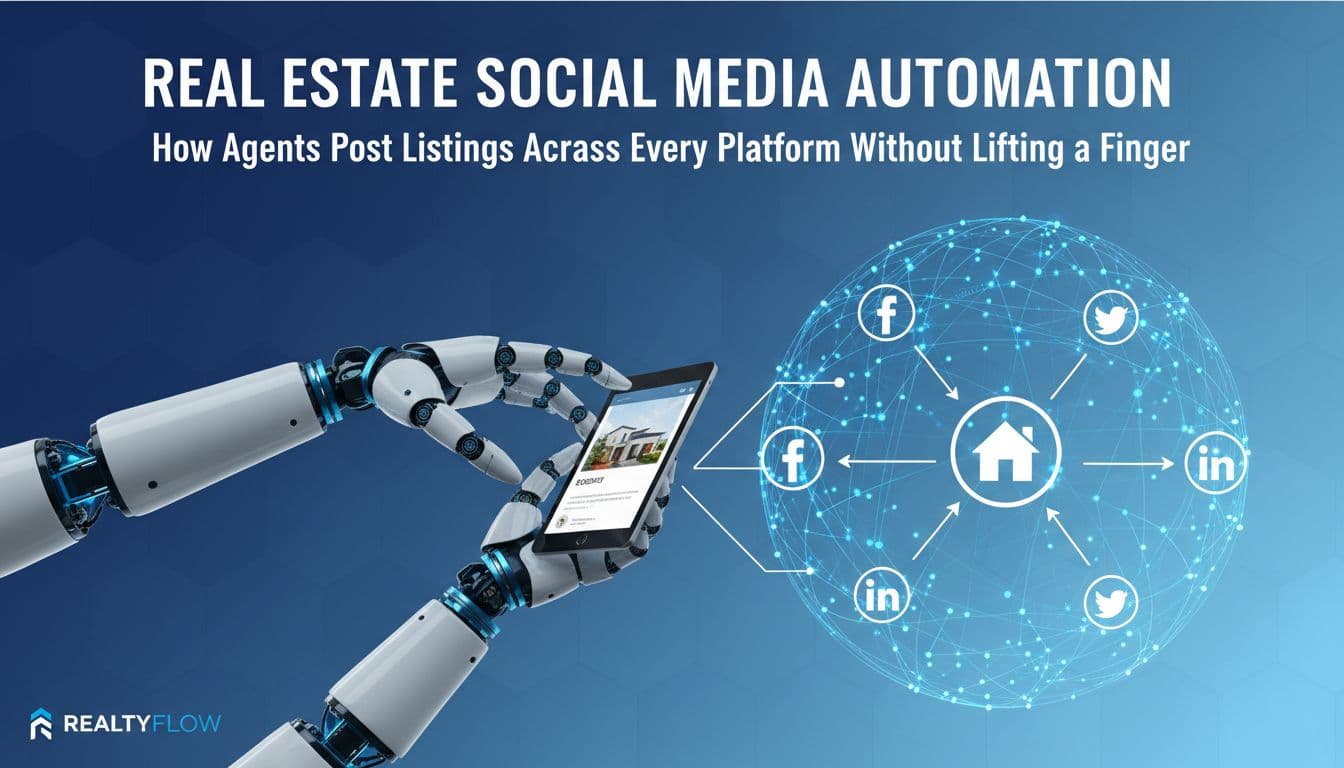
It is Sunday night. You just got a new listing and you know you need to post it. So you open Instagram, write a caption, upload five photos, add your hashtags, and hit share. Then you open Facebook. Then LinkedIn. Then TikTok. Then X. By the time you finish, it is almost 9pm and you have spent nearly an hour doing something that should have taken five minutes. Sound familiar? Most real estate agents are stuck in this loop every single week, and it is costing them time they could be spending on clients, showings, and closings. The good news is that in 2026, this is a solved problem. Agentic AI can take one listing input and handle every post, on every platform, with platform-specific captions, smart timing, and zero manual work on your end. This guide walks through exactly how that works and why it is the biggest shift in how agents manage their social media right now.
One Listing Input, Every Platform Covered
Real estate agents lose hours every week manually posting the same listing content across Instagram, Facebook, LinkedIn, TikTok, and X. That is not an exaggeration. Think about what goes into a single listing post done right: a caption that fits Instagram's vibe, a longer narrative for LinkedIn, a punchy hook for TikTok, and something short and direct for X. Then you need the right image formats for each platform. Then you need to think about timing. Most agents just guess, post whenever they have a free minute, and move on. The result is inconsistent content that does not perform well and a lot of wasted time getting it out at all.
Automating that workflow with an AI social media scheduler cuts that time to near zero. Every post goes out platform-optimized, on-brand, and at the right time. You stop being the person who does the posting and start being the person who just won the listing.
How Agentic AI Handles the Whole Thing
Agentic AI workflows can take a single listing input, the address, photos, price, and a few key features, and autonomously generate platform-specific captions, select optimal posting times, and publish across every channel without the agent touching each post individually.
You put in: 42 Maple Street, 3BR/2BA, $485,000, updated kitchen, walkable to downtown, open house Saturday. The AI reads that and writes an Instagram caption with the right hashtags, a LinkedIn post that speaks to buyers relocating for work, a TikTok script for a quick video tour, and a short punchy line for X. It picks the best time to post each one based on when your audience is actually active. Then it publishes. You did not write a single caption. You did not open a single app.
This is not basic scheduling where you write the post and pick a time. The AI is doing the creative and strategic work end-to-end. That is the difference between a scheduling tool and an agentic workflow, and it is a big one.
Platform Optimization Is Not Optional Anymore
A caption that works on Instagram does not work on LinkedIn. A hook that grabs attention on TikTok sounds off in a Facebook post. Agents who post the same text everywhere get lower reach and lower engagement because each platform's algorithm rewards content that fits its format.
Agentic AI knows this. It writes for the platform, not just for the listing. Your $485,000 Maple Street listing sounds like a lifestyle opportunity on Instagram, a smart move for a growing family on Facebook, and a strategic investment on LinkedIn, all from the same input, all without you rewriting a word. That kind of platform-specific optimization used to require a dedicated social media manager. Now it runs automatically every time you add a listing.
The Consistency Problem and How to Fix It
Consistency is the biggest gap in most agents' social media presence. Not quality. Not strategy. Consistency. Agents post a lot when they have new listings and go quiet for three weeks when closings pile up. Followers notice. The algorithm notices. And when a potential buyer searches for a local agent on Instagram, the profile with sporadic posts from six weeks ago does not inspire confidence.
A visual content calendar with auto-scheduling fills the pipeline weeks in advance so listings, market updates, and neighborhood content go out on a reliable cadence even during busy closing seasons. This is the step most agents skip because it feels like extra work upfront. But front-loading a month of content in one sitting and having it publish automatically means your profile stays active whether you are at a closing, on vacation, or just too slammed to think about posting.
What a Full Content Pipeline Actually Looks Like
A strong real estate content calendar is not just listings. It is a mix of content types that builds trust over time. Think neighborhood spotlights, local market stats, buyer tips, seller tips, behind-the-scenes moments from showings, and client success stories. When you plan that out visually and schedule it weeks ahead, you stop scrambling for something to post and start showing up like someone who has their act together.
Aidelly's visual content calendar lets you see your entire pipeline at a glance. You can adjust timing, shift posts around, and make sure you have the right balance of listing content and value-add posts. When you combine that with AI-powered content drafting, you can generate a week of posts in the time it used to take you to write one. That is not a small upgrade. That is a complete shift in how you work.
Recurring Templates Keep the Baseline Running
Some content is predictable. Every Monday you could share a local market stat. Every Friday a neighborhood restaurant or coffee shop recommendation. Every time you close a deal, a celebration post. Recurring post templates let you set those up once and have them generate and publish automatically.
The AI fills in current data, updates the copy to stay fresh, and keeps your feed moving without you making a single decision. Your followers get a consistent experience. You get your time back. And your profile never looks abandoned, even during the weeks when you are closing three deals at once and have not opened Instagram in four days. That kind of reliable presence is what separates agents who grow their audience from agents who stay stuck at the same follower count for years.
Compliance, Brand Consistency, and Knowing What Actually Works
Real estate teams and brokerages need approval workflows before content goes live. This is not optional. In real estate, a single non-compliant post can create legal exposure. A caption that implies a guaranteed return, a fair housing issue buried in the wrong phrasing, or a brokerage logo missing from an agent's post. These are real risks that happen when agents are moving fast and posting without a review step.
Automated drafting paired with a review gate lets agents create at scale without compliance or brand risk. The agent inputs the listing, the AI drafts every post, and then a broker or marketing manager reviews before anything goes live. That workflow is faster than the old way, where agents wrote posts themselves and brokers had no visibility until after the fact. Now you get speed and oversight at the same time.
Brand Consistency Across a Team of Agents
Brokerages with ten or twenty agents have a brand consistency problem that is hard to manage manually. Every agent has their own style. Some use the brokerage colors, some do not. Some use the approved logo, some use an old version. Some write professional captions, some write whatever comes to mind. The result is a brokerage that looks like ten different businesses instead of one.
Stored brand voice guidelines and asset management solve this at the source. When every agent uses the same AI system with the same brand settings, every post comes out on-brand by default. The AI knows your tone, your approved assets, and your compliance requirements. Agents do not have to think about it. The brand just shows up correctly every time. That kind of consistency builds recognition in a local market over months and years in a way that scattered, inconsistent posts never will.
Analytics Tell You What to Stop Doing
Analytics across platforms tell agents which listing formats, posting times, and content types actually drive engagement and leads. Without cross-platform data in one place, most agents are guessing what works. And most of them are wrong about it.
Here is a pattern that comes up often: an agent spends time on polished graphics because they look professional, but their raw iPhone photos of the listing get three times the engagement. Or they post at noon because that feels right, but their audience is most active at 7pm on weekdays. Without data, you never find that out. You just keep doing what feels right and wonder why the numbers are flat.
Cross-platform analytics in one dashboard change that. You see which posts drove profile visits, which ones got saved, and which ones led to direct messages. You see performance by platform so you know where to focus. Over time, that data compounds. You stop making content that does not work and put more energy into what does. That is how agents go from posting and hoping to posting with a plan that actually brings in leads.
The agents winning on social media in 2026 are not the ones posting the most. They are the ones who set up a system that posts for them, stays on-brand without babysitting, and tells them what is actually working. That means automating the repetitive listing workflow, building a content calendar that runs on its own, putting a review gate in place before anything goes live, and reading the data so every post gets smarter over time. The right tool does not just save you clicks. It runs the whole operation so you can stay focused on clients and closings. If you are ready to stop being your own social media intern, Aidelly is built exactly for that.
You don't have to spend another Sunday night copying and pasting the same listing across five platforms. Aidelly's agentic workflows take one listing input and handle the rest, from writing platform-specific captions to scheduling posts to showing you what's actually driving engagement. If you're ready to hand off the busywork and focus on closing deals, head to aidelly.ai and see how it works.
Compare Social Scheduling Tools
Evaluating software for your content workflow? Use our buyer guides and comparisons to compare scheduling, approvals, analytics, and AI workflow fit.
Share this article
Related Articles
Best Social Media Scheduling Tools in 2026: An Honest Feature-by-Feature Comparison
Most social media tool comparisons give you a checkbox table and call it a day. This one is different. The scheduling market has split into two very different camps in 2026: legacy tools built around manual workflows and agentic tools that let AI handle your entire content lifecycle. Before you pick a tool, you need to know which camp you actually want to be in. This article walks through the real differences between Buffer, Hootsuite, Later, and Aidelly — covering pricing transparency, auto-scheduling accuracy, developer and agency use cases, and the shift toward autonomous AI workflows. No sponsored rankings. No vague feature lists. Just an honest look at what each tool actually does, where each one wins, and how to match the right tool to how you actually work.
May 25, 2026
Read more
AI Brand Voice Training: How to Make Every Scheduled Post Sound Like You
Most AI-generated social media posts have a problem. They sound like AI wrote them. The sentences are clean, the tone is polite, and nothing about them sounds like the person behind the brand. If you've pasted your content into an AI tool and gotten back something that technically works but feels completely wrong, you already know what this means. The fix isn't a better prompt. It's better infrastructure. Brand voice documentation — written down, structured, and stored somewhere your AI tools can actually use it — is what separates generic output from posts that sound like you wrote them on your best day. This article walks through how to build that foundation, how to train AI on your specific voice, and how tools like Aidelly put that voice to work across every platform you post on.
Jun 3, 2026
Read more
Cross-Platform Posting in 2026: One Piece of Content, Six Platforms, Zero Chaos
If you're still copying and pasting the same post across Instagram, TikTok, LinkedIn, YouTube, Facebook, and X, you're not saving time. You're just spreading the same mistake six ways. Cross-platform posting in 2026 isn't a formatting challenge anymore. It's a systems challenge. The platforms have different rules, different audiences, and different content formats. What works as a LinkedIn post will tank on TikTok. What performs on Instagram Reels won't translate to a YouTube description. And doing all of this manually, for multiple brands or clients, across multiple posts per week, adds up to hours of repetitive work that most social media managers and solopreneurs simply can't afford. This article breaks down what true cross-platform publishing looks like now that agentic AI exists, how MCP is changing the way developers and teams connect AI assistants to their publishing pipelines, and why a unified analytics dashboard is the missing piece most people overlook.
Jun 17, 2026
Read moreReady to never miss a post again?
Tell Aidelly what to post. It drafts, schedules, and publishes across 9 platforms while you focus on your business.