Twitter Threads 101: A Beginner's Guide to Sharing Longer Stories in 2026
Remember when Twitter felt like a place where you could only share quick takes and hot takes? Those days are long gone. In 2026, Twitter threads have evolved into a legitimate long-form storytelling medium—one that doesn't require you to jump to Medium, Substack, or your personal blog. The beauty of a well-crafted thread? It feels native to the platform, engages readers in bite-sized chunks, and builds momentum as people scroll through your narrative. If you've ever felt frustrated trying to compress your expertise into a single tweet, or watched someone else's thread go viral while your content barely got noticed, you're not alone. The difference usually comes down to understanding the psychology of thread writing, mastering the technical mechanics, and actually knowing what makes people stop scrolling and start reading. This guide will give you everything you need to become a thread-writing pro.
Understanding Twitter Threads: The Foundation
Let's start with the basics. A Twitter thread isn't just several tweets posted back-to-back—it's a strategically connected series of tweets designed to tell a cohesive story, share a process, or dive deep into a topic that deserves more than a single post. Think of it as the bridge between Twitter's famous brevity and the human need to share complex ideas that can't fit neatly into 280 characters.
The genius of threads lies in how they work with human psychology. Our brains are wired for stories. We crave narrative arcs, revelations, and satisfying conclusions. A thread delivers all of this while keeping individual posts short enough that they don't feel overwhelming. This is why you'll see threads outperform standalone tweets by orders of magnitude—they leverage the platform's format while tapping into our storytelling instincts.
The purpose of a thread has evolved significantly since they first became popular. Early threads were often just long rants broken into pieces. Modern threads serve specific functions: teaching (a step-by-step guide to starting a business), storytelling (the journey that led to a major life change), documenting (lessons learned from a failed project), or building authority (sharing deep expertise in your field). The best threads don't just dump information—they create an experience that makes readers feel like they're learning something valuable from someone they trust.
1. What Exactly Is a Twitter Thread and Why Should You Care?
A Twitter thread is a connected series of tweets that build on each other to tell a complete story or share detailed information. The first tweet sets up the narrative, and each subsequent tweet (usually marked with numbers like 1/, 2/, 3/) continues the thought. Readers can follow the thread in order, and the entire conversation stays threaded together, making it easy to follow even if someone reads it days later.
Why should you care? Because threads democratize long-form content on Twitter. You don't need to be a famous author or verified influencer to share your expertise. A compelling thread from a relatively unknown account can reach thousands of people, generate meaningful engagement, and establish you as someone worth following. In 2026, threads have become the primary way professionals, entrepreneurs, and educators break through the noise on Twitter. They're also incredibly shareable—people screenshot and repost threads, cite them in other content, and refer friends to them. A single great thread can become a permanent fixture in your audience's minds and continue driving engagement months after you post it.
2. The Psychology Behind Why Threads Actually Work
Understanding why threads work is crucial to writing better ones. First, there's the curiosity gap. When you start a thread with an intriguing opening, readers want to know what comes next. They're literally compelled to keep scrolling. Second, there's the cognitive load factor. A 2,000-word article can feel intimidating. But 10 tweets of 200 characters each? That feels manageable, even enjoyable. Your brain doesn't perceive it as heavy reading—it feels like a conversation with someone smart.
Then there's the social proof element. When people see a thread has thousands of likes and retweets, they're more likely to engage with it themselves. This creates a virtuous cycle where popular threads become more visible, which attracts more readers, which generates more engagement. Finally, threads create what psychologists call "progressive commitment." Once someone reads the first tweet, they're more likely to read the second. And after the second, the third feels natural. You're building momentum, and by the time they reach your conclusion, they feel invested in your perspective.
3. The Different Types of Threads and When to Use Each
Not all threads serve the same purpose, and matching your thread type to your goal makes a huge difference. Educational threads teach a specific skill or concept—think "10 things I learned about copywriting" or "How to build your first product in 30 days." These threads work best when you have expertise to share and genuinely want to help your audience. Story threads take readers on a journey, often culminating in a lesson or revelation. These are perfect for sharing personal experiences, documenting failures, or explaining how you achieved something. Analytical threads break down trends, news, or data. If something major happened in your industry, an analytical thread positions you as someone who understands the implications. Listicle threads are straightforward—"5 habits of successful founders" or "7 red flags in contracts." These tend to perform well because they're easy to follow and share. Finally, conversation-starter threads pose questions or present contrarian opinions designed to spark discussion. These often generate the most replies and create community engagement.
Crafting and Formatting: The Technical Mechanics
Now that you understand what threads are and why they work, let's talk about the actual mechanics of creating one. This is where many beginners stumble. They have great ideas but format them poorly, making their threads hard to read and less likely to engage. The good news? Good formatting is learnable, and once you understand the principles, you'll apply them automatically.
The foundation of a readable thread is structure. Each tweet should feel like a complete thought while also being part of a larger narrative. You're balancing two competing needs: making each individual tweet satisfying to read, and making the overall thread feel cohesive. This requires thinking about pacing, emphasis, and how information builds throughout your thread.
Formatting also includes visual elements. The right use of line breaks, capitalization, and even emojis can dramatically improve readability. A tweet that's one solid paragraph of text looks intimidating. The same content broken into 2-3 short paragraphs looks inviting. These small choices accumulate to create threads people actually want to read.
4. Step-by-Step Guide to Creating Your First Thread
Here's how to create a thread that actually works:
- Start with an outline. Before you write a single tweet, jot down your main points. What's the journey you're taking readers on? What's the opening revelation? What's the conclusion? This doesn't need to be formal—bullet points are fine. This step prevents you from rambling or losing focus mid-thread.
- Write your opening hook. This is the most critical tweet. It needs to stop the scroll. "I just learned something that changed how I think about marketing" is better than "Here's a thread about marketing." The first creates curiosity; the second doesn't.
- Write out your full thread in a document first. Don't jump straight to Twitter. Write your entire thread in Google Docs, Notion, or even a Notes app. This lets you see the full narrative arc before committing to the platform. You can rearrange, cut, and refine without losing tweets.
- Number your tweets. Use 1/, 2/, 3/ format. This signals to readers that you're sharing a thread and helps them follow along. Some people skip this, but it genuinely helps with comprehension.
- Read each tweet aloud. Does it sound natural? Would you actually say this to someone in conversation? If it sounds stiff or overly formal, revise it. Twitter threads should feel conversational, not like academic papers.
- Break up text with line breaks. Don't pack too much into a single tweet. Use spacing to make it scannable. Your goal is for readers to grasp the main idea of each tweet in 5-10 seconds.
- Use emojis strategically. A well-placed emoji can add personality and improve readability. Just don't overdo it. You're aiming for professional-yet-approachable, not emoji overload.
- Add a clear conclusion.** Your final tweet should feel like an ending, not like you just ran out of things to say. It might be a summary, a call-to-action, or a thought-provoking question. It should leave readers feeling satisfied.
5. Formatting Best Practices for Maximum Readability
The difference between a thread people skim and one they actually read comes down to formatting. Here are the specific practices that work:
Keep individual tweets short. Aim for 100-200 characters per tweet, not 280. This leaves white space and makes each tweet feel less dense. Paradoxically, shorter tweets in a thread tend to get more engagement than tweets that use the full character limit.
Use strategic line breaks. One technique is to put your main idea on the first line, then expand on it below. This creates visual hierarchy and helps readers understand what's important. For example:
"The biggest mistake new entrepreneurs make?
Thinking they need to be perfect before launching.
You don't. You need to be ready to learn and iterate."
Vary your sentence structure. Don't write the same way in every tweet. Mix short punchy sentences with longer explanatory ones. This keeps the thread engaging and prevents it from feeling monotonous. Use bold and italics sparingly. These formatting tools can emphasize key points, but overusing them reduces their impact. Reserve them for your most important insights.
Consider using formatting characters. Some people use dashes, arrows, or other characters to create visual interest. "→" can indicate progression. "—" can separate ideas. These are subtle but effective.
6. The Anatomy of a High-Performing Thread Structure
A high-performing thread has a specific structure that guides readers through your narrative. The Hook (Tweet 1): This is your opening, and it's everything. It needs to answer the question "Why should I keep reading?" The best hooks either promise value ("I'm about to share the 5-step process that grew my business 300%"), create curiosity ("The advice everyone gives about social media is wrong"), or establish relatability ("I used to think this way too, until..."). Your hook should be bold enough to stop scrolling but authentic enough that it doesn't feel like clickbait.
The Setup (Tweets 2-3): Now that you have attention, provide context. Why does this matter? What problem are you solving? What's the situation? This is where you establish relevance and deepen the curiosity you created in your hook. If your hook is the question, your setup begins to answer it.
The Body (Tweets 4-7): This is where you deliver the substance. Share your insights, steps, or story. Each tweet should add new information or develop your argument further. Think of this section as the "meat" of your thread. This is where you demonstrate your expertise and give readers concrete value.
The Twist or Deepening (Tweet 8-9): Here's where you can add nuance, a counterintuitive insight, or a deeper layer to what you've shared. This prevents your thread from feeling one-dimensional and shows that you've thought deeply about your topic. Maybe you've explained a concept, and now you reveal a limitation or a more advanced application.
The Conclusion (Final Tweet): End strong. Summarize the key takeaway, pose a thought-provoking question, or include a clear call-to-action. Don't just stop abruptly. Your conclusion should feel intentional and leave readers with something to think about or do.
Optimization and Performance: Making Your Threads Shine
Creating a well-structured thread is just the beginning. To truly succeed on Twitter in 2026, you need to understand how to optimize for reach, engagement, and audience growth. This section covers the strategic decisions that separate threads that get hundreds of views from threads that get hundreds of thousands.
The timing of when you post matters. The audience you're trying to reach has predictable patterns. A thread aimed at early-stage entrepreneurs might perform best posted at 7 AM on a Tuesday when founders are having their morning coffee. A thread for students might perform better in the evening. You'll want to test different posting times and track which works best for your specific audience.
Thread length is another critical variable. There's no universal "perfect" length, but research and practical experience suggest that most successful threads are between 8-15 tweets. Anything shorter might not justify being a thread instead of a regular tweet. Anything longer risks losing readers who get tired of scrolling. That said, some threads are 20+ tweets and perform brilliantly because the content is so compelling that readers want to keep going.
How often should you post threads? This depends on your goals and capacity. Some creators post one thread per week. Others post multiple per week. The key is consistency. Your audience should come to expect quality threads from you on a regular schedule. Posting sporadically means you're not building momentum or establishing yourself as someone worth following for threads specifically.
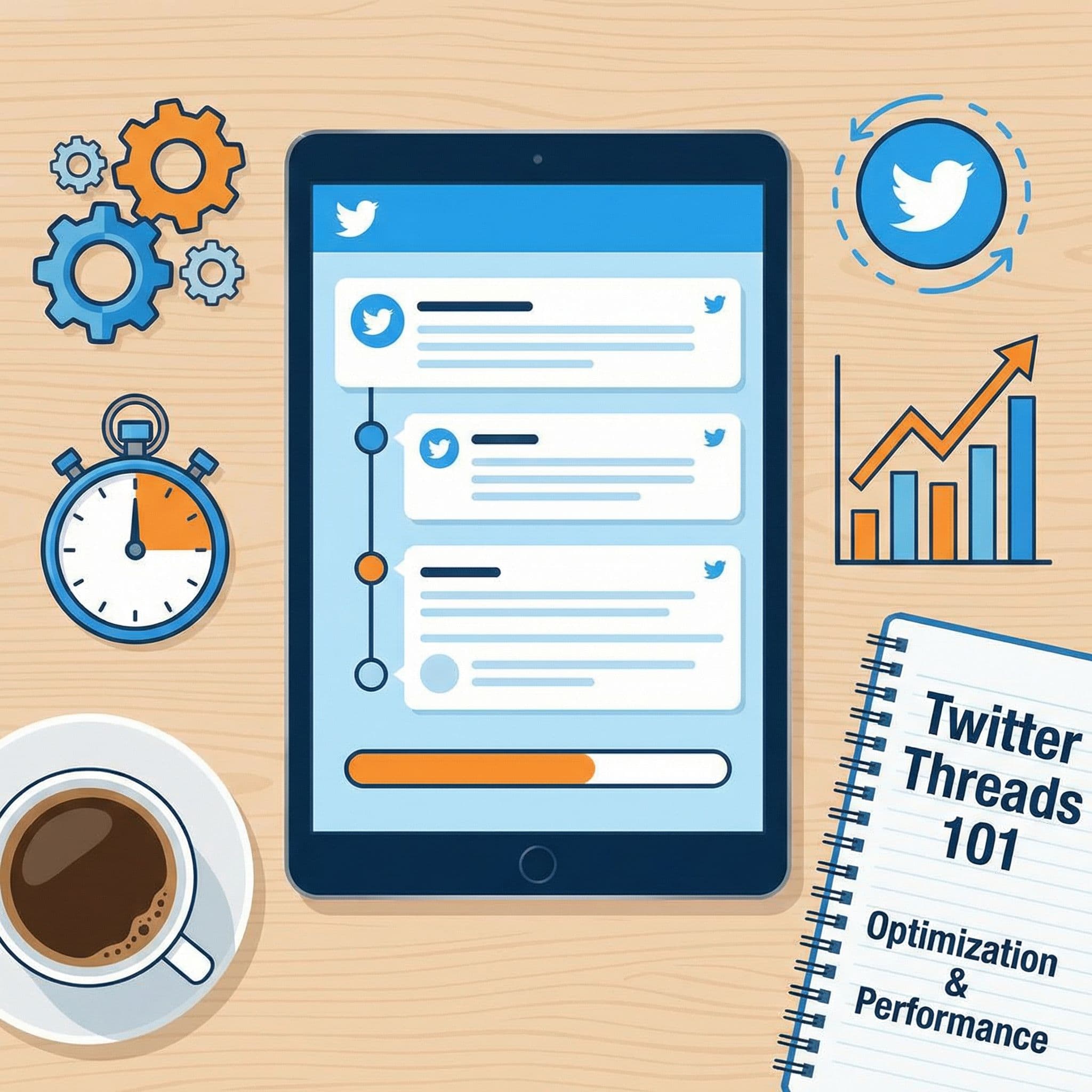
7. Optimal Thread Length, Frequency, and Timing Strategies
Let's get specific about the numbers. Thread length: Data from successful creators shows that 10-12 tweet threads tend to perform best. They're substantial enough to provide real value but short enough that readers don't lose interest. However, this isn't a hard rule. An exceptionally compelling thread might be 20 tweets and still maintain engagement. A complex topic might need 15 tweets to explain properly. The real principle is: as long as your thread is interesting, keep going. As soon as it starts to feel padded or repetitive, wrap it up.
Posting frequency: If you're just starting with threads, aim for one per week. This gives you time to craft quality content and build anticipation. As you get better and faster at writing threads, you might move to two per week. The absolute top creators sometimes post multiple threads per day, but they've also built massive audiences and have teams helping them. For most people, one to two quality threads per week is the sweet spot. Consistency matters more than volume. Your audience should be able to predict when you'll share threads.
Timing: Your audience has a peak activity time. For most professional audiences, this is 8-10 AM or 12-1 PM on weekdays. For more casual audiences, it might be evenings or weekends. The best way to find your optimal time? Post threads at different times over several weeks and track which gets the most engagement in the first hour. Twitter's algorithm heavily weights early engagement, so a thread that gets 50 likes in the first 30 minutes will likely reach far more people than one that gets 50 likes spread over several hours.
8. Engagement Tactics: Making Your Threads Interactive
A thread isn't just content you broadcast—it's an opportunity for conversation. The best threads inspire replies, retweets, and quote tweets. Here's how to encourage engagement:
Include a call-to-action. Don't assume readers know what you want them to do. "What's your experience with this?" or "Reply with your biggest challenge" or "Retweet if you agree" gives readers a clear action. Make your CTA specific. "What do you think?" is vague. "What's one thing from this thread you're going to implement this week?" is specific and actionable.
Ask questions throughout the thread. Don't wait until the end. Pose questions mid-thread to keep readers engaged. "Does this resonate with you?" or "Have you noticed this pattern?" makes readers feel like you're talking with them, not at them.
Be responsive to replies. When people reply to your thread, engage with them. Thank them for sharing their perspective. Answer their questions. Engage with their profiles. This builds community and signals to the algorithm that your thread is creating conversation.
Pin your opening tweet. Some creators pin the first tweet of a major thread to their profile. This extends the life of the thread and makes it discoverable to people visiting their profile.
Create space for different perspectives. Threads that acknowledge counterarguments or different viewpoints tend to spark more discussion. You don't have to agree with every perspective, but showing that you've considered multiple angles invites more nuanced conversation.
9. Common Mistakes That Kill Thread Performance
Even experienced creators make mistakes. But some mistakes are particularly common among beginners and have outsized negative impacts on thread performance. Weak opening hooks: This is the number one killer. If your first tweet doesn't stop scrolling, nothing else matters. Avoid generic openers like "Here's a thread about marketing" or "Let me share something I learned." These don't create curiosity or promise value. Strong hooks create one of three feelings: "I need to know this," "I relate to this," or "This is surprising."
Poor formatting: A wall of text in a tweet is hard to read. Always break up your content with line breaks. Use short paragraphs. Make it scannable. A formatted tweet takes the same 280 characters but feels infinitely more readable.
Lack of context or jumping straight to jargon: You might be an expert in your field, but your audience might not be. Threads that assume too much knowledge alienate readers. Always provide enough context that someone new to your topic can understand. Define terms. Explain concepts. Make your thread accessible.
Inconsistent quality within a thread: Sometimes the first few tweets are great, then quality drops. Readers notice. Each tweet should be as polished as the first. If you're running out of steam, it's better to end the thread than to pad it with weak content.
No clear conclusion: Threads that just end abruptly feel incomplete. Even if you're sharing an ongoing story, give readers a sense of closure or a clear next step. "What would you do?" or "Stay tuned for part two" or "The lesson here is..." all work. Just don't leave readers hanging.
Ignoring engagement after posting: Posting a thread and disappearing is a missed opportunity. The first few hours are critical. Respond to replies, thank people for engagement, and participate in the conversation you've started. This keeps the thread active and signals to the algorithm that it's worth promoting.
Tools, Examples, and Measurement: From Creation to Mastery
At this point, you understand thread theory and mechanics. Now let's talk about the practical tools that make thread creation easier, the real-world examples that show what success looks like, and the metrics that prove your threads are working.
Creating threads directly in Twitter's interface works, but most serious creators use specialized tools. These tools offer features like drafting, scheduling, and analytics that Twitter itself doesn't provide. They save time, reduce errors, and help you optimize posting schedules. Some are free; others charge monthly. The investment in a good tool often pays for itself through improved performance and saved time.
Looking at successful threads from creators in your niche is invaluable. You'll see patterns in what works: how they hook readers, how they structure information, how they pace revelations, how they conclude. You don't copy their threads, but you learn from their approach. A thread about productivity might teach you a structure you can apply to a thread about copywriting.
Finally, measuring thread performance tells you what's working. Not all threads will go viral, and that's okay. But understanding why some threads get 10x the engagement of others lets you refine your approach. You'll identify patterns: maybe your audience engages more with storytelling threads than educational ones. Maybe they prefer threads posted on certain days. Maybe your best-performing threads have specific characteristics. This data-driven approach transforms thread writing from guesswork to strategy.
10. Tools and Features for Efficient Thread Management
Twitter's native features: Twitter itself has built-in tools for thread management. You can compose multiple tweets and thread them together before posting. You can also use Twitter's scheduling feature to post threads at optimal times. These are free and integrated, making them a good starting point.
Third-party tools: Apps like Typefully, Thread Reader, and Hootsuite offer advanced features. Typefully is specifically designed for threads and offers a beautiful interface for composing, previewing, scheduling, and analyzing thread performance. It shows you exactly how your thread will look and lets you adjust formatting before posting. Thread Reader helps people read and archive threads, but it also offers creator tools. Hootsuite is a broader social media management platform that includes thread scheduling and analytics. These tools typically cost between $10-50 per month depending on features and volume.
Drafting tools: Many creators draft threads in Google Docs or Notion before writing them in Twitter. This gives you space to think, revise, and get feedback from others before committing. Some use specialized writing apps like Obsidian or Roam Research that are designed for non-linear writing and ideas.
Analytics tools: Beyond Twitter's built-in analytics, tools like Typefully and third-party analytics platforms give deeper insights into thread performance. You can see not just total engagement but engagement per tweet, helping you understand which tweets resonated most. This data is gold for improving future threads.
Scheduling and batching: The most efficient creators batch-create threads. They might spend a few hours writing 4-6 threads, then schedule them to post throughout the week. This reduces context-switching and lets you focus on quality when you're in a creative mindset. Most tools let you schedule posts weeks in advance.
11. Real-World Examples of Successful Threads Across Industries
Let's look at what success actually looks like. In the entrepreneurship space: Threads about startup lessons, fundraising experiences, or product launches consistently perform well. A founder might share their journey from idea to Series A, breaking it into digestible tweets. The hook might be "I just closed a Series A and made every mistake possible—here's what I learned." These threads work because they combine personal narrative with practical insights.
In education and learning: Teachers and online educators have found massive audiences through threads. A thread on "10 things I teach my students about writing" or "How to actually remember what you read" resonates because it promises practical value. These threads often become reference material that people bookmark and return to.
In technology and development: Technical threads explaining coding concepts, new frameworks, or debugging techniques perform exceptionally well. A developer might thread through their experience debugging a particularly tricky problem, explaining not just the solution but their thought process. This demystifies technical work and makes it accessible.
In marketing and growth: Marketers share case studies, lessons from campaigns, or frameworks for thinking about growth. "Here's how we grew from 0 to 100k users in 6 months" threads generate enormous engagement. The specificity and actionability make them valuable.
In personal development: Threads about habits, mental health, career transitions, or life lessons often go viral. People share them because they're personally meaningful. A thread about overcoming imposter syndrome or building discipline taps into universal human challenges.
The common thread (pun intended) across all these examples? They combine expertise with accessibility, specificity with relatability, and value with personality. They don't just share information—they share perspective.
12. Measuring Success: Metrics That Matter
You can't improve what you don't measure. But not all metrics are equally important. Engagement rate (likes, retweets, and replies relative to impressions) is more meaningful than raw numbers. A thread with 100 likes from 5,000 impressions has a 2% engagement rate. A thread with 100 likes from 100,000 impressions has a 0.1% engagement rate. The first is more successful—it resonated with a higher percentage of people who saw it.
Impressions show how many people saw your thread. This is important for understanding reach, but it's not the full picture. A thread could get huge impressions but low engagement if it doesn't resonate.
Retweets and quote tweets are particularly valuable because they indicate that people found your content valuable enough to share. Quote tweets often include commentary, which means people are actively engaging with your ideas, not just passively liking them.
Replies indicate conversation. A thread that generates 50 replies is creating community and discussion. This is often more valuable than a thread with 500 likes but zero replies.
Click-through rates matter if you're linking to something (your newsletter, a product, etc.). A thread that drives clicks has direct business value.
Follower growth resulting from a thread shows that you're attracting new audience members. Track your follower count before and after posting major threads.
Beyond these, pay attention to which specific tweets within a thread get the most engagement. Did your hook get lots of likes but then engagement dropped? That tells you your hook is strong but the body isn't holding attention. Did one particular tweet in the middle get way more engagement than others? That insight tells you what your audience cares about most.
13. Advanced Techniques: Threading Replies, Media, and Series
Threading replies: This advanced technique involves replying to your own thread with additional thoughts, creating a secondary thread. You might post your main thread, then after it gets engagement, reply to the original thread with "Part 2: Going Deeper" or "Here are some examples." This keeps the conversation active and can breathe new life into a thread that's already posted. It also signals to the algorithm that there's ongoing engagement.
Using media effectively: Images, videos, and GIFs dramatically improve thread engagement. A thread with strategic images gets significantly more engagement than one without. The key word is "strategic." Don't add images just to add them. Use images to illustrate concepts, break up text, or add visual interest. Screenshots of data, diagrams explaining processes, or photos that support your narrative all work well. Videos can be particularly powerful—a 15-30 second video embedded in a thread can stop scrolling and drive engagement. Charts and graphs work well for data-heavy threads.
Building thread series: Once you've built an audience that appreciates your threads, you can create ongoing series. "Every Monday I share a marketing lesson" or "Weekly thread: The one thing I learned this week" creates predictability and builds habit. People start to anticipate your threads and engage with them regularly. Series also give you flexibility—if you miss a week, it's not as noticeable as if you normally post twice a week and suddenly disappear.
Collaborative threads: You can create threads with other creators. One person starts, another continues, creating a back-and-forth that showcases different perspectives. This exposes you to each other's audiences and creates unique content neither of you could create alone.
Threaded conversations: Some creators use threads to respond to or continue conversations started by others. You might see a thread about a topic, then create your own thread offering a different perspective or additional insights. This builds community and positions you as someone engaged with current conversations in your space.
Twitter threads have evolved from a novelty to a primary content format for anyone serious about building authority, sharing expertise, or engaging their audience on social media. From crafting a compelling hook that stops the scroll to measuring performance metrics that guide future content, the skills covered in this guide—understanding your audience's psychology, mastering formatting for readability, posting at optimal times, and genuinely engaging with readers—form the foundation of thread success in 2026. Whether you're sharing a personal story, teaching a skill, or positioning yourself as a thought leader, threads offer an accessible way to break through platform noise and create meaningful connections.
The technical aspects of thread creation—drafting, formatting, scheduling, and analytics—are just the beginning. What separates great threads from mediocre ones is intentionality. Every tweet should serve a purpose in your larger narrative. Every decision about timing, length, and engagement should be informed by understanding what your specific audience responds to. As you implement these strategies and begin posting threads, you'll discover patterns unique to your niche and audience. Track what works, iterate on what doesn't, and continuously refine your approach. The creators seeing the most success with threads in 2026 aren't necessarily the most naturally gifted writers—they're the ones who consistently apply these principles, measure results, and adjust based on data. Your first thread might not go viral, and that's perfectly fine. Your tenth will be better than your first. Your twentieth will be better still. The investment in mastering this format will pay dividends across your entire social media presence.
If you want a low-lift way to apply these ideas, Aidelly helps you keep your social content consistent without extra busywork. Mastering Twitter threads is just the beginning—the real challenge is maintaining this momentum consistently while managing content across all your social channels without burning out. That's where Aidelly comes in: our platform lets you draft, refine, and schedule your best threads (and other content) in advance, so you can focus on the creative storytelling we've covered here while we handle the logistics of keeping your brand voice consistent and your posting schedule on track. If you're ready to turn these Twitter thread strategies into a sustainable part of your social media routine, get started at aidelly.ai.Compare Social Scheduling Tools
Evaluating software for your content workflow? Use our buyer guides and comparisons to compare scheduling, approvals, analytics, and AI workflow fit.
Share this article
Related Articles
How to Write the Perfect Tweet in 2026: 10 Essential Tips for Beginners
Struggling to craft tweets that actually get engagement? Whether you're new to X (formerly Twitter) or looking to boost your social media presence, this comprehensive guide breaks down everything you need to know about writing compelling tweets that stop the scroll and drive real results. From mastering character limits to leveraging trending topics, we'll walk you through 10 proven strategies that beginners, small business owners, and content creators are using right now to grow their following and build genuine connections with their audience.
Feb 14, 2026
Read more
X (Twitter) Marketing 101: A Beginner's Guide to Building Your 2026 Business Presence
Think X (formerly Twitter) is dead for business? Think again. While the platform has transformed dramatically since Elon Musk's acquisition, it remains one of the most powerful channels for B2B marketing, thought leadership, and real-time engagement. This comprehensive guide walks you through everything you need to know to establish a thriving business presence on X in 2026—from setting up a professional account and mastering the new algorithm to driving measurable ROI through strategic content and paid advertising. Whether you're a skeptic or completely new to the platform, you'll discover actionable strategies that successful small and medium-sized businesses are using right now to build authority, generate leads, and create genuine community connections.
Feb 13, 2026
Read more
Twitter Trends & Hashtags 2026: A Beginner's Guide to Joining Conversations Authentically
Ready to tap into Twitter trends without looking like you're desperately chasing viral moments? This comprehensive guide walks you through everything beginners need to know about discovering, understanding, and participating in trending conversations on Twitter/X in 2026. Learn how to identify trends that actually matter to your niche, craft authentic contributions that add real value, and build genuine engagement that translates into follower growth and business results. Discover the insider strategies that successful small accounts use to punch above their weight—without the spammy tactics that damage credibility.
Feb 14, 2026
Read moreReady to never miss a post again?
Tell Aidelly what to post. It drafts, schedules, and publishes across 7 platforms while you focus on your business.