User-Generated Content 101: How to Leverage Your Fans' Posts in 2026
Here's a uncomfortable truth about modern marketing: consumers trust peer recommendations 92% more than traditional brand advertising. Yet most businesses are still pouring thousands into polished, corporate content that screams "we made this." Meanwhile, their actual customers—the people who genuinely love what they sell—are posting authentic photos, videos, and testimonials across social media every single day. The gap between what customers are naturally creating and what brands are actually leveraging is massive. This is where user-generated content (UGC) comes in. It's not just a buzzword or a trendy marketing tactic. It's a fundamental shift in how successful businesses build trust, reduce content creation costs, and foster genuine community loyalty. In 2026, brands that master UGC aren't just saving money on production—they're building movements. This guide will show you exactly how to do it.
Understanding UGC: What It Is, Why It Matters, and How It Transforms Your Brand
Understanding UGC: What It Is, Why It Matters, and How It Transforms Your Brand
User-generated content isn't complicated, but it is powerful. At its core, UGC is any content—photos, videos, testimonials, reviews, social media posts, blog comments, or creative work—created by your customers, fans, or community members rather than by your brand's official team. It's the unfiltered, authentic voice of real people who actually use your product or service.
What makes UGC so valuable isn't just that it's cheaper to produce than traditional marketing content (though it absolutely is). It's that it works. When a potential customer sees a polished Instagram post from your brand's official account, they see marketing. When they see a real person using your product in their everyday life, they see proof. They see someone like them, in a situation like theirs, getting real value. That's the magic of user-generated content.
The statistics back this up. In 2026, brands using UGC see engagement rates that are 5-10 times higher than branded content alone. Conversion rates jump. Customer acquisition costs drop. And perhaps most importantly, brand loyalty deepens because customers feel seen and valued—their voices matter, not just as consumers but as creators and community members.
1. Definition and Benefits of User-Generated Content for Brand Authenticity and Trust-Building
Let's be crystal clear about what UGC does for your brand: it builds trust in ways that paid advertising simply cannot. When your marketing team writes copy about how great your product is, people expect you to say that. You have a financial incentive. But when a customer posts about their experience? That's a different story entirely. That's someone with no obligation to you, spending their own time and effort to share something positive. That's credibility.
The benefits of UGC extend far beyond just trust-building, though that's certainly the foundation. Here's what actually happens when you implement a solid UGC strategy:
- Authenticity and relatability: Real customers in real situations create content that resonates because it's genuine. People see themselves in these stories, not aspirational versions of themselves.
- Social proof at scale: Every piece of user-generated content is essentially a testimonial. When potential customers see dozens or hundreds of real people loving your brand, the conversion impact is undeniable.
- Reduced content creation costs: You're not paying production teams, photographers, or videographers. Your customers become your content creators, and many will do it for free just because they love your brand.
- Increased engagement: Content created by community members gets shared more, commented on more, and engaged with more because people inherently support their peers.
- Improved SEO and online visibility: UGC distributed across social platforms, websites, and reviews generates backlinks, mentions, and signals that search engines love.
- Customer insight and innovation: When customers create content about your product, you learn how real people actually use it—insights that are gold for product development and marketing strategy.
- Community building: UGC creates a feedback loop where customers feel valued, which makes them more likely to stay loyal and advocate for your brand.
The authenticity factor cannot be overstated. In an era where consumers are increasingly skeptical of traditional advertising and influencer partnerships, user-generated content stands out as the real deal. It's why a single customer review or a genuine customer story can drive more conversions than a $10,000 ad campaign.
2. Strategies for Encouraging Customers to Create and Share Content Across Social Platforms
Knowing that UGC is powerful is one thing. Getting your customers to actually create it is another. You can't just hope people will post about your brand—you need intentional strategies that make content creation easy, rewarding, and part of your brand culture.
The first rule of encouraging UGC is to make it effortless. The lower the barrier to entry, the more content you'll get. This means clear calls-to-action, simple processes, and explicit permission. Don't assume customers will tag you or use your hashtag—tell them exactly what you want them to do.
Key strategies for encouraging UGC creation:
- Create branded hashtags: Develop a memorable, unique hashtag that customers can use when posting about your brand. Make it easy to remember, relevant to your brand voice, and something people actually want to use. Promote this hashtag across all your channels and in your physical spaces (point-of-sale displays, packaging, receipts).
- Tag and feature customers: When customers post about you, engage with them immediately. Like, comment, and share their content. People create more when they know their content will be seen and appreciated by the brand.
- Create content templates: Make it easier for customers to participate by providing simple templates. This might be caption suggestions, photo composition ideas, or video prompts. People love guidance.
- Showcase customer stories: Regularly feature customer content on your official channels. Create a dedicated section on your website or a highlight on Instagram specifically for customer photos and stories. This recognition is powerful motivation.
- Embed social feeds on your website: Display real-time customer posts directly on your site. This serves dual purposes: it provides social proof and incentivizes customers to create content knowing it might appear on your main digital property.
- Run regular content challenges: Monthly or seasonal challenges with specific themes get customers excited about creating. "Show us how you use our product" or "Tag yourself in your favorite moment" campaigns generate tons of engagement.
- Make sharing rewarding (not just monetarily): Recognition, community status, exclusive access, and features matter as much as prizes to most people.
The most successful brands treat UGC as a two-way conversation rather than content harvesting. They engage with their community authentically, respond to comments, ask follow-up questions, and create an environment where customers feel like valued contributors rather than free labor.
Building Your UGC Infrastructure: Rights, Tools, and Legal Safeguards
Building Your UGC Infrastructure: Rights, Tools, and Legal Safeguards
This is the part of UGC strategy that doesn't get nearly enough attention, but it's absolutely critical. You can't just screenshot customer content and use it everywhere without consequences. There are legal, ethical, and practical considerations that every business needs to understand before scaling their UGC efforts.
The good news? Once you establish the right processes and use the right tools, managing UGC at scale becomes straightforward. The bad news? Ignoring these considerations can lead to legal issues, damaged customer relationships, and lost opportunities. Let's walk through what you need to know and how to implement it properly.
3. Legal and Rights Management Considerations When Reposting Customer Content
Let's start with the uncomfortable truth: you cannot legally use customer content without permission, even if it's posted publicly on social media. Public doesn't mean free-to-use. Every piece of content created by a customer is automatically copyrighted to that customer. You need explicit permission to repost, republish, or use it in any context beyond the original platform where it was posted.
This is where many businesses get tripped up. They see great customer content, screenshot it, and repost it to their own channels without asking. From a legal standpoint, this is copyright infringement. From a relationship standpoint, it's disrespectful. From a brand perspective, it's risky.
Here's what you actually need to do:
Get clear permission: Before reposting any customer content, reach out and ask. You can do this via direct message, email, or comment. Keep it simple: "We love this photo! Would you mind if we shared it on our Instagram? We'll tag you, of course." Most customers will say yes because they're already fans. Document this permission somewhere you can reference it later.
Use platform-native sharing features: Most social platforms have built-in reposting features (Instagram's Repost, Twitter's Retweet, etc.). These are designed to give proper attribution and are generally accepted by both platforms and creators. When you use these tools, you're following the platform's rules and giving clear credit.
Create a formal UGC licensing agreement: If you're going to use customer content at scale—on your website, in advertising, in email campaigns—create a simple digital agreement that customers can opt into. This doesn't need to be complex. A simple form that says "By submitting your content, you grant us permission to use it across our marketing channels" is sufficient. Make it easy to submit content with permission already granted.
Always tag and credit: Whenever you use customer content, always mention the creator. This is both legally important (it's part of proper attribution) and practically important (it incentivizes more customers to create content because they know they'll be recognized).
Respect platform policies: Each social platform has different rules about reposting. Instagram, for example, prefers that you use their native sharing features. TikTok has specific guidelines about content usage. Know and follow these rules to avoid content removal or account issues.
Be transparent about usage: If you're using customer content in paid advertising, be especially clear about this. Some customers might not want their image in ads. Ask specifically about this use case, and offer compensation if you're using their content commercially beyond social media sharing.
The legal side of UGC management is really about respect and transparency. When you treat customer content with the respect it deserves, get proper permission, and give clear credit, you're not just protecting yourself legally—you're building trust and demonstrating that you value your community.
4. Tools and Platforms for Discovering, Curating, and Organizing UGC at Scale
Managing UGC manually—scrolling through social media, saving screenshots, organizing files—doesn't scale. When you're serious about UGC, you need tools that help you discover, organize, verify, and deploy content efficiently. The good news is that 2026 brings a robust ecosystem of UGC-focused platforms, each with different strengths.
Discovery and curation tools: Platforms like Sprout Social, Hootsuite, and Buffer have built-in social listening features that help you find mentions of your brand across social platforms. Set up searches for your branded hashtags, brand name, and relevant keywords. These tools aggregate everything in one dashboard so you're not manually hunting across multiple platforms.
Specialized UGC platforms: Tools like Yotpo, Trustpilot, and Bazaarvoice are built specifically to collect, organize, and manage customer reviews and content. They make it easy for customers to submit content (photos, videos, reviews) and provide you with a centralized library. Many integrate directly with your website and email marketing platforms.
Asset management and curation: Once you've identified UGC you want to use, you need somewhere to organize it. Airtable, Monday.com, or even a well-structured Google Sheet can work for smaller operations. For larger teams, dedicated DAM (digital asset management) platforms like Frame.io or Cloudinary help you organize, tag, and access UGC quickly. You can tag content by product, campaign, season, or any other relevant category, making it easy to find exactly what you need when you need it.
Rights management integration: Some platforms like Stackla and TINT specialize in UGC and have built-in permission management. They make it easier to request, track, and document permission from customers. When you're scaling UGC, this automation saves enormous amounts of time.
Display and deployment: Once you've curated content, you need to display it. Tools like Shopify, WordPress, and Squarespace have UGC app integrations that let you embed customer photos and videos directly on product pages. Instagram's Embed feature and third-party tools like Taggbox or EmbedSocial make it easy to display social feeds on your website.
Analytics and reporting: Most of these platforms include analytics dashboards that show you which content performs best, where your UGC is coming from, and how it impacts engagement. Use these insights to refine your strategy over time.
The key is choosing tools that fit your current scale and budget, then upgrading as you grow. You don't need every tool at once. Start with basic social listening and a simple organizational system, then add specialized tools as your UGC volume increases.
Activating Your UGC Strategy: Incentives, Integration, and Community Building
Activating Your UGC Strategy: Incentives, Integration, and Community Building
Understanding UGC and having the infrastructure in place is one thing. Actually activating a strategy that gets results requires intentional incentive structures, smart integration across marketing channels, and a genuine commitment to building community. This is where strategy becomes reality, where passive interest transforms into active participation, and where your brand becomes something people don't just buy from—they evangelize for.
The brands winning with UGC in 2026 aren't the ones offering the biggest prizes or running the most aggressive contests. They're the ones creating ecosystems where participation feels natural, where recognition is genuine, and where community members feel like they're part of something bigger than a transaction. Let's dig into how to build that.
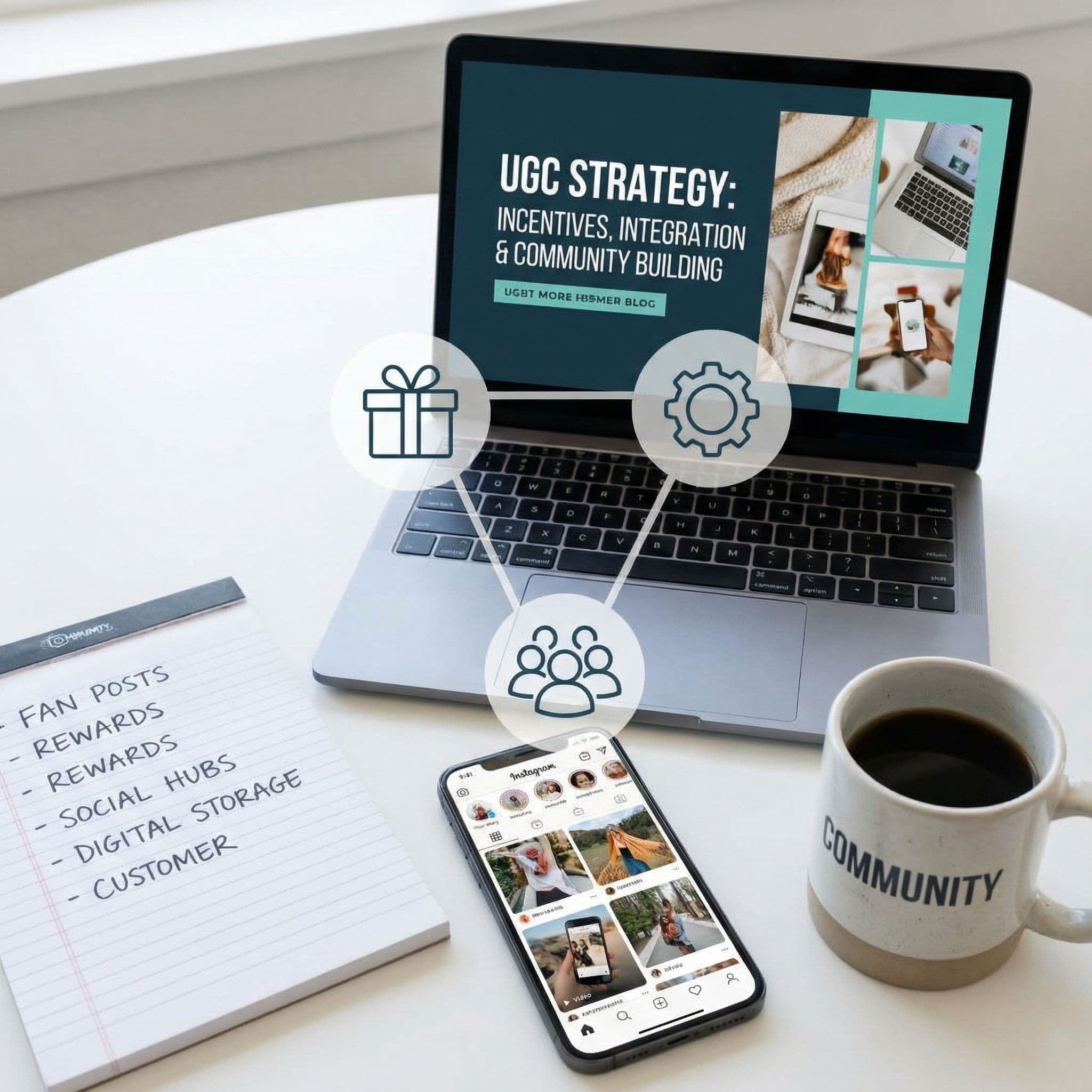
5. Best Practices for Incentivizing Participation Through Contests, Hashtags, and Community Programs
Let's be real: some people will create content about your brand just because they love it. But most people need a little motivation. The key is creating incentive structures that feel fair, exciting, and aligned with what your community actually values.
Contests and giveaways (done right): Contests are a classic UGC driver, but they work best when they're designed well. Instead of "submit your photo and maybe win a prize," try contests with clear themes, specific submission guidelines, and meaningful prizes. "Show us your most creative way to use our product" works better than generic photo contests because it encourages creativity and gives people direction.
Pro tip: Don't just award the biggest prize to one winner. Create multiple tiers: grand prize, runner-up prizes, and recognition prizes for everyone who participates. This increases participation because people feel like they have a real chance of being recognized.
Hashtag campaigns with momentum: A branded hashtag alone isn't enough—you need to build momentum around it. Launch hashtag campaigns in conjunction with product launches, seasonal events, or community milestones. Actively promote the hashtag across your channels, engage with every post that uses it, and showcase the best submissions regularly. When people see their content being featured and the hashtag gaining traction, they're more likely to participate.
Community recognition programs: Some of the most effective incentives aren't monetary at all. Create a "Customer Creator" program where the most active contributors get special recognition, exclusive perks, or early access to new products. Feature them in a monthly newsletter or on a dedicated "Community Heroes" page on your website. Give them exclusive badges or status indicators on your community platform.
Tiered participation rewards: Create a system where participation itself is rewarded, not just winning. For example: submit one photo, get 10 loyalty points. Share your content, get 5 more points. Reach 100 points and unlock something special. This gamification approach keeps people engaged over time.
Micro-incentives and surprise rewards: You don't always need to announce what people will win. Surprise your most engaged community members with unexpected rewards—a free product, a shout-out, exclusive discount codes. These unpredictable rewards create positive associations with participation.
Make participation frictionless: Whatever incentive structure you create, make actually participating as easy as possible. If you're running a contest, make submission a single click. If you want people to use your hashtag, make it memorable and easy to spell. If you're asking for specific content, provide templates or examples. The harder it is to participate, the fewer people will.
Align incentives with your business goals: If you're trying to build email list, offer incentives that require email signup. If you want video content, weight your prizes toward video submissions. If you want detailed reviews, make that your contest focus. Your incentive structure should drive the specific type of content that's most valuable to your business.
6. Measuring ROI and Engagement Metrics From UGC Campaigns
You can't improve what you don't measure. One of the biggest mistakes businesses make with UGC is treating it as a nice-to-have rather than a strategic investment worthy of measurement. In reality, tracking UGC performance is critical to understanding what's working and optimizing your strategy.
Engagement metrics to track: Start with the basics. How many posts are using your branded hashtag? What's the engagement rate (likes, comments, shares) on customer content versus branded content? How many pieces of UGC are you collecting per month? Are these numbers increasing over time? Most social platforms and UGC tools provide these metrics automatically.
Reach and impressions: UGC typically reaches further than branded content because it gets shared within personal networks. Track how many people are seeing customer-created content. If a customer posts about your brand and their followers see it, that's reach you didn't have to pay for.
Conversion and sales impact: This is where UGC really proves its value. Use UTM parameters and unique promo codes to track which pieces of UGC drive actual sales. For example, if you feature a customer's photo on your website with a unique code, you can see exactly how much revenue that content drove. Many e-commerce platforms make this easy through their built-in analytics.
Traffic and click-through rates: If you're embedding UGC on your website or linking to it from email campaigns, track how much traffic it drives. Does a product page with customer photos perform better than one without? (Spoiler: it does.) Measure the difference.
Customer acquisition cost (CAC): Compare your CAC for customers acquired through UGC campaigns versus traditional advertising. Most businesses find that UGC-driven customers cost significantly less to acquire and have higher lifetime value because they're coming through peer recommendations.
Sentiment analysis: Beyond just numbers, track the sentiment of UGC. Are people posting positive, neutral, or negative content about your brand? Sentiment analysis tools can help with this at scale. A spike in positive sentiment is a leading indicator that your brand is resonating.
Community growth: Track growth in your branded hashtag followers, email list signups from UGC campaigns, and overall community size. A healthy UGC strategy should grow your community over time as people join to be part of something.
Content reusability: Track how many pieces of UGC you're able to repurpose across multiple channels. If you collect 100 customer photos but only use 10 across your marketing, you're leaving value on the table. A good UGC strategy should have high reusability rates.
Cost savings: Calculate how much you're saving by using customer content instead of hiring photographers or production teams. If you're getting 20 pieces of usable content per month through UGC campaigns, and professional content creation costs $500-2000 per piece, you're looking at significant savings.
Building a measurement dashboard: Don't just track metrics in isolation. Create a simple dashboard (Google Sheets, Data Studio, or your analytics platform) that shows your key UGC metrics month-over-month. Are your engagement rates improving? Is your hashtag gaining momentum? Is UGC-driven revenue increasing? These trends matter more than individual numbers.
7. Case Studies of Successful UGC Campaigns Across Different Industries
Theory is useful, but examples are inspiring. Let's look at how real brands across different industries have built successful UGC strategies and what we can learn from them.
Case Study 1: Fashion & Retail (Outdoor Apparel Brand)
A mid-sized outdoor apparel company launched a "#AdventureWithUs" campaign encouraging customers to share photos of themselves wearing the brand's gear in natural settings. Rather than running a traditional contest, they created a simple Instagram feed on their website showcasing the best submissions. They featured customer photos in their email newsletter weekly and occasionally used customer photos in their paid social ads (with permission and compensation).
The results: UGC submissions increased 300% in the first three months. Engagement on posts featuring customer content was 7x higher than branded content. Most importantly, products featured in customer photos saw a 23% increase in conversion rate compared to products shown only in professional photos. The brand was able to reduce their photography budget by 40% while actually improving content quality and authenticity.
Case Study 2: Food & Beverage (Coffee Company)
A specialty coffee company noticed customers were posting beautiful flat-lay photos of their products on Instagram. Instead of ignoring this, they created a monthly #CoffeeMomentChallenge with simple rules: show us your coffee moment, tag the brand, and use the hashtag. The grand prize was $100 in free coffee. Runners-up got featured in their newsletter.
What made this successful: they engaged with every submission within 24 hours, always replied to comments, and created a genuine community feeling. Within six months, they had thousands of submissions and their hashtag was organically trending in their local market. The customer photos they collected became their primary content source for social media, reducing their content creation time by 50% while increasing engagement by 400%. They also noticed that customers who participated in the challenge had 3x higher repeat purchase rates.
Case Study 3: Technology & SaaS (Project Management Tool)
A B2B SaaS company knew their product was being used in creative ways by customers, but they weren't capturing these stories. They created a simple "Customer Stories" program where users could submit how they use the tool. They offered incentives: featured case study, $500 credit toward annual subscription, and promotion across all marketing channels.
The impact: they collected 30+ detailed customer stories in the first year. These stories became their most effective sales tool because prospects could see exactly how real companies used the product. Conversion rates for prospects who read customer stories were 34% higher than average. The stories also provided invaluable product insights that informed their development roadmap.
Case Study 4: Beauty & Cosmetics (Indie Beauty Brand)
A small indie beauty brand with limited marketing budget couldn't afford professional product photography. They created a "Tag us for a feature" strategy where they actively searched for customers posting their products and asked permission to repost. They featured customer photos daily on their main feed, always crediting the original creator.
The strategy worked because: 1) customers felt recognized and valued, 2) the brand's feed became authentic and relatable, and 3) featured customers became brand ambassadors who kept creating content. Within a year, they had grown their Instagram from 5K to 150K followers, almost entirely through organic growth powered by UGC. Customer acquisition cost dropped 60% because word-of-mouth became their primary driver.
Common threads across all these cases: Successful UGC campaigns share several characteristics: clear participation mechanisms, consistent recognition and engagement, alignment between incentives and business goals, and genuine appreciation for community contributions. The companies that won weren't necessarily the ones with the biggest budgets—they were the ones that treated their customers like partners rather than content sources.
8. Integration of UGC Into Marketing Channels: Social Media, Websites, Email, and Advertising
Collecting UGC is just the beginning. The real magic happens when you strategically distribute and integrate that content across all your marketing channels. A piece of customer content can work 5-10 times harder if you're smart about where and how you use it.
Social media integration: This is where UGC lives most naturally. Create a consistent posting schedule that blends branded content with customer content. Many successful brands do a 70/30 split (70% customer content, 30% branded). Repost customer content using native sharing tools when possible. Create dedicated Instagram Stories highlights or TikTok playlists showcasing customer content. On LinkedIn, share customer success stories and testimonials. The key is consistency—make UGC a regular, expected part of your social presence.
Website integration: Embed customer photos on your homepage, product pages, and checkout pages. Shopify stores with customer photos on product pages see 27% higher conversion rates on average. Create a dedicated "Customer Gallery" or "Community" page that showcases your best UGC. Include customer testimonials and reviews prominently. Many e-commerce platforms have built-in apps for this, or you can use third-party tools like Trustpilot or Yotpo.
Email marketing: Feature customer photos and testimonials in your email campaigns. A welcome email with a customer success story performs better than one without. Include customer reviews in product recommendation emails. Create monthly "Community Spotlight" emails that feature customer content and stories. Use customer testimonials in your promotional emails—they're more persuasive than copy you write about yourself.
Paid advertising: This is where UGC gets really interesting. Social media platforms allow you to use customer content in ads (with proper permission and compensation). Facebook and Instagram ads featuring customer content typically have lower cost-per-click and higher conversion rates than branded ads. TikTok's organic-style ads often feature customer-created content. Google Shopping ads can include customer reviews. The authenticity of UGC in ads resonates with audiences who are increasingly skeptical of traditional advertising.
Landing pages and sales pages: If you're running campaigns or promotions, include customer testimonials and photos prominently. A landing page with customer reviews and success stories outperforms one without. Consider using customer videos as explainer content—real customers explaining why they love your product is more persuasive than a corporate video.
Partnerships and influencer collaborations: Share customer content with micro-influencers or partners in your space. Many creators love featuring customer stories because it shows authentic community engagement. This extends the reach of your UGC beyond your owned channels.
Offline integration: Don't forget about non-digital channels. Print customer photos in your physical stores, on packaging, or in print advertising. QR codes linking to customer content videos or galleries bridge offline and online experiences. Restaurants often display customer photos on their walls—this same principle applies to any retail or service business.
Content repurposing strategy: One piece of UGC should work across multiple channels. A customer video can be: posted on TikTok as-is, repurposed for Instagram Reels, turned into a testimonial for your website, featured in an email, used in a paid ad, and shared in a blog post. Think about how to extract maximum value from each piece of content.
Seasonal and campaign-based integration: Organize your UGC by campaign or season. During holiday campaigns, feature holiday-themed customer content. For product launches, use customer content that demonstrates the new product. This keeps your UGC fresh and relevant rather than feeling like a static library.
9. Building Community and Fostering Brand Loyalty Through Content Recognition and Amplification
The highest-performing UGC strategies aren't primarily about getting free content—they're about building genuine community and deepening customer loyalty. When customers feel seen, valued, and recognized, they don't just create content once; they become ongoing advocates.
Recognition as core incentive: Public recognition is often more valuable than monetary rewards. When you feature a customer's photo on your main Instagram feed, tag them, and write a thoughtful caption about why you love their content, that's meaningful. That person will tell their friends. They'll keep creating because they know their work will be seen and appreciated. Create multiple recognition tiers: daily features, weekly highlights, monthly spotlights, and annual awards.
Build a creator community, not just a customer base: Separate your most active content creators from your general customer base. Create exclusive communities (Discord servers, private Facebook groups, Slack channels) where your top creators can connect with each other and with your brand. Give them early access to products, ask for their input on new offerings, and make them feel like insiders. These people become your brand's most powerful advocates.
Tell stories about your community members: Go beyond just reposting photos. Write blog posts about interesting customers. Create video interviews. Feature customer stories in your newsletter. When you tell the human story behind the content—who this person is, why they love your brand, what their journey has been—you're building emotional connections that go far beyond transactions.
Create progression and achievement systems: Give community members clear paths to progression. Maybe they start as "Community Members," become "Featured Creators" after their first feature, "Brand Ambassadors" after consistent engagement, and "Community Leaders" if they help moderate and support other members. Visible badges or status indicators make this progression clear and motivate continued participation.
Amplify customer voices in decision-making: Ask your community for input on new products, marketing campaigns, or brand decisions. When customers feel like their opinions actually matter and influence your business, they're invested in your success. This isn't just good for loyalty—it's good for business because your community provides invaluable market feedback.
Celebrate milestones together: When your hashtag hits 10,000 posts, celebrate it with your community. When a customer creator hits their own milestone (100 posts, 1,000 followers), celebrate them. These moments create shared identity and community pride.
Respond authentically to community content: Generic likes and comments don't build loyalty. Respond with genuine, thoughtful engagement. Ask follow-up questions. Show that a real human at your brand cares about this person and their content. This human connection is what transforms casual customers into loyal advocates.
Create offline community experiences: If possible, bring your online community into real-world experiences. Host customer meetups, workshops, or exclusive events. Let your top creators meet each other and your team. These experiences deepen loyalty in ways that purely digital engagement cannot.
Document and share community growth: Regularly share metrics about your community's growth with the community itself. "Thanks to all of you, we've hit 50,000 #BrandHashtag posts!" Transparency and celebration of shared success builds pride in the community.
Long-term relationship building: Think of your community as a long-term relationship, not a transaction. Some of your most valuable community members might not be your biggest spenders. They might be people who've been with you for years, consistently creating content, supporting other community members, and spreading word-of-mouth. Nurture these relationships intentionally.
User-generated content isn't a marketing tactic—it's a fundamental shift in how you relate to your customers and build your brand. When you move from broadcasting at your audience to amplifying their voices, everything changes. You get more authentic content, stronger community loyalty, lower content costs, and better business results. The brands winning in 2026 aren't the ones with the biggest advertising budgets; they're the ones who've figured out how to turn their customers into storytellers.
The good news is that you don't need to be a massive enterprise to make this work. The frameworks, tools, and strategies in this guide work for businesses of any size. Start small—pick one strategy (maybe a branded hashtag or a simple contest), implement it well, measure the results, and build from there. As your UGC volume grows, your tools and processes will scale with you.
The real competitive advantage in content marketing today isn't production quality—it's authenticity and community. When you master UGC, you're not just solving the content creation challenge; you're building something deeper: a community of people who believe in your brand enough to advocate for it. That's the foundation of sustainable growth, and it all starts with recognizing and amplifying the voices of the people who matter most—your customers.
If you want a low-lift way to apply these ideas, Aidelly helps you keep your social content consistent without extra busywork. While building a thriving UGC strategy takes intentional effort, managing all that customer content across multiple platforms—organizing it, scheduling posts, and keeping your brand voice consistent—can quickly become overwhelming without the right tools in your corner. Aidelly makes this part seamless by letting you create and schedule engaging content effortlessly while maintaining a cohesive brand voice across all your social channels, so you can focus on what matters most: nurturing the community you've built. Ready to turn your customers into your most powerful marketing asset? Get started at aidelly.aiCompare Social Scheduling Tools
Evaluating software for your content workflow? Use our buyer guides and comparisons to compare scheduling, approvals, analytics, and AI workflow fit.
Share this article
Related Articles
Hashtags Explained: A Beginner's Guide to Using #Hashtags to Grow Your Reach in 2026
Hashtags have become the backbone of social media discovery, yet many small business owners and content creators still treat them as an afterthought. This comprehensive guide demystifies hashtag strategy by breaking down how they work across different platforms, revealing the algorithms behind them, and providing you with a step-by-step framework to leverage hashtags for sustainable organic growth. Whether you're looking to boost brand awareness, drive engagement, or generate leads, you'll discover platform-specific tactics, common pitfalls to avoid, and proven methods to measure your hashtag ROI—all without spending a dime on paid advertising.
Jan 29, 2026
Read more
How to Create Engaging Social Media Content in 2026: A Beginner's Guide Without the Fluff
Feeling overwhelmed by social media content creation? You're not alone. This comprehensive beginner's guide breaks down the psychology behind engaging posts, practical strategies for visual content, and actionable tactics to grow your following—even if you don't consider yourself creative. Learn how to understand your audience, craft compelling captions, post at the right times, and analyze what actually works so you can stop guessing and start growing with confidence.
Jan 29, 2026
Read more
Top 10 Free Social Media Marketing Tools for Beginners in 2026: Build Your Complete Marketing Stack Without Spending a Dime
Starting a social media marketing strategy doesn't require a hefty budget. In 2026, dozens of powerful free tools exist to help solopreneurs, freelancers, and small business owners manage their online presence professionally. This comprehensive guide breaks down the top 10 free social media marketing tools, explains how to combine them into a complete system, and shows you exactly how much time and money you'll save. Whether you're focusing on Instagram, LinkedIn, or managing multiple platforms simultaneously, you'll discover the perfect toolkit tailored to your specific business goals.
Jan 28, 2026
Read moreReady to never miss a post again?
Tell Aidelly what to post. It drafts, schedules, and publishes across 9 platforms while you focus on your business.