15 Engaging Facebook Post Ideas for Small Businesses in 2026 (Beginner-Friendly Guide)
Let's be honest: Facebook can feel overwhelming when you're running a small business. You've got a thousand things on your plate, and social media often feels like one more task you're not doing quite right. You see other businesses posting engaging content that gets hundreds of comments while yours get crickets. Or maybe you're not even sure what to post in the first place.
Here's what I want you to know right now: you don't need to be a social media expert to build a thriving Facebook presence. You don't need fancy editing software, viral video skills, or hours of free time. What you need are proven post ideas that work for small businesses—the kind of content that builds real relationships with your customers and actually drives sales.
The posts we're covering today have been tested by thousands of small business owners across industries. Whether you run a local service business, sell products online, or offer professional services, these 15 ideas will give you a month's worth of content you can implement immediately. Better yet, each one comes with a clear reason why it works and how it connects to your bottom line.
Building Trust and Connection: Posts That Make Your Business Feel Real
The most successful small businesses on Facebook share one thing in common: they feel authentic. Customers aren't looking for polished, corporate perfection anymore. They're looking for real people, real stories, and real results. This first section covers four post types that build genuine connection with your audience—the kind of trust that turns followers into loyal customers who actually buy from you and recommend you to others.
When people follow a small business on Facebook, they're not just interested in your products or services. They want to know who you are, what your business stands for, and whether they can trust you. These posts deliver exactly that, creating an emotional connection that generic sales pitches simply can't match.
1. Behind-the-Scenes Content: Show Them How the Magic Happens
Behind-the-scenes content is one of the most underutilized tools in small business Facebook marketing, and it's honestly a shame because it works so well. When you give your audience a peek into how you actually operate—the messy workspace, the process of creating your product, the team working late to fulfill orders—something magical happens. People start to see you as human.
Think about what happens behind your doors that your customers never see. Are you carefully sourcing materials? Hand-packing orders? Testing products before they go out? Having a team meeting where everyone gets passionate about solving customer problems? That's gold. That's the content that builds trust because it shows you care about quality and your customers.
Practical template: "Day in the life" posts work incredibly well. Post a series of photos or a short video showing your morning routine, how you prepare for the day, what's happening in your workspace right now. Add a caption like: "Most people don't see what happens before our products reach you. Here's a peek at Tuesday morning in our [workshop/studio/office]. We're currently [specific task], making sure every detail is perfect." Then ask a question: "What would you like to see behind the scenes next?"
The psychology here is simple: transparency builds trust. When customers see the effort, care, and attention you put into your work, they understand why they're paying what they're paying. They become invested in your success because they've seen the real work involved. This type of content also humanizes your brand in a way that product photos never can, creating emotional connections that lead to repeat purchases and word-of-mouth referrals.
2. User-Generated Content and Customer Testimonials: Let Your Customers Do the Selling
Here's a truth that took me years to fully appreciate: your customers' opinions matter way more than anything you could say about yourself. When someone sees a glowing review from a real person who used your product or service, they're far more likely to trust you than if you claimed to be amazing on your own.
User-generated content is any content created by your customers—photos of them using your product, videos of them enjoying your service, written reviews, or testimonials about their experience. When you share this content on your Facebook page, you're essentially getting free advertising from your most credible source: satisfied customers.
Practical template: Create a simple system to collect testimonials. After someone buys from you or completes a service, send them a message asking if they'd be willing to share their experience. Make it super easy: "Would you mind sharing a quick photo and a sentence or two about your experience with us? We'd love to feature you on our page!" When they send it, post it with their name and permission, adding context like: "We love hearing from our customers! [Customer name] recently [what they did/bought] and wanted to share their experience. [Their testimonial or quote]" Tag them if possible so they get notified and their friends see the post.
The conversion impact of testimonials is significant. Studies show that customer reviews are the second most trusted source of information after personal recommendations. When you share real customer experiences, you're essentially getting personal recommendations at scale. This particular post type also encourages your other customers to engage because they see themselves represented—they recognize that real people like them are getting real value from your business.
3. Team Spotlights and Company Culture: Show the People Behind Your Business
Your team members are your business's greatest asset, and yet most small business owners barely mention them on social media. This is a missed opportunity to build deeper connections with your audience. People do business with people they like, and when they see the friendly faces behind your business, they develop affinity for your brand.
Team spotlight posts are simple but powerful. Pick one team member each week or month, and dedicate a post to them. Share their story, their role, what they're passionate about, maybe a fun fact or hobby. This does several things at once: it makes your team members feel valued (which improves their engagement with your brand's social media), it shows your customers that real people are serving them, and it gives your audience more reasons to connect with your business emotionally.
Practical template: "Meet the team" posts should feel personal, not corporate. Try this format: "Meet [Team member name]! [He/She/They] has been with us for [time period] and handles [their role]. When [team member] isn't [something work-related], you can find [him/her/them] [personal hobby/interest]. One thing our customers love about working with [team member]: [specific quality or story]. A fun fact: [interesting personal detail]." Then ask your audience to engage: "Drop a 👋 to welcome [name] or ask them a question in the comments!"
This post type humanizes your brand in a way that nothing else can. Customers start to recognize names and faces, which makes your business feel like a group of friends rather than a faceless corporation. This emotional connection translates directly to customer loyalty. People are much more likely to stick with a business when they feel connected to the people running it, and they're more likely to forgive occasional mistakes because they know there are real humans doing their best on the other side.
Driving Engagement and Demonstrating Value: Posts That Get People Talking and Buying
Now that we've covered the relationship-building posts, let's shift to content that drives measurable business results. The posts in this section are specifically designed to increase engagement (which helps Facebook show your content to more people) and to demonstrate the value you provide to your customers. These are the posts that turn casual followers into paying customers.
Engagement on Facebook matters because of how the algorithm works. When people comment on your posts, Facebook shows your content to more of their friends. When people share your posts, the reach multiplies exponentially. So posts designed to get interaction aren't just vanity metrics—they're strategic tools that expand your audience and strengthen your relationship with existing followers.
4. Educational and How-To Posts: Position Yourself as the Expert
One of the most powerful things you can do on Facebook is establish yourself as an expert in your field. When your audience sees you regularly sharing valuable knowledge, they start to view you as the go-to resource in your industry. This positions you for success because when they need what you offer, you're the first person they think of.
Educational content works because it provides value without asking for anything in return. You're teaching people something useful, which builds goodwill and establishes authority. This type of content also tends to get shared more because people want to pass valuable information along to their friends and networks.
Practical template: "How-to" posts work best when they're specific and actionable. Pick a common problem your customers face and walk them through the solution. Format: "How to [solve specific problem] in [number] steps: [Step 1 - explanation], [Step 2 - explanation], [Step 3 - explanation]. [Optional: explain why this matters or what results they can expect]. Have questions? Drop them in the comments!" You can also do this as a carousel post with each step as a separate image, or as a short video walking through the process.
The beauty of educational content is that it serves multiple purposes simultaneously. First, it builds trust because you're demonstrating real expertise. Second, it reduces future customer support inquiries because you're preemptively answering common questions. Third, it attracts new customers who find your content through search or shares and realize you're knowledgeable about their problem. Finally, it positions you as generous and helpful rather than just sales-focused, which makes people more likely to engage with your actual sales posts when they come.
5. Interactive Content: Polls, Quizzes, and Questions That Boost Comments
Facebook's algorithm has a clear preference for interactive content. When your post gets comments, the platform shows it to more people because engagement is the metric Facebook uses to determine what content is valuable. This means posts designed to get interaction aren't just good for building community—they're good for your reach too.
Interactive content comes in many forms: polls asking people to choose between options, quizzes that reveal something about the person taking them, questions that invite opinions or experiences, or simple engagement prompts like "This or That." The key is making it easy and fun for people to participate.
Practical template: Use Facebook's native poll feature (available in the post creation menu) to ask simple questions related to your business or industry. Examples: "Quick poll! When you're shopping for [product type], what matters most to you? A) Price, B) Quality, C) Customer service, D) Speed of delivery." Or use the question format: "We're trying to decide which [product/service option] to feature next. Which one would YOU want to see? Comment below!" You can also try: "This or That" comparisons, "Finish the sentence" prompts, or "What's your take" questions about industry trends.
Interactive posts typically see 2-3x higher engagement than standard posts because they lower the barrier to participation. Instead of just scrolling past, people stop and actually respond. This creates a visible conversation on your post, which signals to Facebook's algorithm that your content is valuable and worth showing to more people. Beyond the algorithm benefit, interactive posts also give you valuable insights into what your customers care about, what they want, and how they think—information you can use to improve your products and services.
6. Product Showcases and Before-After Transformations: Show Tangible Results
There's something incredibly persuasive about a before-and-after image. It cuts through all the marketing noise and shows in visual form exactly what your product or service can do. Whether you're a personal trainer showing a client's transformation, a cleaning service showing a before-and-after of a space, or a product company showing what your item can do, before-and-after content is engagement gold.
These posts work because they answer the most important question your potential customers have: "What will this actually do for me?" They provide proof in a format that's hard to argue with. They also tend to generate high engagement because people are naturally drawn to transformation stories.
Practical template: Create a side-by-side or before-and-after image (you can use simple tools like Canva for this). Caption it with: "See the transformation! [Client/Customer name] came to us with [specific problem/situation]. Here's what happened when [they used your product/received your service]. [Optional: include a quote from the customer about their experience]. Ready for your own transformation? [Call to action]" Make sure you have permission to use the customer's image and story.
The power of before-and-after posts lies in their ability to communicate value instantly. Someone scrolling through their feed can see in one image what your business actually does and what results are possible. This is especially powerful for service-based businesses where the customer is buying a result rather than a physical product. A personal trainer shows fitness transformation, a therapist shows emotional transformation, a designer shows design transformation. The format works across industries because it shows concrete, visible results. This type of post also generates emotional engagement because transformation stories are inherently compelling to humans—we're drawn to stories of change and improvement.
7. Seasonal Promotions and Limited-Time Offers: Create Urgency and Drive Sales
Seasonal promotions and limited-time offers serve a specific purpose on your Facebook strategy: they drive immediate action. While relationship-building posts create long-term customer loyalty, promotional posts create short-term revenue. Both are essential to a balanced Facebook strategy.
The key to making promotional posts work is creating genuine urgency. When people know an offer is truly limited, they're more likely to act now rather than putting it off. This is why "limited-time offer" posts tend to have higher conversion rates than evergreen offers.
Practical template: "🎉 Limited-time offer! We're running a special [holiday/seasonal/anniversary] promotion: [offer details]. This deal is only available until [specific date/time]. Here's what you get: [list benefits]. [Link to take action or instructions on how to claim offer]. Don't miss out—share this with someone who needs it!" You can also create urgency with quantity: "We only have [number] spots available for [service/product], and we're down to [remaining number]. Book yours today before they're gone." Make the deadline and terms crystal clear.
Promotional posts have a direct impact on your revenue, which is why they're important even though they're not the most exciting type of content. The key is balancing them with value-driven and relationship-building posts so your feed doesn't feel like one long sales pitch. A good rule of thumb: for every promotional post, share at least two posts that provide value without asking for a sale. This ratio keeps your audience engaged and receptive to your offers when they do come around.
Building Community and Expanding Reach: Posts That Connect, Entertain, and Grow
The final section covers post types that build community, expand your reach beyond your current followers, and keep your content calendar fresh without requiring you to reinvent the wheel every single day. These posts are the connective tissue that holds your Facebook strategy together—they keep your audience entertained and engaged between your educational and promotional posts.
Community-building posts and reach-expansion posts work together to create a virtuous cycle. As your reach expands and more people discover your content, your community grows. As your community grows and becomes more engaged, Facebook's algorithm favors your posts even more, which expands your reach further. These posts are the tools that keep that cycle spinning.
8. Live Video Content and Real-Time Updates: Create FOMO and Immediate Interaction
Live video is one of the most powerful tools available on Facebook, and it remains criminally underutilized by small business owners. Facebook's algorithm heavily favors live video because it drives real-time engagement and keeps people on the platform longer. When you go live, Facebook notifies your followers and shows your live stream higher in the feed than regular posts.
Live video doesn't require production quality. In fact, the grainier, more authentic live streams often perform better than overly polished ones because they feel real and immediate. You can go live to answer questions, demonstrate your product, show what's happening at your business right now, host a Q&A, or just chat with your community.
Practical template: Plan a weekly or bi-weekly live stream and announce it in advance. "Join us live tomorrow at [time] for [topic/activity]. We'll be [specific description of what you'll do], and you can ask questions in real-time." When you go live, greet people as they join, explain what you're doing, and encourage them to comment with questions or reactions. After the live stream ends, the video stays on your page as regular content that people can watch later.
The impact of live video on engagement is substantial. Live streams typically get 10x more engagement than regular video posts because of the real-time interaction and FOMO factor. People see that something is happening right now and feel compelled to jump in. This creates a sense of community and immediacy that strengthens customer relationships. Live video is also an opportunity to be spontaneous and authentic in a way that highly-produced content can't match, which builds trust and connection with your audience.
9. Local Community Engagement and Event Promotion: Strengthen Neighborhood Relationships
If you're a local business, your Facebook page should be a hub for local community engagement. This means promoting local events, partnering with other local businesses, supporting local causes, and generally positioning your business as a valuable part of your community rather than just a place to buy something.
Local engagement posts serve multiple purposes. They build goodwill in your community, they create opportunities for word-of-mouth marketing, they strengthen relationships with other local business owners (who might refer customers to you), and they give your followers reasons to stay connected to your page beyond your products and services.
Practical template: "We're excited to be [participating in/sponsoring/supporting] [local event/cause] on [date]. If you're in the [area] area, come by and say hi! We'll be [specific activity], and there will be [other details about the event]. Hope to see you there! 🎉" You can also post: "Shout-out to our neighbors at [other local business]! We love being part of a community with such amazing businesses. If you haven't checked them out yet, you should! [Link/address]." Or: "We're hosting [local event/gathering] at our location. All are welcome! Details: [when/what to bring/etc]."
Local engagement posts build community loyalty in a way that nothing else can. When customers see that you care about your community beyond just making sales, they feel more connected to you as a business. They're more likely to choose you over a non-local competitor because they see you as part of their community, not just a business extracting money from it. These posts also create foot traffic and in-person interactions, which deepen customer relationships and create more organic word-of-mouth marketing than any online post could.
10. Motivational Quotes and Industry Tips: Provide Value Beyond Sales
Not every post you share needs to be directly about your business. In fact, some of your most engaging posts might be motivational quotes, industry tips, or insights that your audience finds valuable regardless of whether they buy from you. These posts build a loyal following because they show you care about your audience's success beyond just making a sale.
This type of content works because it positions you as a generous, knowledgeable resource. People follow businesses that make them feel good, that educate them, or that inspire them. When you share content that does any of these things, people want to stay connected to you.
Practical template: Share relevant quotes that resonate with your industry or customer base, but add your own commentary. "This quote really resonates with us: '[Quote]' Here's why: [explanation of why this matters in your industry]. What's a piece of advice that's changed your perspective? Drop it in the comments!" For industry tips: "Quick tip: [specific, actionable advice relevant to your industry/customer pain point]. [Brief explanation of why this matters]. Have you tried this? Let us know in the comments how it worked for you!" You can also share insights about trends in your industry: "We're seeing [trend] in [industry], and here's what it means for [relevant audience]: [explanation and actionable insight]."
Motivational and educational posts that don't directly sell anything build trust and loyalty in a unique way. They show that you're genuinely interested in your audience's success and wellbeing, not just their wallet. This shifts the relationship from transactional to relational. People are far more likely to buy from businesses they like and trust, and posts that provide value without asking for anything in return build that trust significantly. These posts also tend to be highly shareable, which expands your reach as people share your wisdom with their networks.
11. FAQ and Problem-Solving Posts: Address Pain Points and Reduce Support Inquiries
Every business gets the same questions over and over. Instead of answering these questions individually in messages and comments, create posts that address your most frequently asked questions. This accomplishes multiple things simultaneously: it provides value to your audience, it answers questions for people who haven't asked them yet, and it dramatically reduces the number of repetitive questions you have to answer.
FAQ posts are essentially preventative customer service. By answering common questions proactively, you reduce friction in the customer journey and make it easier for people to do business with you. You're also providing content that ranks well for search and answers questions your potential customers are actively looking for.
Practical template: "We get this question a lot, and we wanted to answer it here so everyone can benefit! [Question]: [Detailed answer with any relevant details, examples, or steps]. If you have follow-up questions, drop them in the comments!" You can also create a carousel post with multiple FAQs, one per slide. Format: "Slide 1: [Question 1], Slide 2: [Answer 1], Slide 3: [Question 2], Slide 4: [Answer 2]," etc. This format works well for visual learners and keeps your answer concise.
FAQ posts reduce support burden while improving customer satisfaction. When someone can quickly find the answer to their question on your Facebook page, they feel respected and valued. They also form a searchable library of information about your business that potential customers can browse. This type of content also has staying power—while other posts quickly disappear from the feed, FAQ posts get found and referenced repeatedly as people search for answers to the same questions. Additionally, answering common objections preemptively removes barriers to purchase. If someone's wondering whether you offer a certain service or how your pricing works, and they find the answer on your page, they're more likely to move forward with a purchase than if they have to send you a message and wait for a response.
12. Contests and Giveaways: Expand Reach Through Sharing and Tagging
Contests and giveaways are powerful reach-expansion tools because they incentivize people to share your content and tag their friends. When someone tags their friends in your post, all those friends see your content, which dramatically expands your reach. This is why Facebook contests have built such a strong reputation for growing followings quickly.
The key to a successful contest is making participation easy and the prize desirable to your target customer. You want people to actually want to participate, not just spam tag random people to have a chance to win something they don't care about.
Practical template: "We're giving away [prize/description of what you're giving away]! Here's how to enter: 1) Like this post, 2) Follow our page, 3) Tag [number] friends who would love [prize/product]. The winner will be selected on [date] and announced here. Good luck! 🍀" You can also do: "We're celebrating [occasion] with a giveaway! To enter: [simple action—like comment with answer to a question, like and share, tag friends, etc.]. One random winner will be selected. [Prize details]." Make sure you're familiar with Facebook's current contest rules, as they update periodically.
The reach expansion from contests is significant, especially compared to other post types. A well-executed contest can introduce your business to hundreds or thousands of new people, many of whom will follow your page after the contest ends. Beyond reach, contests also build email lists if you ask for email addresses as part of the entry process, and they create excitement and positive associations with your brand. The key is making sure the people who enter are actually in your target market—a giveaway that attracts random people who will never buy from you isn't as valuable as one that attracts your ideal customers.
13. Storytelling About Business Origin and Milestones: Create Narrative Engagement
People are naturally drawn to stories. They remember stories far better than they remember facts or statistics. When you tell the story of how your business started, the challenges you overcame, or the milestones you've reached, you create emotional engagement that purely informational posts simply can't match.
Origin stories and milestone posts work because they humanize your business and create a narrative arc that people can follow and relate to. They also give your audience reasons to celebrate with you and feel invested in your ongoing success. When someone knows your story and feels connected to your journey, they become more than just a customer—they become a supporter.
Practical template: "We wanted to share the story of how [business name] got started. [Founder name] was [situation/problem/inspiration], and that's what led to creating [business]. The early days were [honest description—could be exciting, scary, challenging]. We've learned so much along the way, and we're grateful for customers like you who've been part of this journey. What's your story? How did we meet? Drop it in the comments!" For milestones: "We just hit [milestone]! [Number] customers served / [revenue milestone] / [time in business] / [product sold], and we couldn't have done it without you. Thank you for believing in us and supporting our mission. Here's to the next [milestone]! 🎉"
Storytelling creates emotional connections that drive long-term loyalty. When customers know your story and feel part of your journey, they're more likely to stick with you through ups and downs, more likely to forgive occasional mistakes, and more likely to recommend you to others. Stories also stand out in people's feeds because they're more interesting than straightforward promotional content. They break up your feed with narrative variety, which keeps your audience engaged and coming back for more. Additionally, milestone posts create natural engagement as your community celebrates your wins with you, which strengthens the community feeling around your business.
14. Trending Audio and Format Adaptation: Keep Content Fresh Without Constant Original Creation
One of the biggest barriers to consistent Facebook posting for small business owners is the assumption that every post needs to be completely original and require significant effort to create. The truth is that you can leverage trending formats and audio to create engaging content quickly without constantly reinventing the wheel.
Facebook's trending audio and format features let you quickly create videos that feel current and engaging without needing production skills or equipment. You can use trending sounds, adapt popular video formats, or participate in trending challenges relevant to your industry. This keeps your content feeling fresh and current without requiring hours of creation time.
Practical template: When you see a trending audio or format on Facebook, adapt it to your business. For example, if there's a trending sound about "things that make you feel [emotion]," create a video showing "things that make our customers feel [emotion] about [your product/service]." If there's a trending video format like "POV: You're [situation]," adapt it: "POV: You're looking for [what you offer] and you found us." Use the trending audio or format as the base, but make it relevant to your business. The algorithm favors content that uses trending audio and formats, so this type of content often performs better than original audio with no trend attached.
Trending content serves a specific purpose in your strategy: it keeps your page feeling current and relevant while dramatically reducing the time and effort required to create engaging posts. Instead of brainstorming completely original ideas, you're taking proven formats and making them relevant to your business. This is efficient content creation at its best. The algorithmic benefit is also significant—Facebook promotes content that uses trending sounds and formats because it keeps users on the platform longer and encourages them to create similar content. Beyond efficiency and algorithm benefits, trending content also makes your business feel current and in-tune with what's happening culturally, which appeals to younger demographics and makes your brand feel fresh rather than stale.
15. Call-to-Action Optimization: Use Specific Language to Increase Clicks and Conversions
The final piece of the puzzle that many small business owners overlook is call-to-action optimization. Your call-to-action—the specific language you use to tell people what to do next—has a dramatic impact on how many people actually take that action. Vague CTAs like "Learn more" underperform compared to specific, action-oriented CTAs.
Call-to-action optimization is about being crystal clear about what you want people to do and making it as easy as possible for them to do it. It's also about using language that creates urgency or emotional resonance, not just generic instructions.
Practical template: Instead of "Click here," use specific language: "Book your free consultation," "Claim your 20% discount," "Join our mailing list," "Get the free guide," "Reserve your spot," "Shop the sale now," "Download the template," "See how it works," "Schedule your appointment." Every call-to-action should clearly state the benefit and the action. Example: "Ready to [benefit]? [Specific action] today—[optional urgency element like deadline or limited availability]." You can also test different CTAs to see which ones get higher click-through rates, then use the winners more frequently.
CTA optimization directly impacts your conversion rates. The difference between a vague CTA and a specific, benefit-focused CTA can mean the difference between 5% of people taking action and 15% taking action. That's a 200% improvement from changing just a few words. Specific CTAs also reduce friction because they clearly communicate what will happen next. People are more likely to click on something when they know exactly what they're clicking into. Additionally, action-oriented language creates psychological commitment—when you tell someone to "Book now" versus just asking them to "click," you're using language that implies they've already decided and are just taking the final step. This subtle psychological nudge increases conversion rates significantly.
You now have 15 proven Facebook post ideas that cover every aspect of small business social media strategy—from building trust and community to driving immediate sales and expanding your reach. These aren't complicated, viral-focused tactics that might work once and then disappear. They're foundational strategies that successful small businesses have been using for years, adapted for 2026's Facebook landscape.
The real power in these post ideas comes from consistent implementation. You don't need to do all 15 in one week. Start by picking the two or three that resonate most with your business, create templates you can reuse and adapt, and commit to posting regularly. As you get comfortable, add more variety to keep your audience engaged. The businesses that see the best results on Facebook are the ones that treat it like a regular part of their marketing routine, not a sporadic effort when they remember to post.
The good news? Managing a consistent, strategic Facebook presence doesn't require hiring an expensive agency or becoming a social media expert. With these templates, a basic understanding of what works, and a content calendar to keep you organized, you can build a thriving Facebook community that supports your business goals. The key is getting started, staying consistent, and letting the engagement and results speak for themselves.
If you want a low-lift way to apply these ideas, Aidelly helps you keep your social content consistent without extra busywork. Now that you have 15 proven post ideas and templates ready to go, the real challenge isn't coming up with content—it's staying consistent and managing everything across your platforms without it becoming a second job. That's where Aidelly comes in: you can plan out your Facebook posts in minutes using these frameworks, schedule them weeks in advance, and keep your brand voice consistent across all your social channels, so you can focus on actually running your business instead of scrambling for daily content ideas. If you're ready to take the guesswork out of social media and start seeing real results from your posts, get started at aidelly.ai.Compare Social Scheduling Tools
Evaluating software for your content workflow? Use our buyer guides and comparisons to compare scheduling, approvals, analytics, and AI workflow fit.
Share this article
Related Articles
Facebook Groups for Business: A Beginner's Guide to Building Community in 2026
Discover how to leverage Facebook Groups as a cost-effective community-building tool that drives real business results. This comprehensive guide walks small business owners through setting up their first group, creating an engaged community culture, leveraging platform features, developing winning content strategies, and monetizing sustainably. Learn how to build genuine customer loyalty and authority without expensive tools or large advertising budgets.
Feb 8, 2026
Read more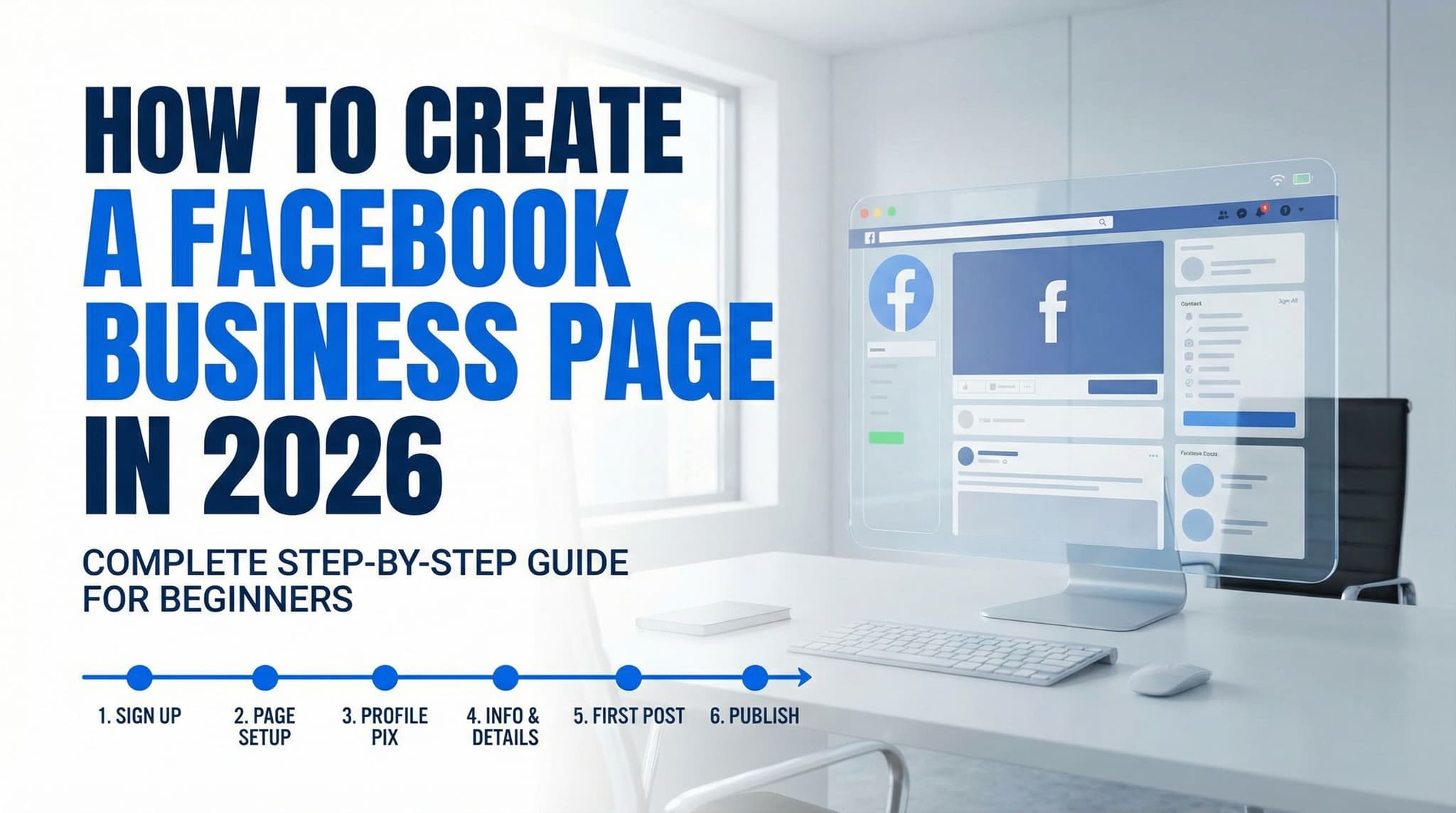
How to Create a Facebook Business Page in 2026: Complete Step-by-Step Guide for Beginners
Ready to establish your business on Facebook in 2026? This comprehensive guide walks you through everything from pre-setup requirements to post-launch optimization. Whether you're a solopreneur, local service provider, or e-commerce seller, you'll learn how to set up your Facebook Business Page correctly the first time, avoid common mistakes, and start building your online presence with confidence. Includes a downloadable checklist and actionable next steps.
Feb 8, 2026
Read more
Best Times to Post on Facebook for Maximum Reach in 2026: A Beginner's Guide
Tired of posting on Facebook and watching your content disappear into the void? You're not alone. Many small business owners and content creators struggle to figure out when their audience is actually paying attention. While there's no magic posting time that works for everyone, this beginner's guide reveals a data-driven framework for discovering YOUR optimal posting schedule using free Facebook tools. Learn how to analyze your specific audience, test different times, and create a consistent posting strategy that actually drives engagement—without needing expensive software or paid advertising.
Feb 9, 2026
Read moreReady to never miss a post again?
Tell Aidelly what to post. It drafts, schedules, and publishes across 7 platforms while you focus on your business.