Building a Community: How to Engage and Grow Your Social Media Audience in 2026
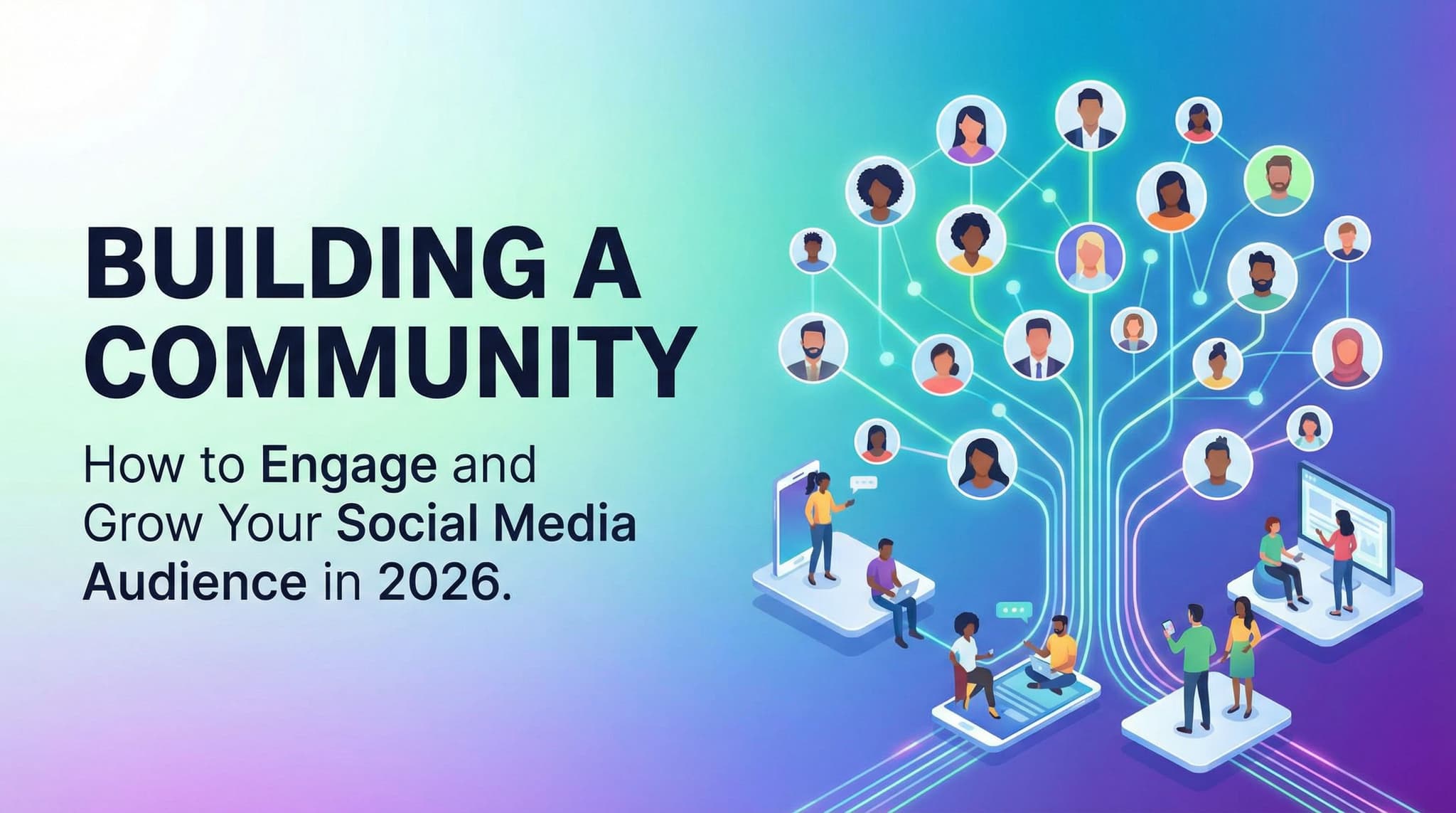
Remember when having 10,000 followers felt like the ultimate social media win? Yeah, those days are pretty much over. In 2026, we've collectively realized that a million followers who don't care about your brand is basically worthless. What actually matters is having 1,000 people who would genuinely recommend you to their friends, who engage with your content consistently, and who feel like they're part of something meaningful when they interact with your brand.
The shift from vanity metrics to genuine community building isn't just a trend—it's become the foundation of sustainable social media success. Whether you're running a small e-commerce business, creating content full-time, or managing social media for a mid-sized company, the strategies that worked in 2024 simply don't cut it anymore. Algorithms have evolved, audience expectations have changed, and the noise on every platform has only gotten louder.
So how do you actually build a community that sticks around? It starts with understanding that community building is fundamentally different from audience growth. You're not trying to accumulate followers like they're Pokemon cards; you're cultivating relationships with real people who share your values and interests. The good news? It's entirely achievable, and it doesn't require a massive marketing budget or a team of social media experts. What it does require is strategy, authenticity, and a genuine commitment to showing up for your audience consistently.
Section 1: The Foundation—Strategy and Authenticity
Building a thriving social media community starts with getting the fundamentals right. You can't skip the foundational work and expect to build genuine connections. This section covers the essential elements that every successful community is built on: a strategic approach to content and posting, and an unwavering commitment to authenticity.
Think of these foundations as the scaffolding for your community. Without them, you're essentially building on sand. With them in place, you have something solid to build on, and everything else becomes easier to implement. Let's break down what this looks like in practice.
1.1: Develop a Consistent Posting Schedule Aligned with Platform Algorithms
Consistency is the unsexy secret that separates communities that thrive from ones that fizzle out. When you post sporadically, your audience never quite knows when to expect you. They might check in one day and find nothing new, then forget to come back. But when you show up reliably, your followers build a habit of engaging with your content.
Here's the thing about algorithms in 2026: they're actually more sophisticated than they were a few years ago, but they're also more transparent about what they reward. Instagram's algorithm prioritizes content that generates quick engagement and watch time. TikTok's algorithm loves videos that keep people watching until the end. YouTube rewards longer watch sessions and click-through rates. LinkedIn values professional conversations and articles that spark meaningful discussion.
The key is matching your posting schedule to both your audience's behavior and the platform's algorithm preferences. If your audience is most active at 7 PM on weekdays, that's probably when you should post. But you also need to consider what type of content performs best at different times. Some brands find that educational content performs better in the morning when people are planning their day, while entertaining content peaks in the evening.
Start by auditing your current posting patterns. Which posts get the most engagement? What time were they posted? What day of the week? Use this data to create a posting schedule that you can actually sustain. Consistency matters far more than frequency—posting three times a week reliably beats posting seven times one week and zero times the next. Most successful creators we've seen stick to a schedule they can maintain for at least three months without burning out. That might be three posts a week on Instagram, one long-form video per week on YouTube, and daily Stories. Find your rhythm and commit to it.
1.2: Create Authentic, Value-Driven Content That Addresses Audience Pain Points
Your audience doesn't follow you because they want to be sold to. They follow you because they believe you can help them solve a problem, learn something new, or feel entertained. The most successful communities are built on content that genuinely serves the audience first and promotes the business second.
Think about the last time you unfollowed someone. Was it because they weren't selling you anything? Or was it because they weren't offering any real value? Most of us unfollow when content becomes repetitive, irrelevant, or feels inauthentic. We follow people who make us feel something—whether that's inspired, educated, entertained, or understood.
The best approach is to create a content mix that balances education, entertainment, and inspiration with your promotional content. A good ratio many successful creators use is the 80/20 rule: 80% of your content should genuinely help or entertain your audience, while 20% can be promotional. But here's the critical part—even your promotional content should be valuable. If you're promoting a product, explain how it solves a specific problem. Share a real customer story. Show the behind-the-scenes of how it's made.
To identify what your audience actually needs, pay attention to the questions they ask in comments and DMs. What problems do they mention repeatedly? What topics get the most conversation? These are your content goldmines. A fitness coach might notice that followers repeatedly ask about meal prep for busy schedules, so they create a series of 15-minute meal prep videos. A B2B SaaS company might notice that prospects are confused about implementation, so they create detailed walkthrough videos. Listen to your audience and let their needs guide your content strategy.
1.3: Use Storytelling and Behind-the-Scenes Content to Humanize Your Brand
People don't connect with brands. They connect with people. One of the most powerful ways to build community is to pull back the curtain and let your audience see the real humans behind your business. This doesn't mean oversharing your personal life—it means showing the messy, real, human side of what you do.
Behind-the-scenes content has become surprisingly powerful because it's so rare to see it done authentically. Most brands show a polished, perfected version of their business. But when you show the failed experiment, the team member who messed up and how you handled it, or the unglamorous part of your process, people feel like they're part of an inside community. They're seeing something real.
Storytelling takes this further. Instead of just saying 'we made this product,' tell the story of why. Share the founder's journey. Talk about the customer who inspired a new feature. Explain the setback that taught you something important. Stories are how humans have shared information since the beginning of time, and they're still the most effective way to create emotional connections.
A sustainable fashion brand might share the story of how they source their materials, introducing followers to the farmers and artisans they work with. A productivity app might share the founder's personal struggle with organization that led to creating the tool. A marketing agency might share case studies as stories—not just the results, but the journey, the challenges, and what they learned. These stories humanize your brand and make people feel invested in your success because they understand the 'why' behind what you do.
Section 2: Active Engagement—Building Real Relationships
Having a great content strategy and posting consistently is step one. But if you're not actively engaging with your community, you're missing the entire point of building one. Community isn't a broadcast—it's a conversation. This section focuses on the interactive elements that turn followers into actual community members: responding to comments, leveraging user-generated content, and using data to understand and serve your audience better.
Think of this section as the difference between having an audience and having a community. An audience watches. A community participates. Your job is to create the conditions where participation feels natural, rewarded, and valued. When you do this consistently, something magical happens—people stop just consuming your content and start creating content about you.
2.1: Foster Two-Way Conversations Through Active Engagement and Responsive Communication
Here's a harsh truth: if you're not responding to comments and messages from your audience, you're not building a community. You're just broadcasting. The brands and creators with the most engaged communities are obsessive about responding to comments and DMs. Not eventually. Not when they get around to it. Quickly.
When someone takes the time to leave a thoughtful comment on your post, they're offering you a gift—an opportunity to deepen the relationship and show other potential community members that you actually care about engagement. When you respond, you're signaling that their voice matters. You're also providing social proof that this is a place where conversations happen.
The practical challenge is that as your audience grows, responding to every single comment becomes time-consuming. This is where prioritization comes in. Aim to respond to every comment in the first hour after posting—this is when algorithms are most active and your response can amplify the original comment's reach. For comments that come in later, focus on responding to ones that ask questions, share personal stories, or add value to the conversation. If someone leaves a simple 'love this!' emoji, you can like their comment instead of responding verbally.
Direct messages deserve special attention. When someone takes the effort to send you a DM, they're interested in a direct relationship. This is where you can have deeper conversations, answer specific questions, and make people feel seen. Set up a system where you check and respond to DMs at least once a day. Many successful creators block out 30 minutes in the morning and 30 minutes in the evening for DM responses. Some use tools to automate initial responses (like 'Thanks for reaching out! I'll respond personally within 24 hours'), which sets expectations and shows you're organized and professional.
The tone of your responses matters enormously. Respond as the real human behind the account, not as a corporate entity. If someone shares a struggle, empathize. If someone asks a question, answer it thoroughly. If someone makes a joke, laugh with them. This is where the real magic of community building happens—in these small, genuine interactions that make people feel valued.
2.2: Leverage User-Generated Content and Community Features to Build Belonging and Loyalty
One of the most underutilized tools for community building is user-generated content (UGC). When your audience creates content about your brand—photos using your product, testimonials, creative takes on your ideas—you have pure gold. This content is more authentic than anything you could create yourself, and it makes the creator feel like a valued part of your community.
The most successful brands actively encourage UGC through branded hashtags, challenges, and features. When someone uses your product and posts about it, repost their content to your main feed (with permission). Give them a shout-out. Tag them. Make them feel like a celebrity in your community. This accomplishes several things: it rewards the creator for their loyalty, it shows other followers that you celebrate community members, it provides authentic social proof, and it gives you content without having to create it yourself.
Instagram has made this easier with the 'Repost' feature and the ability to tag users in Stories. TikTok's 'duet' and 'stitch' features are built entirely around UGC. YouTube has community posts that encourage interaction. LinkedIn has articles where followers can comment and share. Use these platform-native features to amplify community voices.
Consider creating specific opportunities for UGC. A fitness brand might ask followers to share their workout videos with a specific hashtag. A beauty brand might ask customers to show how they use their products. A B2B company might ask clients to share success stories. A content creator might ask followers to share how they've applied a lesson from their content. The key is making it easy and rewarding to participate.
Beyond reposting, use community features like Instagram's Community tab, YouTube's Community posts, or Discord servers to create spaces where your audience can interact with each other, not just with you. When community members form relationships with each other, loyalty increases exponentially. They're not just following you—they're part of a group of people with shared interests. This sense of belonging is what turns casual followers into devoted community members who actively defend your brand and recruit their friends.
2.3: Utilize Data Analytics to Understand Audience Behavior and Optimize Content Performance
If you're not looking at your analytics regularly, you're essentially flying blind. Every platform provides data about what content resonates with your audience, when they're most active, and how they interact with your posts. This data is the roadmap for building a stronger community.
Start by understanding the key metrics that actually matter. Vanity metrics like follower count and total likes are less important than engagement rate (likes and comments divided by follower count), watch time, saves, shares, and click-through rates. These metrics tell you what content is actually resonating and what people value enough to save or share with others.
Look at your audience demographics and insights. What ages are most engaged? What genders? What locations? What times are they online? What devices do they use? This information helps you tailor your content and posting schedule. If your audience is primarily Gen Z, short-form video content will likely perform better than long-form blog posts. If they're mostly business professionals, you might focus on LinkedIn and professional insights rather than TikTok trends.
Track which content types generate the most meaningful engagement. For most communities, educational content, personal stories, and content that sparks conversation generate higher engagement than purely promotional content. Video typically outperforms static images. Reels and short-form video get more reach on Instagram than carousel posts. Understand your specific audience's preferences and double down on what works.
Create a simple analytics review routine—weekly is ideal, monthly at minimum. Spend 30 minutes looking at what worked and what didn't. Ask yourself: Which posts got the most saves? Which generated the most comments? Which had the highest watch-through rate? Which led to the most profile visits? Track these patterns over time. You'll start to see what your audience actually wants, and you can adjust your strategy accordingly. This isn't about following trends blindly—it's about understanding your specific audience and serving them better.
Section 3: Growth and Sustainability—Scaling Your Community
Once you've established the foundation with consistent content and authentic engagement, it's time to think strategically about growth. But not the kind of growth that happens overnight and disappears just as quickly. The growth we're talking about here is sustainable, organic, and built on real relationships. This section covers how to expand your reach through strategic partnerships, create exclusive experiences that reward loyalty, and maintain a healthy community culture as you scale.
Scaling a community is different from scaling an audience. As your community grows, the challenge shifts from getting people's attention to maintaining the quality of interactions and the sense of belonging. The strategies in this section help you grow without losing the intimacy and authenticity that made people want to join in the first place.
3.1: Collaborate with Micro-Influencers and Community Members to Expand Reach Organically
One of the most effective growth strategies in 2026 is collaborating with micro-influencers—creators with smaller but highly engaged audiences (typically 10,000 to 100,000 followers). These collaborations are often more authentic and effective than working with mega-influencers because micro-influencers typically have stronger relationships with their audiences and are more affordable.
The beauty of micro-influencer collaborations is that they feel organic to both audiences. When a micro-influencer genuinely recommends your brand, their followers take it seriously because they trust their opinion. It's not a transactional advertisement—it's a real person sharing something they actually value. This type of collaboration introduces your brand to a new, pre-qualified audience of people who are already interested in topics related to yours.
Start by identifying micro-influencers in your niche who genuinely align with your brand values. Don't just look at follower count—look at engagement rate, audience demographics, and content quality. A creator with 30,000 highly engaged followers in your target market is far more valuable than a creator with 500,000 disengaged followers. Reach out with a genuine, personalized message. Don't use a generic template. Show that you actually follow their content and explain why you think a collaboration would be mutually beneficial.
Collaborations can take many forms: guest posts on each other's platforms, takeovers where you create content for their audience and vice versa, joint webinars or live streams, product exchanges where you both review each other's offerings, or co-created content like interviews or challenges. The best collaborations feel natural and provide value to both audiences.
Beyond micro-influencers, don't overlook your own community members. Your most engaged followers are often your best advocates. Consider creating an ambassador program where loyal community members get exclusive perks (early access to products, special discounts, featured content) in exchange for sharing your content with their networks. These authentic recommendations from real people are often more powerful than any paid advertising.
The key to successful collaborations is finding partners who share your values and have audiences that genuinely overlap with yours. A collaboration that feels forced or inauthentic will be obvious to both audiences and can actually damage your credibility. Choose partners carefully, and prioritize quality over quantity.
3.2: Create Exclusive Content, Challenges, and Membership Programs to Reward Loyal Followers
People want to feel special. They want to be part of an exclusive group. This is why exclusive content and membership programs are so effective for building loyalty and rewarding your most engaged community members. When you create something that only your most dedicated followers can access, you're giving them a reason to stay engaged and a status symbol within the community.
Exclusive content can take many forms. YouTube has memberships where subscribers pay a monthly fee for exclusive videos, early access to content, and special perks like badges in the comments. Patreon allows creators to offer tiered memberships with different benefits at each level. Discord servers can have exclusive channels for premium members. Instagram and TikTok have Subscriptions features. Even email can be used for exclusive content—many creators reserve their most valuable long-form content, templates, or resources for email subscribers.
The key is making the exclusive content valuable enough that people feel it's worth the investment, but not so exclusive that you're cutting off your main audience. Think of it as a tiered system: free content attracts people and shows them the value you provide. Exclusive content rewards people who want to go deeper and are willing to support you financially. This model works because it doesn't gatekeep everything—people can still experience your core content for free, but they have the option to pay for more depth, fewer ads, or special perks.
Challenges are another powerful tool for building community and engagement. A challenge is a specific action or goal you encourage your community to complete, usually over a set time period (7 days, 30 days, etc.). A fitness creator might run a 30-day workout challenge. A productivity expert might run a 7-day productivity challenge. A business coach might run a challenge around launching a side business. Participants share their progress using a specific hashtag, creating a sense of community and friendly competition.
Challenges work because they create accountability, foster interaction between community members, and give you tons of user-generated content. They also create a natural moment to deepen relationships—many people who start as casual participants become loyal community members after completing a challenge together. Consider running a challenge quarterly or biannually, with increasing value and exclusivity as your community grows.
Membership programs and exclusive communities go beyond just paywalls. They create a sense of belonging. Consider creating a private Slack group, Discord server, or Circle community where members can interact with you and each other. This becomes a space where real relationships form, where members support each other, and where you can provide personalized value. Even if you charge for access, the real value is often the community itself—people paying to be part of a group of like-minded individuals.
3.3: Build Strategic Partnerships and Cross-Promote with Complementary Brands or Creators
Strategic partnerships are partnerships where you work with another brand or creator to achieve mutual goals. Unlike micro-influencer collaborations, which are often one-off campaigns, strategic partnerships are typically longer-term relationships that benefit both parties repeatedly.
The best partnerships are with complementary brands—brands that serve a similar audience but don't directly compete. A sustainable fashion brand might partner with an eco-friendly beauty brand. A productivity app might partner with a time management coach. A pet food company might partner with a pet training platform. These partnerships make sense because the audiences overlap, but the offerings are different, so there's no direct competition.
Strategic partnerships can include cross-promotion (sharing each other's content and recommending each other to your audiences), joint products or services, bundled offerings, affiliate relationships, or content collaborations. The key is ensuring that the partnership provides genuine value to both audiences, not just to the brands involved.
Cross-promotion is the simplest form of partnership. You recommend a complementary brand or creator to your audience, and they do the same for you. This exposes both of you to new, pre-qualified audiences. Make sure that your cross-promotion feels authentic—only recommend brands or creators that you genuinely believe in and that you think your audience will value. Your credibility depends on your recommendations being trustworthy.
Affiliate partnerships take this further by adding a financial incentive. If you recommend a product or service and someone from your audience purchases through your unique link, you earn a commission. This aligns incentives and makes the partnership mutually beneficial. Many successful creators generate significant revenue through affiliate partnerships because they're recommending products they actually use and believe in.
Joint ventures or co-created products are the most ambitious form of partnership. This might be a co-authored book, a joint online course, a bundled product offering, or a collaborative event. These require more planning and coordination but can be incredibly powerful for growth because they combine the strengths and audiences of both partners.
When evaluating potential partnerships, ask yourself: Does this align with my brand values? Will my audience genuinely benefit from this partnership? Is the other brand or creator someone I respect and would recommend anyway? If the answer to all three is yes, it's probably a good partnership. If you're hesitating on any of them, it's usually better to pass.
3.4: Implement Community Guidelines and Moderation Practices to Maintain a Positive Environment
As your community grows, maintaining a positive, safe environment becomes increasingly important. This is where community guidelines and moderation come in. Clear guidelines set expectations for how community members should interact, and consistent moderation enforces those guidelines and protects the community from toxicity.
Community guidelines should be clear, specific, and focused on behavior rather than beliefs. Instead of 'be respectful,' try 'respectful disagreement is welcome, but personal attacks, harassment, or hate speech will not be tolerated.' Instead of 'no spam,' try 'don't post the same message multiple times or use the comments section to promote unrelated products.' Good guidelines are easy to understand and difficult to misinterpret.
Make your guidelines easily accessible—pin them to the top of your community space, mention them in your bio, or include them in a welcome message for new followers. Many successful communities reference their guidelines in an onboarding message for new members. The more visible your guidelines are, the fewer violations you'll have because people know what's expected.
Moderation is the enforcement side of community guidelines. This might be deleting comments that violate guidelines, removing members who repeatedly violate rules, or having private conversations with members who are pushing boundaries. The goal isn't to be heavy-handed—it's to protect the community and help members understand expectations.
As your community grows, you likely won't be able to moderate everything yourself. Consider recruiting trusted community members as moderators. These are people who are already highly engaged, understand your community values, and are willing to help maintain a positive environment. Give them clear guidelines for what they should and shouldn't moderate, and support them in their role. A good moderation team can actually improve community health because moderators are often trusted community members themselves.
Finally, be consistent and transparent in your moderation. If you delete a comment or remove a member, explain why if possible. If your moderation seems arbitrary or unfair, it erodes trust in your community. When you're consistent and transparent, community members understand that the guidelines are there to protect the community, not to silence certain viewpoints. This builds respect for you as a leader and for the community itself.
Building a thriving social media community isn't about chasing the biggest numbers or winning the most followers—it's about creating meaningful relationships with people who genuinely care about what you do. The strategies we've covered in this guide—from developing a consistent posting schedule and creating authentic, value-driven content to actively engaging with your audience and fostering exclusive experiences—all work together to create a community that's engaged, loyal, and invested in your success.
The most important thing to remember is that community building is a long-term investment. You won't see explosive growth overnight, but what you will see is sustainable, organic growth built on real relationships. You'll see higher engagement rates, better retention, more word-of-mouth referrals, and customers who feel like they're part of something meaningful. These are the metrics that actually matter, and they're far more valuable than vanity metrics ever will be.
As you implement these strategies, remember that managing a growing community becomes increasingly complex. Keeping track of posting schedules, monitoring engagement, analyzing performance data, responding to comments and messages, and coordinating with partners and collaborators is a lot to juggle manually. This is where community management and social media tools can make a huge difference, helping you stay organized, maintain consistency, and focus on what really matters—building genuine connections with your audience.
If you want a low-lift way to apply these ideas, Aidelly helps you keep your social content consistent without extra busywork. Building a genuine community takes intentional effort across multiple platforms, and the good news is you don't have to manage it alone—tools like Aidelly can handle the behind-the-scenes work so you can focus on what matters most: connecting with your audience. With Aidelly, you can schedule your authentic, value-driven content in advance while maintaining a consistent brand voice across all your channels, giving you more time to respond to comments, engage in conversations, and nurture the relationships that transform casual followers into loyal community members. Ready to shift your focus from vanity metrics to real community growth? Get started at aidelly.aiCompare Social Scheduling Tools
Evaluating software for your content workflow? Use our buyer guides and comparisons to compare scheduling, approvals, analytics, and AI workflow fit.
Share this article
Related Articles
User-Generated Content 101: How to Leverage Your Fans' Posts in 2026
Stop paying for content you don't need. Your customers are already creating authentic, engaging material about your brand—you just need to know how to tap into it. This comprehensive guide walks you through everything from understanding what user-generated content really is to building a full-scale UGC strategy that turns customers into brand advocates, cuts your content costs, and builds genuine community trust. Learn the actionable frameworks, legal safeguards, and proven tactics that successful brands are using right now.
Jan 29, 2026
Read more
How to Handle Negative Comments on Social Media: A Beginner's Guide for 2026
Negative comments stinging your social media presence? What if they could actually become your biggest asset? This comprehensive guide transforms how you view criticism online—from threat to opportunity. Learn practical strategies to distinguish trolls from genuine feedback, master de-escalation techniques that convert critics into advocates, and implement systems that turn every negative comment into a chance to showcase your brand's excellence. Includes downloadable response templates and real-world examples.
Jan 30, 2026
Read more
How to Turn Social Media Followers into Customers: The Complete 2026 Beginner's Guide to Social Selling
Stop treating your social media followers like vanity metrics. In 2026, the most successful small businesses aren't just building audiences—they're converting them into loyal, paying customers. This comprehensive guide reveals the psychology-driven strategies that transform your follower count into real revenue, without the pushy sales tactics that make people unfollow. Learn the relationship-first approach that's proven to work for e-commerce sellers, service providers, and content creators, complete with platform-specific tactics, real case studies, and actionable checklists you can implement today.
Jan 30, 2026
Read moreReady to never miss a post again?
Tell Aidelly what to post. It drafts, schedules, and publishes across 9 platforms while you focus on your business.