Content Calendar vs. Agentic Scheduler: What's Actually Different (And Why It Matters in 2026)
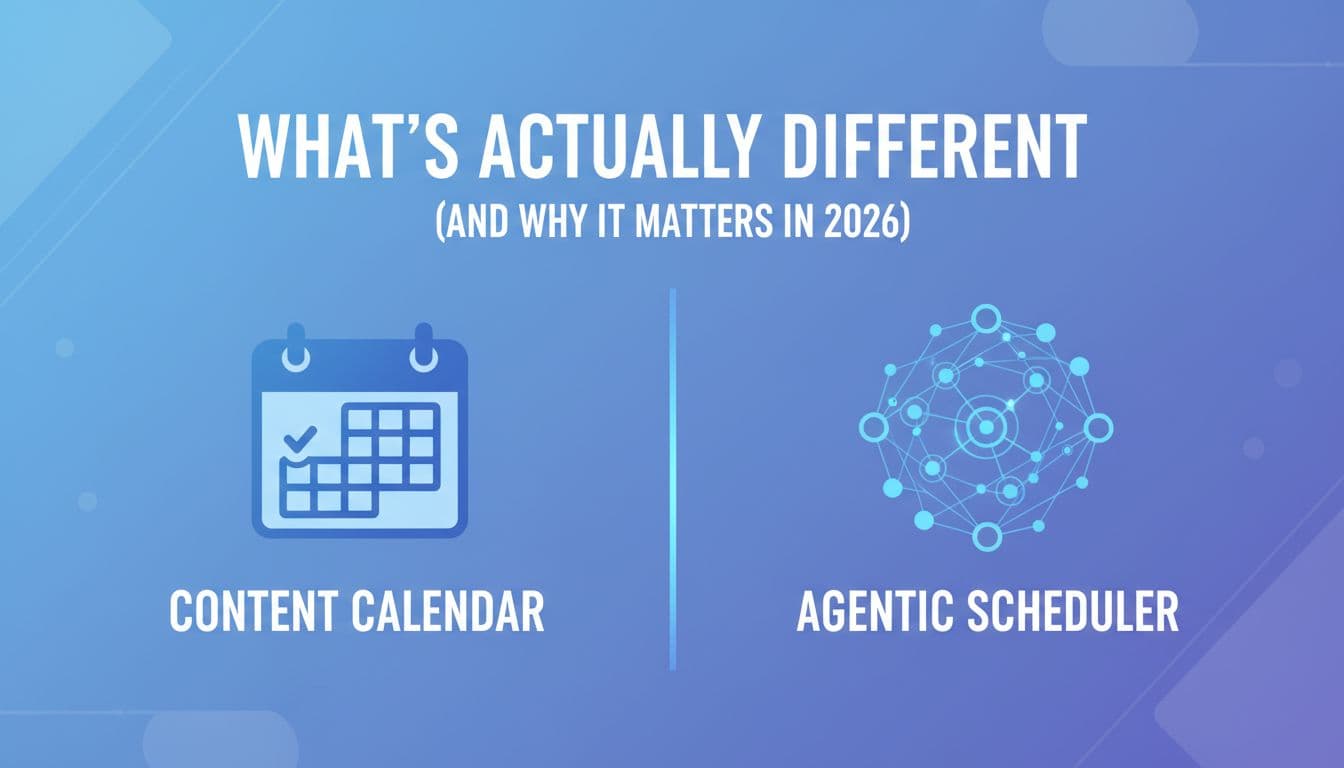
Most people use the terms 'content calendar' and 'social media scheduler' like they mean the same thing. They do not. And in 2026, with agentic AI changing how content actually gets made and published, the difference between these tools is wider than it has ever been. If you have spent a Sunday night writing captions for the week, or opened a blank Notion board on a Monday morning wondering what to post, you already know the manual content workflow has a real cost. This article breaks down what each tool actually does, where the friction lives, and what it means when something is called an 'agentic' scheduler. No jargon. No hype. Just a clear look at the tools and what they ask of you.
Three Tools, Three Very Different Jobs
The Content Calendar: A Map, Not a Driver
A content calendar is a planning tool. It shows you what to post and when, but it does not do the posting. You still write the copy, pick the image, and hit publish. Most teams use spreadsheets, Notion boards, or basic calendar views inside scheduling tools to manage this layer.
Think of it like a meal plan. You write down that Tuesday is taco night. But the calendar does not shop for ingredients, chop the onions, or cook anything. That is still on you. The calendar is just the plan sitting on the fridge.
For small teams, this layer is genuinely useful. It creates structure. It helps you avoid posting three things on Monday and nothing for the rest of the week. It gives your team a shared view of what is coming. But the moment you close the spreadsheet or the Notion board, nothing happens. Content does not write itself. Images do not get resized for Instagram versus LinkedIn. Captions do not adapt to platform tone. You do all of that manually, every single time. The content calendar is not the problem. The problem is what it asks of you before anything gets posted.
The Traditional Scheduler: A Delivery Truck, Not a Writer
A traditional social media scheduler automates the publishing step. You queue posts in advance and the tool sends them out on time. But you still create every piece of content manually before it goes into the queue. The scheduler is a delivery mechanism, not a thinking partner.
Tools built on this model have been around for over a decade. And the model works. Scheduling in bulk on a Friday so posts go out across the week saves real time compared to logging into each platform manually every day. But here is what the scheduler does not do: it does not write the post. It does not suggest a better hook. It does not notice that your LinkedIn audience responds better to longer posts on Wednesday mornings. It just sends what you put in the queue, when you told it to.
The scheduler is reliable and consistent. But it is passive. Every piece of content that goes out still started with a human sitting down and creating it from scratch. The tool handled the last mile of delivery. You handled everything before that.
Why the Gap Between Planning and Publishing Still Costs You
Here is where most articles on this topic stop. They compare the calendar to the scheduler, note that one plans and one publishes, and call it a day. But the real story is what happens in the middle, the part where a human has to create every single piece of content that moves from the calendar into the queue.
That middle layer is where time disappears. You plan on Monday. You write on Tuesday. You find images on Wednesday. You resize and format on Thursday. You schedule on Friday. And then you do it all again next week. The calendar and the scheduler are both doing their jobs. But the human in the middle is doing the heaviest work, every week, without a break. Understanding this gap is the first step to understanding why agentic tools exist and what problem they are actually solving.
What 'Agentic' Actually Means in Plain English
An Agent That Acts, Not a Tool That Waits
An agentic social media scheduler closes the gap between planning and execution. AI agents handle ideation, drafting, platform optimization, scheduling, and performance analysis without waiting for a human to prompt each step. The difference is not just speed. It is that the system acts autonomously on your behalf.
Here is a concrete way to think about it. A traditional scheduler is like a postal service. You write the letter, address the envelope, and drop it off. The service delivers it. An agentic scheduler is more like a chief of staff who knows your brand, understands your audience, drafts the letter, picks the right format for each recipient, and sends it at the best time, then reports back on whether it landed. You stay in the loop. You approve before anything goes out. But you are not doing the drafting, the formatting, or the timing research yourself.
Agentic does not mean the AI disappears into a black box and you lose control. It means the AI handles the steps that used to eat your time, and surfaces the output for you to review and approve. The human is still in the driver's seat. The human just is not manually turning every crank anymore.
The Real Cost of the Manual Model
The practical cost of the manual model is real. A small business owner or solopreneur managing three platforms can spend 8 to 12 hours per week on content creation and scheduling alone. Agentic workflows collapse that to a review-and-approve model, where the human stays in control without doing the heavy lifting.
Eight to twelve hours is not a rounding error. That is a full workday, sometimes more, spent on content every single week. For a solopreneur running a coaching business, an e-commerce store, or a local restaurant, that time comes directly out of hours they could spend on client work, product development, or just not burning out. And that estimate is conservative. It does not count the mental load of deciding what to post, researching what is trending, or staring at a blank draft wondering why nothing sounds right.
Agentic workflows change the math. Instead of creating everything from scratch, you review what the agent drafted. You approve, adjust, or reject. The heavy lifting moved to the AI. You stay in the loop without being the engine. For a small team or a solo operator, that shift is not a minor convenience. It is the difference between content being sustainable and content being the thing that always falls behind.
What Agentic Looks Like in Practice
Take a real example. A real estate agent posting on Instagram, Facebook, and LinkedIn three times a week has 9 posts to produce. In the manual model, that means 9 captions written from scratch, 9 images sourced and resized, and 9 scheduling decisions made. Every week. In an agentic model, the AI drafts all 9, formatted correctly for each platform, with brand voice already applied. The agent picks posting times based on when that agent's audience is actually active. The human reviews the drafts, approves what works, and tweaks what does not. The whole review cycle might take 30 minutes instead of 8 hours.
Aidelly's agentic workflows handle this full cycle. The AI drafts posts with your brand voice baked in, optimizes for each platform, and schedules based on performance data. The visual content calendar gives you a clear view of everything before it goes live, so you are always in control without doing every task by hand.
The 2026 Shift: From Tools That Help to Agents That Act
The Calendar Is the Interface. The Agent Is the Engine.
The 2026 shift in social media management is from tools that assist to agents that act. Content calendars and basic schedulers are not going away, but they are becoming the interface layer on top of agentic systems. The calendar is what you see. The agent is what does the work underneath.
This is a real structural change, not just a feature update. For years, every improvement in social media tools was about making the manual process faster or easier. Better drag-and-drop. Bulk uploading. Browser extensions to save links. All of those improvements assumed that a human was still doing the creating. The 2026 model flips that assumption. The agent creates. The human reviews. The calendar shows you the output and lets you adjust before anything goes live.
Think about what that means for a marketing manager at a small agency running accounts for ten clients. In the old model, they are writing or editing content for all ten, every week, for every platform. In the agentic model, they are reviewing drafts the system generated, approving what works, and redirecting what does not. The job changes from producer to editor. That is a fundamentally different use of time and skill, and it scales in a way the manual model never could.
Where Developers and Power Users Fit In
For teams with technical resources, the agentic model opens up a different kind of possibility. Aidelly's REST API and MCP Server let developers and AI assistants connect directly to the publishing pipeline. That means you can build custom agents using Claude, ChatGPT, or your own tooling and have them publish across all platforms programmatically through a single unified API.
This is not a feature for everyone. But for agencies building client automation systems, or developers creating content pipelines for e-commerce brands, the ability to wire an AI agent into a publishing workflow without building the social media infrastructure from scratch is a significant shortcut. The MCP Server specifically lets any AI assistant that supports the Model Context Protocol talk to Aidelly directly. The agent you already use for other tasks can now handle social publishing too, without switching tools or rebuilding your stack.
The Decision Framework: Delivery Service or Autonomous System
Here is the clearest way to think about where you stand right now. If you are writing every post before it enters your scheduler, you are using a delivery service. The scheduler is reliable and it saves you from logging into five platforms every day, but the content creation is still entirely on you. You are the engine. The tool is just the last mile.
An agentic system changes that relationship. The AI handles ideation and drafting. It optimizes for each platform. It schedules based on real performance data. You stay in control through approval workflows, brand voice settings, and a content calendar that shows you everything before it goes live. But you are not doing every task by hand. You are directing, not producing.
The question is not whether agentic AI is better in some abstract sense. The question is whether spending 8 to 12 hours a week on content creation is a good use of your time, or whether that time would be better spent on the parts of your business that need you most. For most solopreneurs, small business owners, and agency managers, the answer is pretty obvious once you see the math clearly.
A content calendar shows you the plan. A traditional scheduler executes the delivery. An agentic scheduler handles the work in between, the part that has always been the most expensive in time, energy, and consistency. The tools are not the same, and treating them like they are keeps you stuck in a workflow that was never designed to scale. Social media management in 2026 does not have to mean spending half your week on content. It can mean reviewing what an AI built for you, approving what fits your brand, and spending your time on the work that actually moves your business forward. If you are ready to see what that looks like in practice, Aidelly is worth a closer look.
If you're still writing every post, queuing it manually, and checking analytics on your own, you're doing the work of three jobs. Aidelly's agentic workflows handle content creation, scheduling, and performance analysis so you can stay in control without staying in the weeds. See what that looks like for your accounts at aidelly.ai.
Compare Social Scheduling Tools
Evaluating software for your content workflow? Use our buyer guides and comparisons to compare scheduling, approvals, analytics, and AI workflow fit.
Share this article
Related Articles
LinkedIn Automation for B2B: How to Schedule and Scale Without Losing the Human Touch
Most LinkedIn automation articles warn you about bots or pitch outreach tools. This one is different. The real LinkedIn automation problem for B2B marketers is not lead gen spam. It is inconsistent content. You miss a week, the algorithm buries you. You scramble to post something, it sounds off-brand. You hand it to an intern, it goes live without a review. This article shows you how to build a content engine that posts consistently, sounds like you, and gets better over time using AI. The key insight is this: automation does not kill the human touch. Bad automation does. Good automation creates space for you to be more human, because you are not writing a post at 7am before a client call. You handle the ideas and the voice. The right tools handle everything else.
May 10, 2026
Read more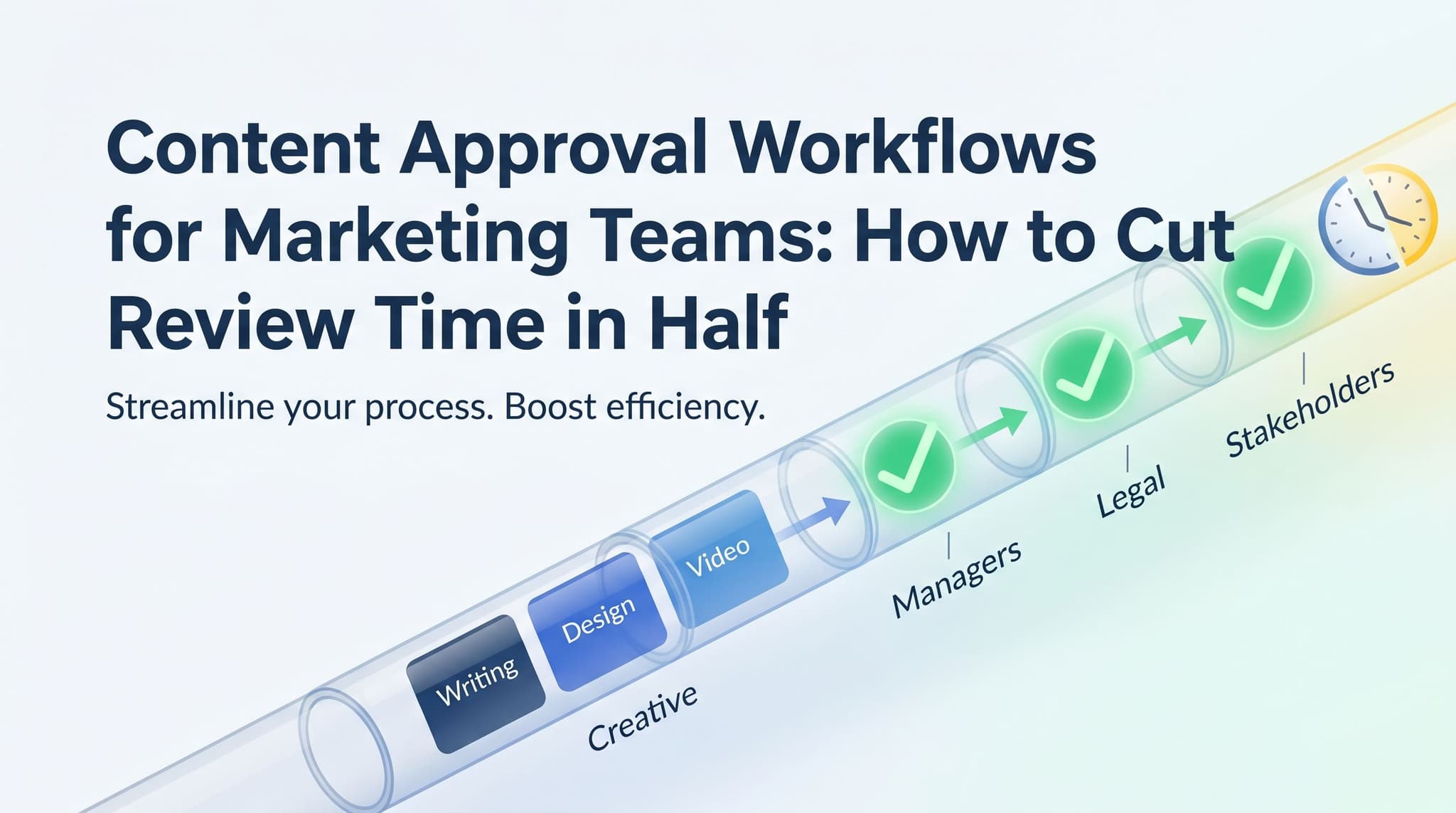
Content Approval Workflows for Marketing Teams: How to Cut Review Time in Half
Most marketing teams don't have a content problem. They have an approval problem. Posts sit in email threads for days. Feedback arrives late. Nobody knows who has the final call. By the time the content is approved, the moment has passed. In 2026, the teams moving fastest aren't working harder on their review process. They're rebuilding it from scratch around a simple idea: AI handles creation and scheduling, and humans make the fast calls. This article breaks down exactly how to build a content approval workflow that doesn't stall, who owns each stage, and why consolidating everything into one tool changes the math entirely. If you manage social media for a team, an agency, or a client roster, this is the workflow shift that will actually stick.
May 13, 2026
Read more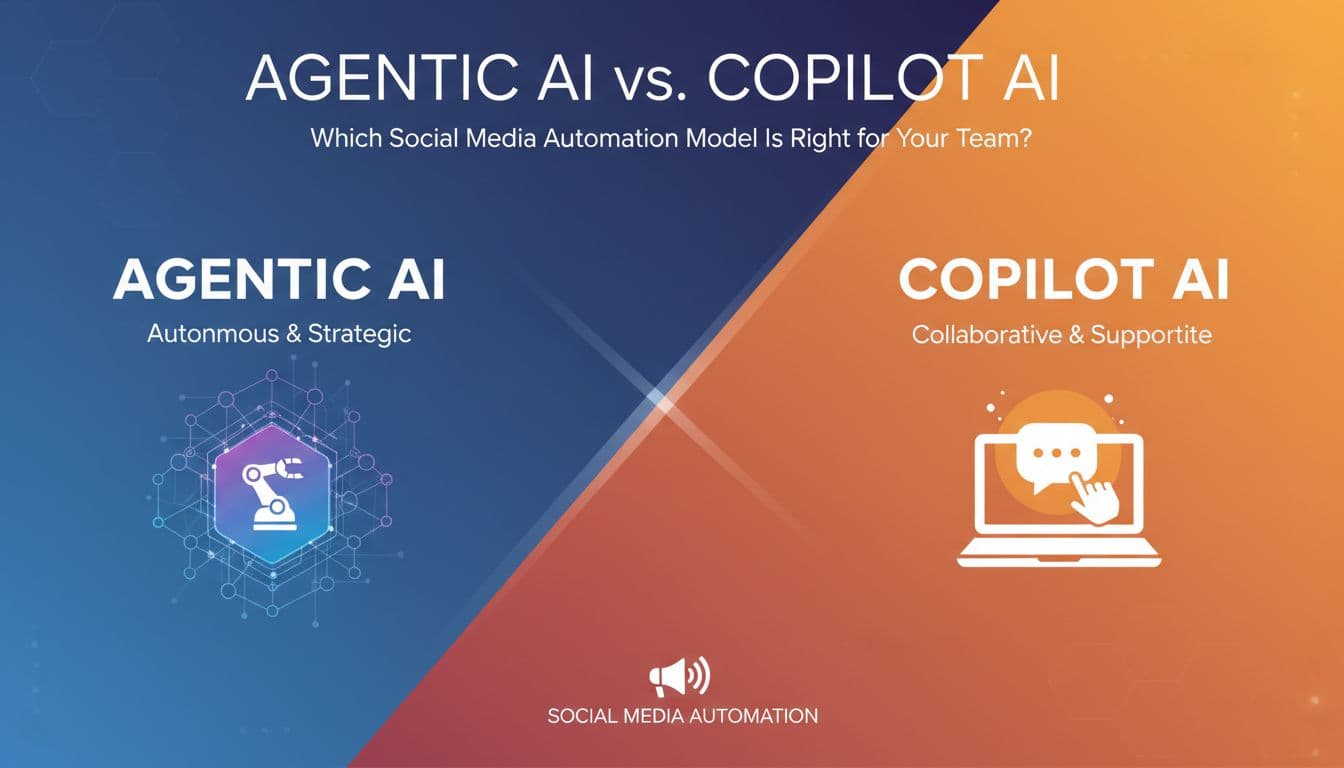
Agentic AI vs. Copilot AI: Which Social Media Automation Model Is Right for Your Team
Most AI tools make you faster. Agentic AI makes certain tasks disappear entirely. If you're still spending hours each week writing captions, picking post times, and moving content through approval chains, the problem isn't your output speed. It's that you're still in the loop for decisions an AI agent could handle on its own. This article breaks down the real difference between copilot AI and agentic AI for social media management — not as a technology explainer, but as a workflow decision. We walk through what each model actually looks like for a solopreneur juggling six platforms, a small in-house team trying to scale content without adding headcount, and an agency managing a dozen client accounts. By the end, you'll know which model fits your team right now and how to move toward more autonomy as your confidence in AI grows.
Jun 2, 2026
Read moreReady to never miss a post again?
Tell Aidelly what to post. It drafts, schedules, and publishes across 9 platforms while you focus on your business.