How to Repurpose Content Across Social Media Platforms in 2026: Work Smarter, Not Harder
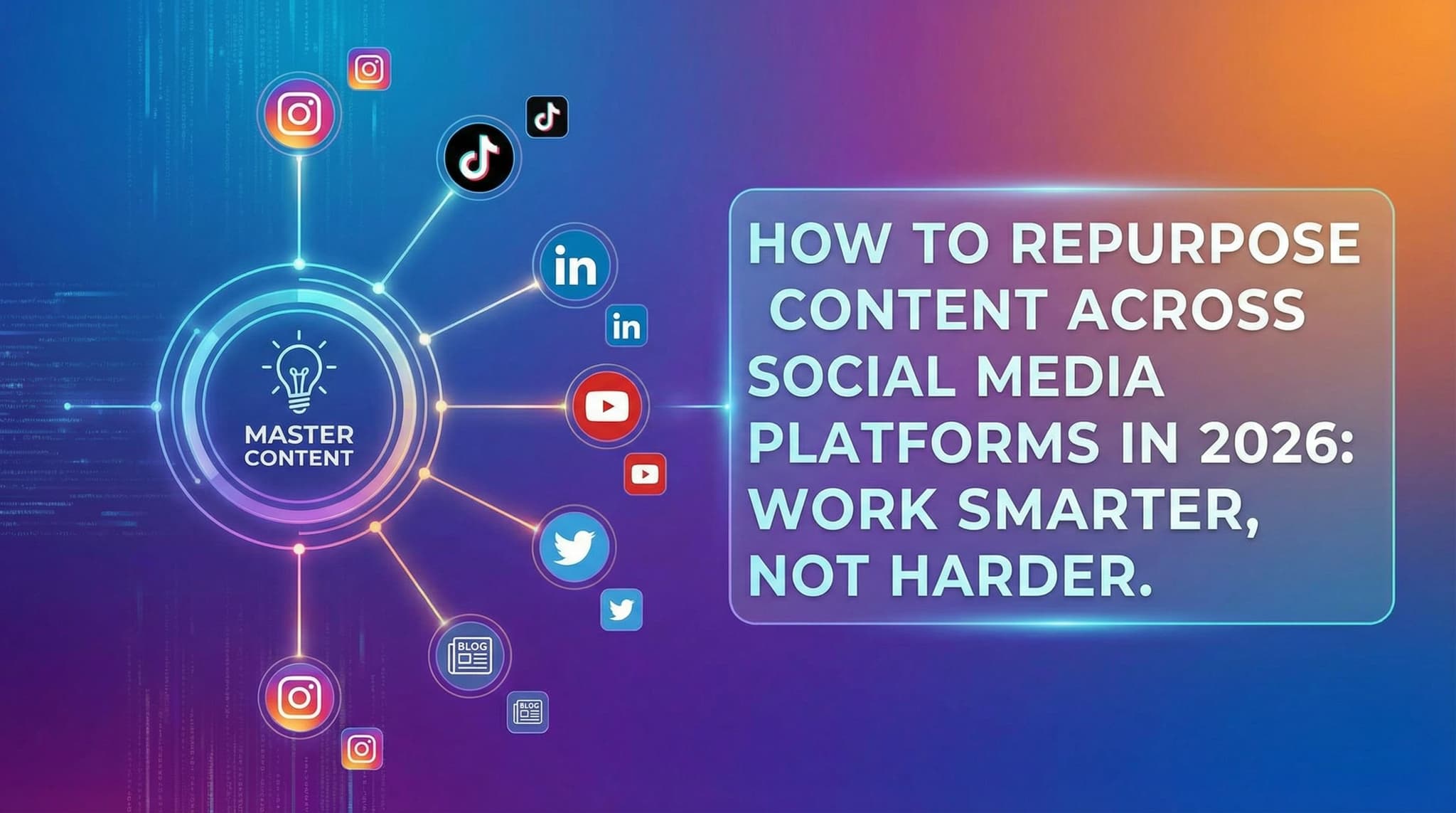
You just spent three hours perfecting a blog post. It's comprehensive, well-researched, and packed with value. Then you stare at your social media calendar and think: "Now I have to create content for Instagram, TikTok, LinkedIn, Pinterest, and YouTube." Your stomach sinks. The thought of repurposing that one piece across five different platforms feels like creating five entirely new pieces from scratch.
Here's the thing: it doesn't have to be that way.
The difference between a content creator who burns out and one who thrives isn't talent or inspiration—it's systems. Specifically, it's understanding how to break down one comprehensive piece of content into atomic units designed for each platform's unique algorithm, audience expectations, and format requirements. This approach, called content atomization, is the secret weapon that top marketers and agencies have been using for years to multiply their reach without multiplying their workload.
By the end of this guide, you'll have a step-by-step framework for repurposing content like a pro, complete with platform-specific rules, real-world templates, and the exact metrics you need to track to keep improving. Let's get started.
Section 1: Understanding Your Platforms—The Foundation of Smart Repurposing
Before you touch a piece of content, you need to understand something fundamental: every platform is not the same, and treating them that way is why most content repurposing efforts fail spectacularly.
Think about your own behavior for a second. When you open LinkedIn, you're in a professional headspace, scrolling for industry insights and career opportunities. When you open TikTok, you're looking for entertainment, trends, and personality-driven content. When you read a blog post, you're settling in for depth and nuance. These aren't small differences—they're completely different psychological states and content expectations.
The biggest mistake creators make is assuming that if content works on one platform, a slightly tweaked version will work everywhere. It won't. A 2,000-word deep-dive blog post formatted as a LinkedIn carousel with tiny text? Disaster. A 60-second educational video designed for YouTube Shorts but posted without optimization for TikTok's algorithm? You'll get a fraction of the views you deserve.
Understanding platform-specific formats and audience behaviors isn't just about technical optimization—it's about respecting where your audience is and what they're looking for in that moment. When you nail this, your repurposed content doesn't feel like repurposed content. It feels native, relevant, and impossible to ignore.
Let's break down what makes each major platform tick, and more importantly, how that affects your repurposing strategy.
1.1: Platform-Specific Formats and Audience Behaviors
LinkedIn is where professionals go to learn, share insights, and build credibility. The algorithm favors long-form carousel posts (those multi-slide posts where people swipe through), thoughtful text-based content, and anything that sparks professional conversation. LinkedIn audiences have longer attention spans and actually read captions—sometimes really long ones. They're looking for actionable insights, industry trends, and career development tips. The best-performing content here is personal, vulnerable, and ties to professional growth.
TikTok and Instagram Reels operate on completely different rules. These are entertainment-first platforms where the algorithm rewards watch time, completion rates, and shares above all else. Users are scrolling fast, so your first second needs to stop them cold. Trends matter enormously. Hashtag strategy is different (you don't need as many, and they're less critical than on other platforms). The best repurposed content here comes from extracting the most entertaining or surprising 15-60 seconds from your longer content and packaging it with trending audio, captions, and hooks that make people stop mid-scroll.
YouTube is where people go to invest time in learning. They'll watch 10-minute videos if the content is valuable. The algorithm cares about watch time, click-through rate on thumbnails, and audience retention. Repurposed YouTube content performs best when it's edited for pacing, has strong pattern interrupts (cuts, zooms, graphics), and delivers on the promise made in the title and thumbnail within the first 15 seconds.
Pinterest is a visual search engine, not a social platform in the traditional sense. People use it to discover ideas, plan projects, and save things for later. The algorithm prioritizes high-quality images, clear text overlays, and keywords in descriptions. Repurposed content here should focus on infographics, quote graphics, and tutorial pins that people will want to save and share.
Email and newsletters operate in a permission-based environment where people chose to hear from you. They're willing to read longer content and expect deeper insights. Repurposed content here can be slightly longer and more detailed than social versions, but should still be scannable with clear headers and bullet points.
The key insight: the same core idea can be delivered in completely different formats for each platform, and each version should feel native to that platform. Your LinkedIn audience shouldn't feel like they're reading a TikTok script. Your YouTube viewers shouldn't feel like they're watching a series of Instagram Reels stitched together.
1.2: How Algorithm Differences Affect Your Content Strategy
Here's where it gets tactical. Each platform's algorithm prioritizes different signals, and understanding these signals changes how you repurpose content.
LinkedIn's algorithm heavily weights engagement (comments, shares, reactions) in the first hour of posting. It also favors longer dwell time and content that keeps people on the platform rather than sending them away. This means your repurposed LinkedIn content should invite discussion, ask questions, and make people want to comment. Don't just share a link to your blog—share the key insight, invite feedback, and then link to the full article for those who want to go deeper.
TikTok and Reels algorithms are all about completion rate and shares. If people watch your video all the way through and then share it, the algorithm notices and pushes it to more people. This means your repurposed short-form content needs a hook in the first second, a clear progression that keeps people watching, and ideally, a satisfying conclusion that makes people want to share. The algorithm doesn't care if your video links to anything—it cares if people watch it fully and engage with it.
YouTube's algorithm is obsessed with watch time. A 10-minute video with 90% average view duration will rank higher than a 5-minute video with 100% average view duration. This changes how you repurpose content for YouTube—you might expand your core message, add examples, or include follow-up questions that keep viewers engaged longer.
Pinterest's algorithm prioritizes quality images, keyword optimization in descriptions, and click-through rate to your website. Unlike social platforms that want to keep people on-platform, Pinterest actually rewards content that sends traffic elsewhere. This is why Pinterest is often the top traffic driver for blogs—the algorithm works in your favor when you link to valuable content.
When you understand these algorithmic differences, you stop trying to create one-size-fits-all content and start creating platform-specific content that works with each algorithm rather than against it.
1.3: Mapping Your Audience Across Platforms
Before you repurpose a single piece of content, you need to know: is my audience actually on this platform? And if they are, are they the right version of my audience?
This is crucial because not all audience segments behave the same way on every platform. You might have an audience of marketing managers on LinkedIn who are looking for strategic insights, but those same people on TikTok would be looking for entertainment. Your yoga instructor audience on Instagram might be there for inspiration and community, but on YouTube they might be looking for specific tutorials.
Create a simple platform-audience map: for each major platform you use, write down who your audience is on that specific platform, what they're looking for, and how they differ from your audience on other platforms. This isn't about having different audiences—it's about understanding the different needs and behaviors of the same people in different contexts.
For example, a productivity app might have an audience of busy entrepreneurs on all platforms, but:
- On LinkedIn, these entrepreneurs want case studies and ROI data
- On TikTok, they want quick tips and entertaining demonstrations
- On YouTube, they want detailed tutorials and behind-the-scenes content
- On Pinterest, they want workflow diagrams and productivity templates
Same audience, completely different content needs. When you map this out before you start repurposing, your content strategy becomes infinitely more effective because you're not forcing the same message into different bottles—you're tailoring the message to the context while keeping the core idea intact.
Content repurposing isn't about working harder—it's about working smarter by building systems that multiply your reach without multiplying your workload. When you understand how different platforms work, create a structured repurposing workflow, and measure what actually resonates with your audience, you stop feeling overwhelmed by content creation and start feeling like you have a sustainable, scalable system.
The creators and businesses winning in 2026 aren't the ones creating the most content—they're the ones creating the most effective content with the least wasted effort. By implementing the content atomization framework, batching your creation process, and continuously refining based on performance data, you can cut your content creation time in half while actually increasing your reach and impact. The system does the heavy lifting; you just need to set it up once and then maintain it.
The real magic happens when you combine these strategies with the right tools that automate scheduling, simplify design, and centralize your analytics so you can see at a glance what's working across all your platforms. That's when content repurposing stops being a chore and becomes your competitive advantage.
If you want a low-lift way to apply these ideas, Aidelly helps you keep your social content consistent without extra busywork. Now that you understand how to strategically atomize your content and adapt it for each platform's unique audience, the real challenge becomes managing this workflow consistently—especially as your content library grows. Aidelly takes the friction out of this process by helping you create and schedule platform-optimized content effortlessly while maintaining that consistent brand voice across all your channels, so you can spend less time juggling multiple platforms and more time analyzing what actually moves the needle. Ready to turn your content strategy into a scalable system that works for you? Get started at aidelly.ai.Compare Social Scheduling Tools
Evaluating software for your content workflow? Use our buyer guides and comparisons to compare scheduling, approvals, analytics, and AI workflow fit.
Share this article
Related Articles
How to Handle Negative Comments on Social Media: A Beginner's Guide for 2026
Negative comments stinging your social media presence? What if they could actually become your biggest asset? This comprehensive guide transforms how you view criticism online—from threat to opportunity. Learn practical strategies to distinguish trolls from genuine feedback, master de-escalation techniques that convert critics into advocates, and implement systems that turn every negative comment into a chance to showcase your brand's excellence. Includes downloadable response templates and real-world examples.
Jan 30, 2026
Read more
How to Turn Social Media Followers into Customers: The Complete 2026 Beginner's Guide to Social Selling
Stop treating your social media followers like vanity metrics. In 2026, the most successful small businesses aren't just building audiences—they're converting them into loyal, paying customers. This comprehensive guide reveals the psychology-driven strategies that transform your follower count into real revenue, without the pushy sales tactics that make people unfollow. Learn the relationship-first approach that's proven to work for e-commerce sellers, service providers, and content creators, complete with platform-specific tactics, real case studies, and actionable checklists you can implement today.
Jan 30, 2026
Read more
Building a Community: How to Engage and Grow Your Social Media Audience in 2026
Stop chasing vanity metrics and start building real relationships with your audience. In 2026, the brands winning on social media aren't the ones with the biggest follower counts—they're the ones with the most engaged, loyal communities. This comprehensive guide walks you through proven strategies for creating authentic connections, fostering meaningful conversations, and building a social media presence that actually converts. Discover how to move beyond surface-level engagement and develop a thriving community that keeps coming back for more.
Jan 30, 2026
Read moreReady to never miss a post again?
Tell Aidelly what to post. It drafts, schedules, and publishes across 9 platforms while you focus on your business.