Instagram Stories 101: How to Engage Your Audience with Stories in 2026
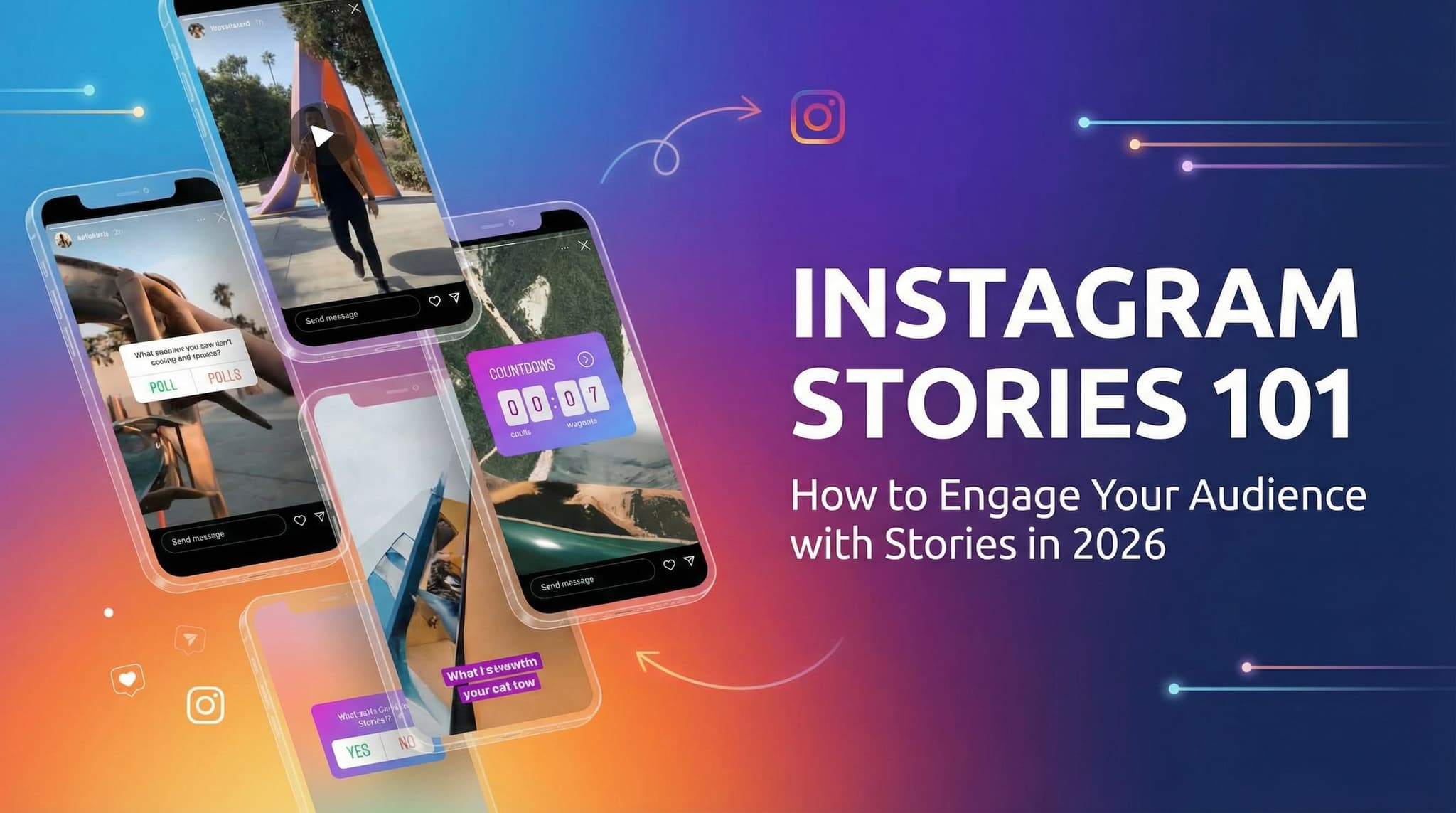
Let's be honest: Instagram Stories feel like the wild west of social media sometimes. You post, you hope people watch, and then they're gone forever. But here's what most people get wrong about Stories—that 24-hour disappearance isn't a bug, it's the entire feature's superpower. And if you're not leveraging it strategically, you're leaving serious engagement and conversion opportunities on the table.
In 2026, Stories have become the primary way Instagram users interact with brands and creators they follow. It's where authenticity lives, where your audience expects real moments instead of perfectly polished content, and where engagement rates consistently outperform feed posts. Yet most businesses treat Stories like an afterthought—a place to quickly dump content without strategy.
This isn't a tutorial on how to find the Stories button. Instead, we're diving into the why behind Stories engagement, the behavioral psychology that makes certain tactics work, and the practical framework you can use to transform your Stories from invisible to impossible-to-ignore. By the end of this guide, you'll understand Stories not as a feature, but as a strategic tool for building real community connection and driving measurable business results.
Understanding the Psychology of Ephemeral Content and Interactive Engagement
The foundation of Instagram Stories' power lies in something behavioral psychologists call scarcity-driven urgency. When your audience knows content disappears in 24 hours, their brain perceives it as valuable and time-sensitive. This isn't manipulation—it's tapping into how human psychology actually works. We're naturally drawn to things we might miss, and Stories create that psychological pressure that keeps people coming back multiple times throughout the day.
What's fascinating is that this ephemeral nature fundamentally changes how people consume content. Feed posts sit there indefinitely, so people can scroll past them without guilt. But Stories? They're gone soon, so viewers feel compelled to engage immediately or lose the opportunity. This creates a behavioral loop that drives higher engagement rates than traditional feed content—often 2-3x higher, depending on your niche and audience.
The second psychological component is what we call the interactive engagement loop. When you add polls, questions, quizzes, or sliders to your Stories, you're not just asking for engagement—you're triggering something deeper in human behavior. People want to be heard. They want their opinions to matter. Interactive elements transform your audience from passive viewers into active participants, which fundamentally changes their relationship with your brand.
Think about the last time you answered a poll on someone's Story. You didn't just watch—you participated. That participation creates a sense of investment. Psychologically, we're more likely to care about things we've invested effort into. This is why interactive Stories don't just boost engagement numbers; they build genuine connection and community feeling.
The 24-Hour Urgency Window: Why Disappearing Content Drives Recurring Engagement
Let's start with the most foundational element of Stories: they vanish after 24 hours. This isn't just a technical limitation—it's the entire reason Stories work so differently from feed posts. When something is permanent (like a feed post), people know they can come back to it anytime. There's no urgency. But when something disappears? Suddenly, people feel compelled to check your profile regularly so they don't miss anything.
This creates what marketers call a daily engagement habit. Instead of hoping your audience sees your content once, Stories make people check your profile multiple times throughout the day. According to 2026 Instagram engagement data, users who have Stories habits check them an average of 3-5 times daily. That's five opportunities to see your content, compared to the single chance a feed post might get.
The urgency mechanism also impacts how people share Stories. When content is temporary, people are more likely to share it immediately—they don't want others to miss it. This accelerates your organic reach and creates a compounding effect where Stories generate more shares and comments in their 24-hour window than feed posts generate in weeks.
From a strategic standpoint, this means you should post Stories with consistency and intention. The goal isn't to post once and hope for the best—it's to create a rhythm that keeps your audience coming back. Most successful creators post 3-5 Stories per day during their audience's peak hours. This consistency trains your audience to check your profile regularly, transforming casual followers into habitual viewers.
Interactive Features: Polls, Questions, Quizzes, and Sliders as Engagement Multipliers
Here's where the real magic happens. Interactive stickers in Stories—polls, questions, quizzes, and sliders—aren't just nice additions. They're engagement multipliers that can increase your interaction rates by 300-400% compared to static Stories. And the data backs this up: Stories with interactive elements receive significantly higher completion rates and generate more replies and direct messages.
Let's break down why each interactive element works differently, because understanding the psychology behind each one helps you use them strategically. Polls are your engagement starter. They're low-friction (just one tap), they're fun, and they give you real data about your audience's preferences. When you use polls regularly, your audience learns that engaging with your Stories is rewarding—they get to voice their opinion and see results. This trains them to interact with future Stories.
Questions are different. They require actual thought and typing effort, so people only answer questions they genuinely care about. This means questions generate higher quality engagement. Someone who types out an answer is more invested than someone who taps a poll option. The replies you get from questions become conversation starters, not just vanity metrics. Many successful creators use questions as their primary lead generation tool, asking things like "What's your biggest challenge with [topic]?" and using the responses to understand their audience's pain points.
Quizzes tap into our competitive nature and love of testing ourselves. They're inherently engaging because people want to see if they'll get the "right" answer. Quizzes also provide you with behavioral data—you can see which answer options people choose most frequently, revealing insights about your audience's interests and knowledge levels. Sliders work similarly but for preference measurement; they're perfect for "Rate this idea" or "How interested are you in [topic]?" scenarios.
The key strategic insight: rotate between different interactive elements rather than using the same one repeatedly. Variety maintains novelty and keeps your audience engaged. A typical effective Stories strategy might look like: Question (Monday) → Poll (Tuesday) → Quiz (Wednesday) → Slider (Thursday) → Mix of all on Friday. This rhythm keeps things fresh while training your audience to expect and look forward to interaction opportunities.
Story Sequencing and Narrative Structure: Keeping Audiences Watching Through Multiple Frames
Most people treat each Story frame as a standalone piece of content. That's a massive missed opportunity. The most effective Instagram Stories strategy uses narrative sequencing—structuring multiple Stories in a sequence that creates a story arc compelling enough to keep people watching through multiple frames instead of skipping after the first one.
Here's the psychological principle at work: when you start something and don't finish it, your brain experiences what's called "cognitive tension." We're naturally driven to resolve that tension by continuing to watch. This is why cliffhangers work in movies, why TV shows end episodes on plot twists, and why Stories with narrative structure get watched completely while disjointed Stories get skipped.
A practical example: instead of posting five random tips about productivity, create a Story sequence titled "5 Productivity Hacks That Changed My Life" with a preview frame, then reveal them one by one with context and explanation. The preview creates the tension, and viewers watch through multiple frames to get all five tips. Compare this to posting five unrelated tips throughout the day—the sequenced version will have significantly higher completion rates.
The most effective narrative structures follow basic storytelling patterns: Setup → Conflict → Solution → Payoff. For business content, this might look like: (Frame 1) "Here's the problem my clients face..." (Frame 2) "Here's why most solutions fail..." (Frame 3) "Here's the unconventional approach I use..." (Frame 4) "Here are the results..." (Frame 5) "Want to know more? Swipe up or DM me."
This structure works because it respects your audience's time while rewarding their attention. They're not just passively scrolling—they're following a narrative that makes them feel like they're learning something valuable. The completion rate on narrative-structured Stories typically runs 40-60% higher than random single Stories, which means more people seeing your call-to-action at the end.
Content Strategy: Authenticity, Behind-the-Scenes, and Building Real Community Connection
Here's something that might surprise you: the most engaging Stories aren't your polished, perfectly produced content. They're the messy, authentic, behind-the-scenes moments that make your audience feel like they're getting insider access to your real life or business. This flies in the face of how many brands were taught to communicate, but the data is overwhelming and consistent.
The reason behind-the-scenes content performs so well connects back to behavioral psychology. Humans are tribal creatures—we want to feel part of an inner circle. When you show behind-the-scenes content, you're essentially saying "You're important enough to me that I'm showing you what most people don't see." This creates a psychological sense of inclusion and special status that builds genuine loyalty far more effectively than polished promotional content ever could.
Think about your own behavior on Instagram. When you watch a Story of someone going about their day, making mistakes, showing their messy desk, or talking candidly about challenges, don't you feel more connected to them? Compare that to watching a perfectly produced promotional video. One feels like a friend sharing with you; the other feels like a commercial. Your audience feels the same way, and they vote with their engagement.
The strategic framework here isn't "be unprofessional." It's "be authentic within your brand." A luxury brand can show behind-the-scenes moments of their production process or team meetings. A service provider can share how they work and the thinking behind their decisions. A creator can show their creative process, including the failures and iterations. The through-line is that you're showing the real, unfiltered version of your work, not just the polished end result.
This approach also reduces the pressure on content quality. You don't need perfect lighting, professional editing, or premium production values for Stories. In fact, overly produced Stories often underperform because they feel inauthentic. A quick phone video of your process, complete with imperfect audio and natural lighting, will outperform a professionally produced promotional video nearly every time.
Behind-the-Scenes Content as Your Secret Engagement Weapon
Behind-the-scenes (BTS) content is the closest thing Instagram Stories have to a guaranteed engagement multiplier. When you consistently share BTS moments, your audience doesn't just engage more—they develop a deeper understanding of and appreciation for your work. They see the effort, the thinking, and the reality behind what you create, which transforms them from casual followers into invested community members.
The mechanics of why BTS content works are rooted in something called the "effort heuristic." When people see the work that goes into something, they automatically value it more. A product that appears to magically exist is less impressive than a product where people see the research, design iterations, production challenges, and problem-solving involved. By showing your process through Stories, you're essentially helping your audience appreciate your work more deeply.
Practically speaking, BTS Stories might include: your morning routine and how you get in a productive mindset, a walk-through of your workspace, the research you do before creating content, the first draft that didn't work, your brainstorming process, team meetings and collaboration moments, customer interactions and testimonials, or even the "boring" administrative work that keeps your business running. The key is consistency—aim to include at least one genuine BTS moment in your daily Stories.
The engagement data on BTS Stories is compelling: they typically receive 15-25% higher engagement than polished content, and more importantly, they generate more meaningful interactions. People comment with appreciation ("I had no idea you did this!"), ask questions about your process, and feel more emotionally connected to you. This transforms your Stories from a broadcast channel into a genuine relationship-building tool.
One strategic note: BTS content doesn't mean you should share everything. You're still curating what you show—just being authentic about what you do show. Think about what would be interesting or valuable to your audience, what demonstrates your expertise and effort, and what helps them understand your work better. That's the BTS content worth sharing.
Authentic Moments Over Promotional Messages: The Community Connection Framework
Let's address the elephant in the room: most businesses want to use Stories to promote products and services. That's natural—you want to drive sales. But here's the counter-intuitive truth that data consistently supports: Stories primarily focused on promotion underperform dramatically compared to Stories focused on community connection and value delivery.
The ratio that successful creators and brands use is approximately 70% value/connection content and 30% promotional content. This doesn't mean you're not selling—it means you're building trust and community first, which makes people actually want to buy from you when you do promote. It's the difference between interrupting someone with an ad versus someone who's been waiting to hear what you have to offer.
Authentic moments that build community connection include: sharing your personal story and why you do what you do, celebrating customer wins and success stories, asking for your audience's input and opinions, sharing lessons you've learned (including failures), giving away valuable information or tips without asking for anything in return, showing your personality and sense of humor, and acknowledging and appreciating your community. These moments create emotional resonance and loyalty that can't be achieved through promotional content alone.
The strategic framework is this: every Story should answer one of three questions for your audience: "Did this entertain me?" "Did this teach me something?" or "Did this make me feel connected to this person/brand?" If a Story doesn't answer at least one of these questions clearly, reconsider posting it. This filter ensures that your Stories are consistently providing value to your audience, which builds genuine community rather than just broadcasting messages.
When you do include promotional Stories, frame them within the context of the value you've been providing. If you've spent weeks sharing tips, behind-the-scenes moments, and authentic connection, your audience will be receptive to your promotion because they've already decided they trust you and like you. The promotion becomes a natural next step rather than an interruption.
Optimization Strategies: Discovery, Consistency, Highlights, and Data-Driven Decision Making
Creating great Stories is only half the battle. The other half is making sure the right people see them and that you're continuously improving based on what actually works. This section covers the tactical optimization strategies that transform Stories from a content channel into a measurable, results-driven system for engagement and growth.
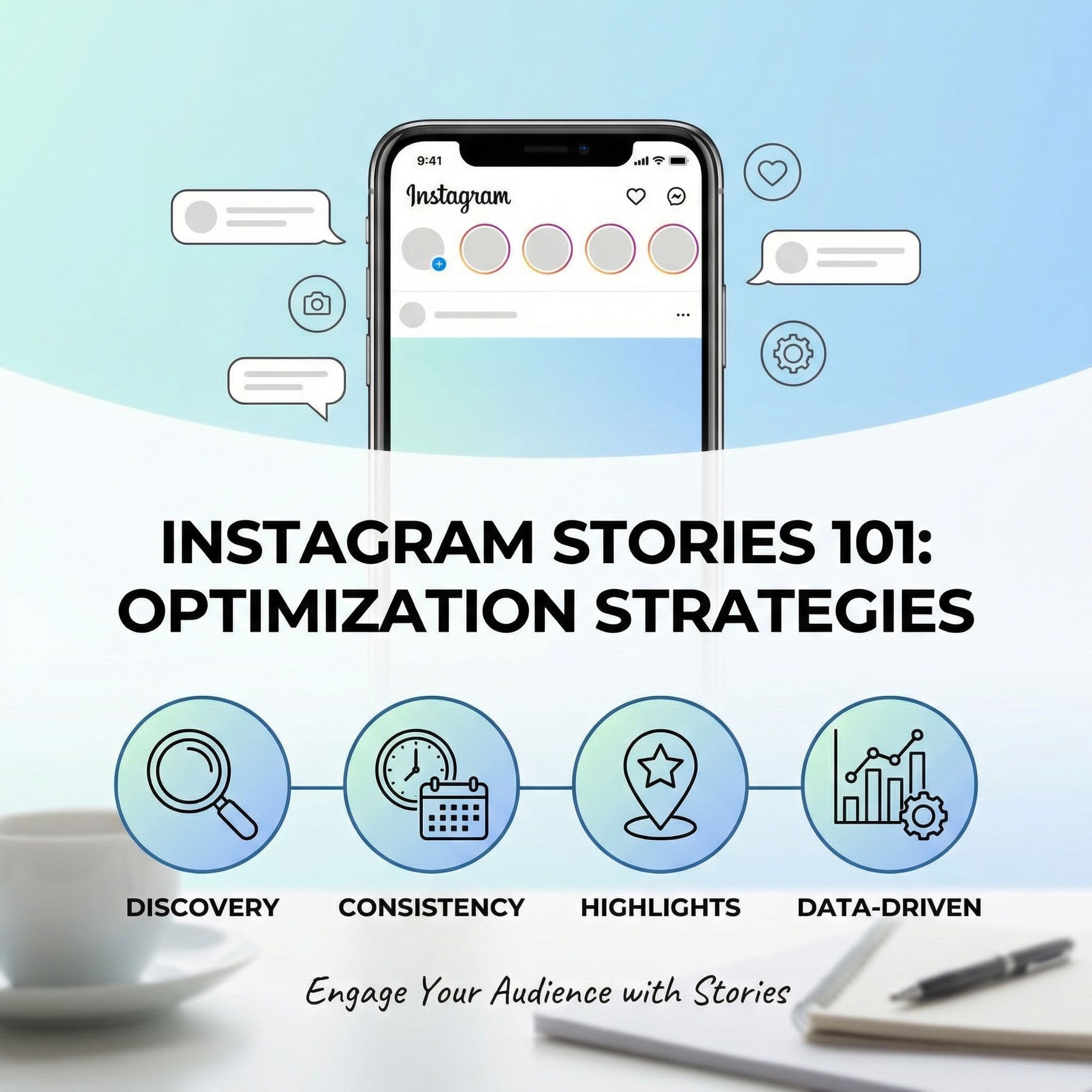
The optimization process has several layers: first, you need to get your Stories in front of more people through strategic use of discovery tools like hashtags and location tags. Second, you need to post consistently at times when your audience is most active to maximize completion rates. Third, you need to preserve your best content beyond the 24-hour window using Story Highlights. And finally, you need to analyze your performance data to understand what's actually working and adjust accordingly.
Most creators and businesses neglect at least one of these layers, which means they're leaving significant engagement and reach on the table. A comprehensive approach to Stories optimization means attending to all four areas systematically. Let's break down each one and explore how to implement them strategically.
Hashtags, Location Tags, and Strategic Discoverability: Expanding Your Stories Reach
Most people think hashtags are just for feed posts, but they work equally well for Stories—and many creators completely ignore this opportunity. When you add hashtags and location tags to your Stories, you're making them discoverable to people outside your immediate follower base. This is critical for growth, especially if you're building a new audience or trying to reach niche communities.
Here's how the mechanics work: when someone clicks on a hashtag or location tag, Instagram shows them recent content using that tag. For hashtags, this includes Stories. So if you tag your Story with relevant hashtags, people searching or browsing those hashtags can discover your content. This is particularly powerful for niche hashtags where the competition is lower and the audience is highly targeted.
The strategy isn't to stuff your Stories with as many hashtags as possible. That looks spammy and actually reduces engagement. Instead, use 3-5 highly relevant hashtags that your target audience is actually searching for. Research hashtags in your niche and pay attention to which ones have strong engagement. A mix of larger hashtags (100K+ posts) and smaller niche hashtags (10K-50K posts) typically works best. The larger hashtags give you broader reach; the smaller ones help you reach more qualified, interested audiences.
Location tags work similarly but often get overlooked. If your business has a physical location, always tag it. If you're creating content at interesting locations, tag them. People often browse location tags looking for local recommendations and content, so this is particularly valuable if you serve a geographic market. Even if you don't have a physical location, tagging relevant locations can help you reach people interested in that area.
The data on hashtag effectiveness in Stories shows that Stories with 3-5 relevant hashtags receive 15-30% higher reach than Stories without hashtags. Combined with location tags, this can increase discoverability by 40-50%. For growing accounts especially, this is one of the highest-ROI optimization tactics you can implement. It requires minimal effort but significantly expands who sees your content.
Posting Consistency and Timing: The Science of When Your Audience Actually Watches
Here's a fact that surprises many people: the time you post Stories matters enormously for completion rates. But it's not universal—the optimal posting time for your audience depends on who they are and when they're actually using Instagram. This is why generic "post at 9 AM" advice is basically useless. You need to know when your specific audience is most active.
The behavioral science here is straightforward: people are more likely to watch Stories that appear when they're actively using Instagram. If you post at 2 AM and your audience is sleeping, almost nobody will see it in those first crucial hours when Stories are most visible. But if you post at 7 AM when your audience is waking up and checking their phone, you'll capture them at the moment they're looking for content. This creates a compounding effect where higher initial engagement triggers Instagram's algorithm to show your Stories to even more people.
To find your optimal posting times, you need to use Instagram's built-in analytics. Go to your Insights and look at the "Total Followers" tab, which shows when your followers are most active. Most accounts will have 2-3 peak activity windows throughout the day. Post Stories during these windows, and your completion rates will be noticeably higher. For most accounts, peak times are typically early morning (7-9 AM), lunch time (12-1 PM), and evening (6-8 PM), but this varies significantly by audience.
Consistency is equally important. Your audience learns when to expect your Stories, and they check your profile at those times. If you post randomly, you train your audience to check less frequently because they never know when you'll post. But if you post consistently at the same times each day, your audience learns to check your profile at those times. This creates a habitual engagement pattern that significantly increases your overall reach and completion rates.
The practical recommendation: post at least 3-5 Stories per day, clustered around your peak activity windows. If you have multiple peak times, spread your Stories across them rather than dumping all your content at once. This maximizes the number of people who see your Stories during times when they're actively browsing. Track your analytics weekly and adjust your posting schedule based on what you're seeing in your data. What works in January might shift as your audience grows and evolves.
Story Highlights: Preserving Your Best Content Beyond 24 Hours and Building a Strategic Archive
Story Highlights are one of the most underutilized features in Instagram Stories, which is unfortunate because they're incredibly powerful for both engagement and conversion. Highlights allow you to save Stories permanently on your profile, organized by topic. This transforms your profile from a static grid of feed posts into a dynamic, story-rich experience that tells the full story of your brand or personal brand.
The strategic value of Highlights is multifaceted. First, they extend the lifespan of your best content beyond 24 hours, allowing new followers to discover your best Stories long after they originally posted. Second, they organize your content thematically, making it easy for visitors to your profile to understand what you do and what you offer. Third, they serve as a lead generation tool—you can create Highlights for different audience segments or interests, guiding people toward relevant content and offers.
The structure most successful creators use includes Highlights for categories like: "About Me," "Behind the Scenes," "Customer Stories," "Tips & Advice," "New Offers," "FAQ," and any other category relevant to your brand. Each Highlight should have 8-12 Stories that comprehensively cover that topic. The cover images for Highlights should be custom-designed (not just screenshots) with text indicating what the Highlight contains. This makes your profile feel intentional and professional.
From a conversion standpoint, Highlights are powerful because they give people a way to engage with your content without following you first. Someone visiting your profile can browse your Highlights to understand what you offer, watch relevant Stories, and decide if they want to follow or take action. For businesses, creating a "Services," "Testimonials," or "Before & After" Highlight can serve as a mini-sales page that converts profile visitors into customers.
The data shows that accounts with 5+ organized Highlights receive 20-30% higher profile engagement and significantly higher conversion rates. This is because Highlights make your profile functional—they serve a purpose beyond just showing your feed grid. They demonstrate that you've thought strategically about how to present your content and make it easy for your audience to find what they're looking for.
Stickers, GIFs, Music, and Visual Enhancement: Making Your Stories Impossible to Ignore
The visual and audio elements you add to your Stories—stickers, GIFs, music, and text effects—might seem like decorative flourishes, but they're actually crucial engagement drivers. These elements serve multiple purposes: they make your Stories more visually interesting and memorable, they signal that you've put effort into creating quality content, and they can enhance the emotional impact of your message.
Let's start with music, which is surprisingly impactful for engagement. Stories with music receive higher completion rates and are shared more frequently than Stories without music. This is partly because music creates an emotional connection and makes content more memorable. The psychology is well-established: music triggers emotional responses and creates associations with the content it accompanies. A Story about your journey with the right background music is far more impactful than the same Story with silence.
Instagram's music library has thousands of options across every genre and mood. The strategy is to match the music to the emotional tone of your Story. Uplifting, energetic music for motivational or exciting content. Calming, contemplative music for reflective or educational content. Fun, playful music for lighthearted or entertainment-focused Stories. Don't just slap any music on—be intentional about the emotional tone you're creating.
Stickers are equally important. Interactive stickers (polls, questions, quizzes, sliders) we've already covered, but decorative stickers also serve a purpose. They break up text-heavy Stories, make your content feel more dynamic and less like a boring lecture, and can reinforce your brand personality. A minimalist brand might use fewer, more subtle stickers, while a fun, playful brand might use more colorful, expressive stickers. Consistency in sticker usage helps build brand recognition.
GIFs add movement and visual interest to static Stories. They work particularly well for transitions between Story frames, for emphasis on important points, and for adding visual interest to text-heavy content. The key is not overdoing it—one or two well-placed GIFs per Story is usually optimal. Too many GIFs makes your Stories feel chaotic and unprofessional.
Text effects and formatting also matter. Use bold, readable fonts. Add contrast between text and background so text is always legible. Use color strategically to draw attention to important information. The visual presentation of your Stories contributes to how professional and intentional they appear, which impacts whether people take you seriously and engage with your content.
Call-to-Action Strategy: Converting Story Views into Meaningful Actions and Direct Engagement
This is where Stories transition from engagement tool to conversion tool. Every Story should have a clear purpose and a corresponding call-to-action (CTA) that guides your audience toward the next step you want them to take. Without a clear CTA, even highly engaged viewers don't know what you want them to do next, and the engagement doesn't translate into meaningful business results.
The most direct CTA in Stories is the swipe-up link, available to accounts with 10,000+ followers or verified accounts. If you have swipe-up capability, use it strategically. Swipe-up links should go to relevant landing pages: a product page for promotional Stories, a blog post for educational Stories, a signup form for lead generation Stories, or a specific offer page for sales Stories. The key is relevance—the linked page should be directly related to the Story content, not a generic homepage.
But swipe-up isn't available to everyone, and even when it is, it's not the only conversion mechanism. Direct messages are incredibly powerful for conversion, especially for service-based businesses. A Story CTA might be "DM me if you're interested" or "Message me to learn more." This creates a direct conversation channel that's often more effective than link clicks. People who message you are already demonstrating serious interest, and you have an immediate opportunity to engage with them personally.
Other effective CTAs include asking people to comment on your feed post (which drives feed engagement), tag a friend who should see the content, or follow you for more. These CTAs work well when your goal is growth and engagement rather than immediate conversion. The point is: be intentional about what action you want people to take, and make that action crystal clear in your Stories.
The psychology of effective CTAs is about reducing friction and making the desired action obvious. Don't assume people will figure out what to do. Tell them explicitly: "Swipe up to see the full guide," "DM me if you want to work together," "Comment your biggest challenge below." Explicit CTAs get higher response rates than implicit ones because you're removing any ambiguity about what you want them to do.
Timing matters too. Place your CTA at the end of the Story sequence, after you've provided value or told your story. A CTA in the first frame before you've given people a reason to care will be ignored. But a CTA at the end of a valuable, engaging Story sequence, after you've built interest and trust, will get much higher response rates. Think of your Stories as a narrative arc, with the CTA as the natural conclusion.
Analytics and Insights: Using Data to Identify Top-Performing Content and Optimize Your Strategy
Here's the truth that separates successful Stories strategists from people just posting randomly: your analytics are your roadmap. Instagram provides detailed insights into how your Stories perform, who's watching them, and what's working. If you're not regularly checking this data and adjusting based on what you learn, you're essentially flying blind.
The key metrics to track in your Stories analytics are: completion rate (what percentage of people who start watching finish?), taps forward (how many people skip through quickly?), taps back (how many people rewatch?), replies (how many people message you), shares (how many people share your Stories?), and exits (how many people leave your profile?). Each of these metrics tells you something different about how your Stories are performing.
A high completion rate means people find your content valuable or interesting enough to watch through. A low completion rate with high taps forward means your content isn't engaging people—they're skipping through. High taps back mean people found something worth rewatching—your content resonated. Replies indicate strong engagement and interest. Shares mean your content is valuable enough that people want others to see it. Exits mean your Stories are turning people away from your profile.
Use this data to identify patterns. Which types of Stories have the highest completion rates? Which CTAs get the most responses? Which posting times drive the highest engagement? Which hashtags bring the most engaged viewers? Once you identify these patterns, double down on what's working and eliminate or revise what isn't.
The practical process: every week, spend 10 minutes reviewing your top-performing Stories from the past week. Note what they had in common. Were they behind-the-scenes? Did they have interactive elements? What was the posting time? Then look at your underperforming Stories and identify what they were missing. This systematic review process, done weekly, creates continuous improvement that compounds over time.
Create a simple spreadsheet tracking your Stories performance weekly: date, content type (BTS, tip, promotional, etc.), posting time, interactive elements used, completion rate, replies, shares, and any notes about what worked. Over time, this data becomes incredibly valuable—you'll see clear patterns about what your specific audience responds to, and you can optimize your entire Stories strategy around those patterns.
One important note: don't obsess over vanity metrics like total views. A Story with 1,000 views but a 20% completion rate and 50 replies is far more successful than a Story with 5,000 views but a 5% completion rate and 5 replies. Completion rate, engagement rate, and response rate are far more meaningful indicators of success than raw view counts. These metrics indicate that you're creating content that actually resonates with your audience, not just reaching a lot of people who don't care.
Instagram Stories have evolved from a novelty feature to the primary engagement tool for building genuine community connection with your audience. Throughout this guide, we've explored the psychological foundations of why Stories work—from the urgency created by the 24-hour window to the community-building power of authentic, behind-the-scenes content. We've covered the tactical elements: interactive features that boost engagement, narrative sequencing that keeps people watching, discovery optimization through hashtags and timing, and data-driven decision making that separates successful strategists from those just posting randomly.
The through-line connecting all these elements is this: Stories aren't just a broadcasting channel for your messages. They're a relationship-building platform where you can create genuine connection with your audience, understand what they care about through interactive engagement, and build trust that eventually translates into meaningful business results. When you approach Stories with intention and strategy—rather than as an afterthought—they become one of your most powerful tools for sustainable growth and community building.
Implementing this comprehensive Stories strategy requires consistency, willingness to experiment, and regular analysis of what's working. Start with one or two elements from this guide—perhaps adding interactive features to your Stories this week and refining your posting schedule next week. Build your Stories system gradually, measure your results, and adjust based on what your specific audience responds to. Over time, Stories will shift from feeling like another task on your content calendar to becoming a natural, intuitive part of how you connect with and serve your community.
If you want a low-lift way to apply these ideas, Aidelly helps you keep your social content consistent without extra busywork. Mastering Instagram Stories is about understanding your audience's psychology and showing up consistently with authentic moments—but managing this across multiple platforms while maintaining a cohesive brand voice can quickly become overwhelming. That's where Aidelly comes in: you can create and schedule your most engaging Stories content in advance, maintain perfect posting consistency without the daily stress, and ensure your brand voice stays authentic across all your channels. If you're ready to transform Stories from a daily scramble into a strategic tool that builds real community connection, Get started at aidelly.ai.Compare Social Scheduling Tools
Evaluating software for your content workflow? Use our buyer guides and comparisons to compare scheduling, approvals, analytics, and AI workflow fit.
Share this article
Related Articles
Social Media Trends 2026: The Beginner's Survival Guide to Staying Ahead Without the Overwhelm
Social media in 2026 looks nothing like it did three years ago. If you're just starting out or trying to grow your small business online, you've probably noticed the landscape has shifted dramatically—new platforms are popping up, algorithms are rewarding different behaviors, and the pressure to 'keep up' feels more intense than ever. But here's the good news: you don't need a massive budget or a team of experts to win on social media anymore. This comprehensive guide breaks down the 10 trends that actually matter for beginners in 2026, cuts through the hype, and gives you practical, step-by-step tactics you can implement today. Whether you're a solopreneur, a freelancer building your personal brand, or a small business owner with a shoestring marketing budget, you'll learn exactly where to focus your energy for maximum impact.
Feb 5, 2026
Read more
Demystifying Social Media Algorithms in 2026: A Beginner's Guide to Getting Noticed Without Gaming the System
Social media algorithms feel like black boxes, right? You post content and hope it reaches people, only to watch your engagement numbers flatline. But here's the truth: algorithms aren't mysterious gatekeepers designed to frustrate you. They're actually systems built to connect creators like you with audiences who genuinely care about what you're sharing. In this comprehensive guide, we'll break down exactly how algorithms work across Instagram, TikTok, Facebook, LinkedIn, and Twitter, reveal what actually influences your visibility, and give you practical strategies to grow your reach organically. Whether you're a small business owner, aspiring influencer, or freelancer just starting out, you'll learn the real factors that matter—and the myths you can stop worrying about right now.
Feb 5, 2026
Read more
Buffer vs. Hootsuite vs. Aidelly: Which Social Media Scheduling Tool Is Best for Beginners in 2026?
Choosing your first social media scheduling tool doesn't have to be overwhelming. In 2026, three platforms stand out for beginners: Buffer's refreshing simplicity, Hootsuite's comprehensive power, and Aidelly's AI-driven innovation. We've cut through the noise and created an honest comparison focused on what actually matters when you're just starting out—ease of use, learning curve, and real value from day one. Whether you're a solopreneur managing your first Instagram account or a small business owner juggling multiple channels, this guide will help you pick the tool that fits your actual needs, not just the one with the most features.
Feb 5, 2026
Read moreReady to never miss a post again?
Tell Aidelly what to post. It drafts, schedules, and publishes across 9 platforms while you focus on your business.