How Consistent Posting Builds Trust (and Why That's Critical for Your Service Business)
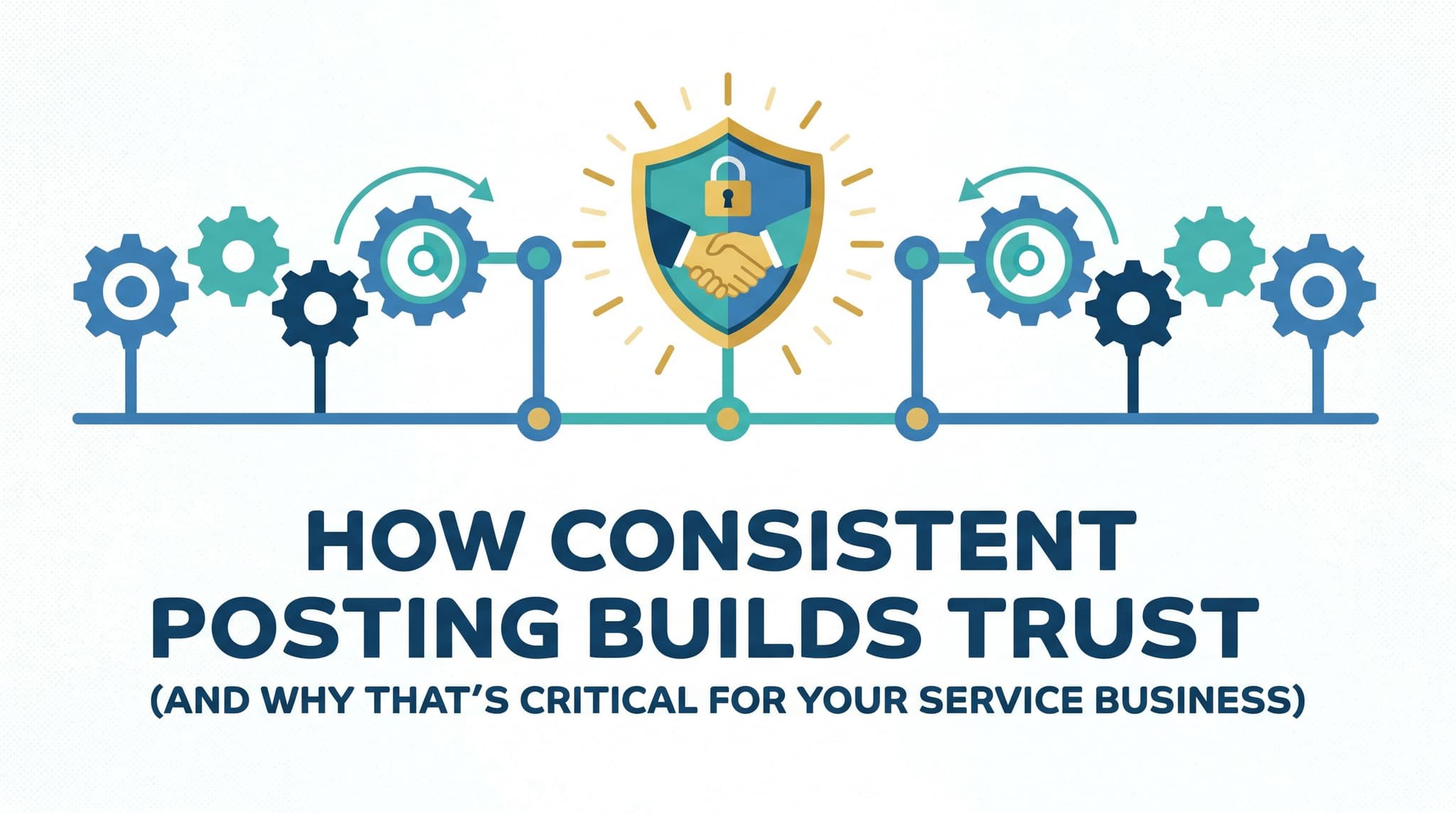
You know you should be posting more consistently on social media. You've known it for a while. And yet, here you are, looking at a feed where the last post went up three weeks ago, telling yourself you'll get back on track next week. This isn't a motivation problem. It's a system problem. And it's costing you clients who checked your profile, saw the silence, and moved on.
Your Posting Cadence Is a Trust Signal
Before a potential client books a call, fills out your contact form, or walks through your door, they check you out online. Usually on Instagram, LinkedIn, or Facebook. And what they find in those 30 seconds shapes whether they reach out or keep scrolling.
Trust Is the Product for Service Businesses
If you're a coach, consultant, real estate agent, restaurant owner, or freelancer, you are the product. Clients aren't buying software or a physical item they can return. They're buying your judgment, your expertise, your reliability. That means trust isn't a nice-to-have marketing outcome. It's the foundation of every sale you make.
Social media is where that trust gets built before anyone ever talks to you. A prospect might find you through a referral, a Google search, or a hashtag. But before they reach out, they're going to look at your profile. They're going to scroll your feed. They're forming an opinion based on what they see, and one of the clearest signals they pick up on is whether you show up regularly.
Research from Sprout Social shows that 74% of consumers say consistent brand presentation across channels increases trust. That number holds whether you're a solopreneur life coach in Austin or a boutique marketing agency in Chicago. Consistency signals that you're active, reliable, and still in business. It tells people you do what you say you'll do, before they've even had a conversation with you. For a service business, that signal is worth more than any single clever post.
Think about how you behave as a consumer. If you're looking for a financial advisor and you find two profiles, one that posts twice a week with clear, useful content and one that posted three times in 2024 and then went quiet, which one do you trust more? The answer is obvious. Your prospects are making the same call about you.
What Consistency Actually Communicates
Consistency on social media communicates more than just activity. It communicates that you're organized, that you care about your audience, and that you're not going anywhere. For service businesses, where the relationship starts before the contract does, that matters a lot.
A coach who posts every Tuesday and Thursday is telling potential clients something without saying a word: I show up when I say I will. A real estate agent who shares market updates every Monday is building a reputation as someone who stays informed and keeps their audience informed. A restaurant that posts their weekly specials every Thursday is giving people a reason to keep following and keep coming back.
These aren't just marketing tactics. They're proof of character delivered in small doses over time. And that proof compounds. The longer you maintain a consistent presence, the more authority you build, and the easier it becomes for a prospect to say yes when they finally reach out.
The Numbers Back It Up
The Sprout Social data isn't the only signal here. Brands that post consistently see higher organic reach, better engagement rates, and stronger follower retention compared to those that post sporadically. Platform algorithms on Instagram, LinkedIn, and TikTok reward accounts that post regularly with more distribution. So consistency doesn't just build trust with your audience. It builds trust with the algorithm too, which means more people see you, which means more potential clients find you. The whole system works better when you show up on a schedule.
The Ghost Business Problem
There's a specific kind of damage that irregular posting does to a service business. It's not just missed opportunity. It's active doubt creation.
What a Prospect Sees When You Go Quiet
Picture this. Someone gets a referral to your coaching practice. They pull up your Instagram. The last post is from six weeks ago. What goes through their head?
They wonder if you're still taking clients. They wonder if something went wrong with your business. They wonder if maybe the referral is outdated and you've moved on to something else. None of these thoughts are fair, but they're completely natural. When there's no recent activity, people fill the silence with doubt. And doubt kills conversions before a single conversation happens.
This is what you might call the ghost business effect. You're still operating, still excellent at what you do, still available. But your social presence says otherwise. A prospect who doesn't reach out because your profile looked inactive is a client you lost without ever knowing you lost them. That's the most painful kind of missed business because there's no feedback, no signal, just silence on both ends.
Irregular posting creates this ghost business perception in a very predictable way. When a prospect checks your Instagram and sees the last post was six weeks ago, they question whether you're still operating, still good, or still available. Consistency is the only thing that removes that doubt entirely, not a clever bio or a polished logo, just regular, reliable presence.
Consistency Removes the Doubt
The fix isn't complicated, but it requires a system. When you post regularly, say three times a week on Instagram and twice a week on LinkedIn, a prospect who finds you on any given day sees recent content. They see that you're active. They see that you're engaged with your audience. The doubt never forms because there's no gap to fill with worry.
This is especially important for service businesses in competitive markets. A real estate agent competing with 50 other agents in the same zip code needs every edge they can get. A consultant pitching to a corporate client who's also looking at three other firms needs to look like the obvious choice. Regular posting doesn't just keep you visible. It keeps you credible at the exact moment a prospect is deciding whether to reach out.
The goal isn't to go viral. It's to be consistently present so that when someone is ready to make a decision, your profile looks like a business that's alive, active, and worth contacting. That's a low bar, but most service businesses don't clear it because they don't have a system that makes it easy.
The Compounding Effect of Showing Up
Here's what most people miss about consistency. It doesn't just prevent doubt. It builds authority over time. Every post you publish is a small deposit into a trust account with your audience. One post doesn't move the needle much. But 50 posts, 100 posts, 200 posts, all on-brand, all useful, all showing up on a predictable schedule, that's a body of work. That's a reputation. And reputations are what turn followers into clients and clients into referral sources. The compounding is slow at first and then very fast, but only if you stay in the game long enough to let it work.
A Content Calendar Is Trust Infrastructure
Most people think of a content calendar as an organizational tool. A place to plan what to post and when. That's true, but it's underselling what a calendar actually does for a service business.

Planning Ahead Means You Post When It Matters Most
The weeks when you most need to be visible are often the weeks when posting feels hardest. You're slammed with client work during a busy season. You're sick for three days in February. You're traveling for a conference and completely off your routine. Without a plan, those are the weeks when your social media goes dark, which is exactly when a prospect might be checking you out for the first time.
A content calendar changes that equation. When you plan your posts two or three weeks in advance, you're not relying on inspiration or free time to show up online. The posts are already written. They're already scheduled. They go out whether you're at your desk or on a plane or in bed with a fever. That regularity, the fact that your audience sees you even when life gets hard, is what turns a posting habit into brand authority.
A content calendar is not just an organizational tool. It's trust infrastructure. It's the system that makes your reliability automatic instead of dependent on how much energy you have on a given Tuesday morning. Planning posts in advance means you post during slow weeks, sick days, and busy seasons, not just when you feel like it. That regularity compounds over time into the kind of brand authority that makes prospects choose you without much deliberation.
Planning Removes Decision Fatigue
One of the biggest reasons service business owners stop posting is decision fatigue. Every time you sit down to post, you have to decide what to say, which platform to use, what format works, and whether it sounds right. That's a lot of cognitive load for someone who's already made a hundred decisions that day about their actual business.
A content calendar eliminates most of those decisions in advance. You sit down once a week or once a month, plan your content, and then you're done. The rest is execution, which is much easier than creation on demand. Aidelly's visual content calendar makes this practical for a solo operator or a small team. You can see your entire pipeline across every platform in one view, drag and drop posts, and make adjustments without losing track of what's going live when. It turns content planning from a stressful scramble into a clean, manageable process that doesn't require a dedicated social media manager.
Consistency Compounds Into Authority
There's a reason the most trusted voices in any industry, the coaches with the big followings, the consultants who get inbound leads without cold outreach, the real estate agents who are known as the go-to person in their market, all have one thing in common. They've been showing up consistently for a long time. That consistency compounds. Each post builds on the last. Each week you show up, you get a little more visible, a little more trusted, a little more top of mind. It doesn't happen overnight, but it does happen. And it only happens if you have a system that keeps you in the game even when motivation dips.
The System That Makes Consistency Automatic
Here's the honest truth about why service business owners don't post consistently. It's not laziness. It's not that they don't care. It's that they don't have a system that removes the friction. Posting consistently requires knowing what to say, finding the time to write it, figuring out the best time to post on each platform, and then actually doing it across multiple platforms, week after week. That's a lot of steps. Any one of them can become the bottleneck that breaks the habit.
Auto-Scheduling Removes the Manual Work
Auto-scheduling to the best times per platform is one of the most underrated tools available to service businesses. Most coaches, real estate agents, consultants, and restaurant owners don't have a dedicated social media manager. They're doing it themselves, usually in the margins of their day. That means posting often gets pushed to whenever they have a free moment, which might be 11pm on a Wednesday, not exactly prime time for reaching potential clients on LinkedIn or Instagram.
Scheduling tools solve this. You write the post when you have time, set it to publish at the optimal time for that platform, and move on. You save time, you reach more people, and you don't have to think about it again. For a solo operator managing Instagram, LinkedIn, Facebook, and maybe TikTok, that's the difference between a multi-platform presence that actually performs and a sporadic effort that burns you out. Auto-scheduling lets one person maintain a consistent presence across every channel without adding hours to their week or hiring someone to manage it. Service businesses don't have a dedicated social team, and they shouldn't need one to stay visible.
AI Content Creation Closes the Biggest Gap
Knowing you should post and knowing what to post are two very different things. Most service business owners get stuck at the second one. They sit down to write a post and go blank. Or they write something and delete it because it doesn't sound right. Or they spend 45 minutes on a caption that gets 12 likes and decide it's not worth the effort.
This is where AI-powered content creation paired with scheduling changes everything. When an AI tool understands your brand voice, your audience, and your goals, it can generate platform-optimized drafts that you review, tweak, and approve instead of writing from scratch. That's a completely different experience. Instead of staring at a blank screen, you're editing. And editing is ten times faster than creating from nothing.
Aidelly's AI-powered content drafting works this way. It generates content with your brand voice baked in, so the posts actually sound like you, not like a generic AI output. You can refine and schedule from one workspace without jumping between five different tools. That alone removes enough friction to make consistent posting realistic for a busy service business owner who has exactly 20 minutes between client calls.
Agentic Workflows End the Cycle of Inconsistency
The cycle most service business owners are stuck in looks like this. They get motivated, post a bunch, get busy, fall off, feel guilty, get motivated again. Repeat. The problem isn't motivation. The problem is that the system requires motivation to keep running. When motivation dips, the system stops.
Agentic workflows break that cycle at the root. AI-powered content creation paired with scheduling closes the biggest gap for service businesses: they know they should post, but they don't know what to say or when. Agentic workflows that handle ideation, drafting, scheduling, and analysis end the cycle of inconsistency because the system doesn't depend on how you feel on a given morning. It runs. Posts go out. Your presence stays consistent. Your trust signal stays strong.
Aidelly's agentic workflows handle the full cycle autonomously. And if you're already using Claude or ChatGPT to draft emails or brainstorm ideas, you can connect them directly to your social media accounts through Aidelly's MCP server and post straight from your AI assistant. Tell Claude to schedule a LinkedIn post about your new service offering and it handles the rest, no extra steps, no separate tool to open. That's not a scheduling feature. That's a workflow that removes the human bottleneck entirely and keeps your business showing up even when you're heads-down in client work.
Inconsistency on social media isn't a character flaw. It's a workflow gap. When you have a system that plans your content in advance, schedules it at the right times, and uses AI to handle the drafting, consistency stops being something you have to force and starts being something that just happens. That's when the trust compounds. That's when prospects find you and see a business that shows up, and reach out because of it. The right tools don't just make social media easier. They make your business look like one worth trusting, every week, whether you're thinking about it or not.
If you want a low-lift way to apply these ideas, Aidelly helps you keep your social content consistent without extra busywork.Consistency stops being a willpower problem the moment you have a system doing the work. Aidelly's agentic workflows handle content creation, scheduling, and performance analysis end-to-end, so your presence stays steady even when your week gets messy. If you're ready to stop posting in bursts and start building real trust with your audience, head to aidelly.ai and see how it works.
Compare Social Scheduling Tools
Evaluating software for your content workflow? Use our buyer guides and comparisons to compare scheduling, approvals, analytics, and AI workflow fit.
Share this article
Related Articles
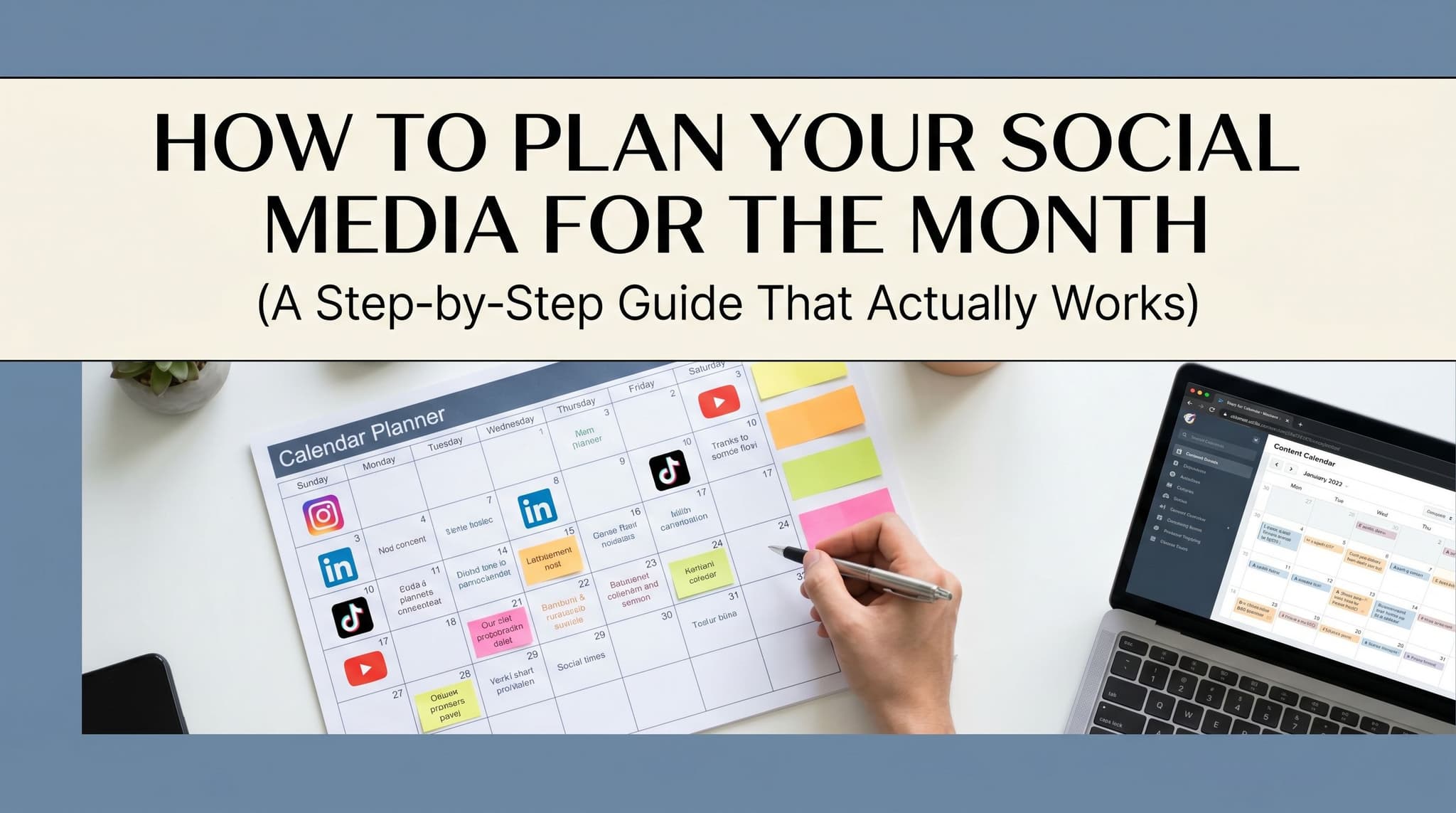
How to Plan Your Social Media for the Month (A Step-by-Step Guide That Actually Works)
Most people treat social media planning like a chore they put off until the last minute. They post when they remember, scramble for ideas on Monday morning, and wonder why their numbers never improve. The fix is not posting more. It is planning smarter. This guide walks you through a real monthly planning process, step by step, from setting goals to auditing last month's performance to batching your content creation so you are not reinventing the wheel every week. And at each stage, you will see how agentic AI tools can take over the repetitive work so you only have to do the thinking once. The result is not just a full content calendar. It is a system that keeps running even when you are heads-down in the actual work of your business.
May 1, 2026
Read more
20 Instagram Post Ideas for Small Businesses and New Creators (With a Plan to Actually Use Them)
Most small businesses and new creators do not run out of motivation on Instagram. They run out of ideas. You know you need to post. You sit down to write a caption and your mind goes blank. Or you post three times in one week, then nothing for two weeks, and the algorithm buries you. This article gives you 20 specific Instagram post ideas built for small businesses, solopreneurs, coaches, restaurants, real estate agents, and anyone just getting started. Each idea connects to a real business goal, whether that is building trust, driving traffic, or generating leads. And at the end, you will see how to turn this list into a repeatable monthly content system you can batch and schedule in advance, so you stop starting from zero every single week.
May 2, 2026
Read more
20 Instagram Post Ideas for Small Businesses and New Creators (Plus How to Turn Them Into a 60-Day Content Plan)
Most small businesses hit a wall on Instagram around week two. The first few posts come easy. Then the ideas dry up, the posting gets inconsistent, and the account goes quiet. It happens to bakeries, coaches, handmade shops, and local service businesses all the time. The problem is not that you lack a story or a product worth sharing. The problem is not having a system. This article gives you 20 proven Instagram post ideas built for small businesses and new creators, each one tied to a real goal like building trust, driving traffic, or getting leads. Then it shows you how to take those 20 ideas and turn them into a full 60-day content pipeline using a visual content calendar and AI tools. No design team needed. No social media degree required. Just a repeatable system that keeps your account active and working for your business.
May 2, 2026
Read moreReady to never miss a post again?
Tell Aidelly what to post. It drafts, schedules, and publishes across 7 platforms while you focus on your business.