The Beginner-to-Beginner Partnership Playbook: How to Collaborate and Grow on Social Media in 2026
Here's something nobody tells you when you're starting out on social media: the best partnerships don't happen between a tiny creator and a mega-influencer. They happen between people like you—creators with small but engaged audiences, solopreneurs building their brand, coaches launching their online presence, and creatives who are tired of shouting into the void.
Back in 2026, the social media landscape has completely shifted. Algorithms favor authenticity and community-driven content over vanity metrics. Micro-collaborations between creators at similar follower counts are generating more engagement, more genuine connections, and more sustainable growth than ever before. The barrier to entry? It's basically zero. You just need a strategy, a bit of courage, and the willingness to show up for someone else's audience.
If you've ever thought, "I have nothing to offer yet, so why would anyone want to collaborate with me?"—this playbook is for you. We're going to walk through everything you need to know to find the right partners, approach them professionally, create content that doesn't feel like a desperate ask, and build relationships that lead to recurring opportunities. Ready to stop growing alone?
Section 1: Finding Your People—The Foundation of Smart Collaborations
Before you send a single collaboration pitch, you need to understand who you're actually looking for. This isn't about follower count; it's about fit. The wrong collaboration partner—even one with a huge audience—can tank your engagement and waste both of your time. The right partner, even if they have only 500 followers, can open doors you didn't know existed.
The foundation of every successful collaboration is audience alignment combined with values alignment. Your audiences don't have to be identical, but they should overlap meaningfully. If you're a fitness coach targeting busy professionals and you collaborate with someone who creates content for college students, the overlap might feel natural until it doesn't. Your audience tunes in for professional advice delivered with confidence; their audience tunes in for relatable, chaotic energy. When you show up in their content, some of their followers will feel like they've landed in the wrong place.
This is why the identification and vetting process is so critical. It's where most beginners mess up—they see someone with decent engagement and shoot off a collaboration request without actually understanding whether it makes sense. Then they're confused when the collaboration doesn't move the needle.
1.1 Identifying and Vetting Potential Collaboration Partners with Aligned Audiences and Values
The first step is knowing where to look. Most beginners either randomly DM creators they like or assume they need to chase the biggest accounts in their niche. Neither approach works well. Instead, you want to be intentional about who you target for partnerships.
Start by identifying your niche and the adjacent niches that naturally complement it. If you're a productivity coach, your natural collaborators might include habit-tracking app creators, minimalism advocates, time management experts, or even mental health creators focused on stress management. These aren't identical audiences, but they overlap significantly.
Next, actually spend time with potential partners' content. Don't just glance at their follower count. Watch several of their videos or posts. Read their captions. Look at their comments section. What kind of people are engaging? What's the tone of the community? Are people having genuine conversations, or is it just emojis and generic praise? This tells you whether their audience is actually engaged or just inflated by bots and inactive followers.
Check their posting consistency and engagement rate. A creator with 2,000 followers and 200 likes per post (10% engagement) is far more valuable than a creator with 10,000 followers and 100 likes per post (1% engagement). Tools like Social Blade or Creator Analytics can help you see engagement patterns over time. You're looking for creators who have built real community, not just accumulated numbers.
Most importantly, assess values alignment. Spend time understanding what they stand for. Do they promote things that conflict with your values? Do they have a history of drama or unethical behavior? Are they genuine, or do they feel like they're constantly selling? The beauty of beginner-to-beginner collaborations is that you're usually working with people who are still building their brand authentically. But you still need to verify this. A collaboration with someone whose values clash with yours can damage your credibility far more than no collaboration at all.
1.2 Creating a Collaboration Wish List and Tracking System
Once you've identified the landscape, create a simple tracking system. This doesn't need to be complicated—a Google Sheet works perfectly. List potential collaborators along with key information: their follower count, engagement rate, niche overlap, values alignment (yes/no), posting frequency, and any notes about why they'd be a good fit.
Organize them into tiers. Tier 1 are your absolute dream collaborators—perfect audience match, strong engagement, shared values. Tier 2 are solid options with some overlap. Tier 3 are people you'd collaborate with if the opportunity arose but aren't priority targets. This framework helps you be strategic about where you spend your outreach energy.
Update this list regularly. Every month or two, add new creators you discover and re-evaluate existing ones. As your account grows, you might outgrow some of these partnerships, and that's fine. The point is to always have a clear sense of who your ideal collaborators are, rather than randomly reaching out when inspiration strikes.
1.3 Red Flags That Indicate a Poor Collaboration Fit
Sometimes it's easier to know who NOT to collaborate with. Watch out for creators who seem to collaborate with everyone indiscriminately. This often signals they're not selective about quality and might be using collaborations purely for growth-hacking rather than building genuine partnerships. Also be wary of creators who have a history of drama—public feuds, call-outs, or constant controversy. You don't want that energy attached to your brand.
If a creator's engagement suddenly spikes and then drops, or if they have thousands of followers but minimal engagement, they might have purchased followers or engaged in other inauthentic growth tactics. Avoid this. If their audience is predominantly bots (check the comments—do they look like real people or generic spam?), the collaboration won't benefit you no matter how many followers they have.
Finally, if something feels off when you're researching them, trust that instinct. If their content doesn't align with yours, if their values seem different, or if their community feels toxic, move on. There are plenty of other creators out there who are a better fit.
Section 2: Making the Ask—Pitches, Proposals, and Platform-Specific Strategies
You've found potential partners. Now comes the part that makes most beginners nervous: actually reaching out. The good news? When you've done your homework in the identification phase, the outreach becomes so much easier. You're not cold-pitching a stranger; you're reaching out to someone whose work you genuinely know and appreciate.
The biggest mistake beginners make is framing collaboration as a one-way ask. "Will you give me a shoutout?" or "Can you mention my account?" These feel desperate because they are. You're asking someone to do you a favor with nothing in return. Instead, you need to frame collaboration as mutual benefit. Both of you are getting something valuable from this partnership.
What's valuable? Expanded reach to a new audience, fresh content ideas, increased engagement on both sides, and the ability to deliver more value to your respective communities. When you position collaboration this way, you're not asking for a favor—you're proposing a win-win.
The execution of this varies significantly by platform. Instagram collaboration looks different than TikTok collaboration, which looks different than YouTube or LinkedIn. You need to understand the native features of each platform and leverage them strategically.
2.1 Types of Collaborations Suitable for Beginners: From Shoutouts to Affiliate Partnerships
Let's talk about the different collaboration formats available to you. Understanding each type helps you propose the right collaboration for the right situation.
Shoutouts and Cross-Promotions: The most straightforward collaboration. You mention each other to your respective audiences, ideally with genuine enthusiasm about why you recommend them. This works best when it's organic—mentioning them in a story, video, or post because their work genuinely aligns with what you're sharing. A shoutout feels authentic when it's integrated naturally into your content rather than tacked on as an afterthought. "Hey, this creator makes amazing content about X, and if you like my content about Y, you'll probably like theirs" hits different than "Check out @username because they asked me to."
Duets and Stitches: These are platform-native features that are absolute gold for beginners. On Instagram Reels, you can duet with another creator's content, creating a split-screen video where you respond to or build on their content. On TikTok, stitches let you take a snippet of someone's video and create your own response around it. These formats are inherently collaborative and feel authentic because they're literally building on each other's ideas. They also tend to perform well algorithmically because the interaction signals engagement.
Joint Content and Collaborations: Creating something completely new together. This might be a podcast episode where you interview each other, a YouTube video where you both appear, a blog post written collaboratively, or even a challenge you create together. Joint content requires more coordination but creates the most value because it's entirely new material that neither of you could have created alone. This is where true synergy happens.
Affiliate Partnerships: If either of you has products or recommends products, you can set up affiliate relationships where you recommend each other's offerings and earn commission on sales. This works best when you genuinely use and believe in what you're recommending. A fitness coach recommending a productivity app they actually uses to their audience feels authentic. An arbitrary product recommendation feels like a cash grab.
Tag-Team Content and Series: Creating recurring content together. Maybe you do a weekly "expert roundup" where you feature different creators, or you start a monthly series where you interview someone from your industry. This builds anticipation and gives you a reason to collaborate repeatedly with the same people.
The best collaboration for beginners is usually a combination of these. Start with a shoutout or duet (low barrier to entry, quick to execute), then graduate to joint content as you build the relationship.
2.2 Strategies for Approaching Potential Partners with Professional Pitches and Clear Value Propositions
Here's where most beginners struggle: they don't know how to write an outreach message that actually gets a response. Let's fix that.
First, the basics: personalize every single message. No copy-paste templates. Actually reference their work. "I loved your recent video about [specific topic]" is infinitely better than "I'm a creator and think we should collaborate." It shows you actually know their content.
Second, be clear about what you're proposing. Don't be vague. "I think we should collaborate" is too broad. "I'd love to create a duet where I respond to your productivity hacks with my time-blocking method" is specific and actionable.
Third, lead with what they get, not what you get. Instead of "I have X followers and would love a shoutout," try "Your audience is super interested in [topic], and I create content that goes deeper into [related angle]. I think a collaboration would give your followers more value." You're positioning this as a gift to their audience, not a favor to you.
Here's a template you can customize:
"Hi [Name], I've been following your [content type] for [timeframe], and I really appreciate how you approach [specific thing they do well]. I think your audience would get value from [what you offer], and my audience would love your perspective on [your niche]. I'm thinking we could [specific collaboration idea—duet, joint content, shoutout, etc.]. Would that be interesting to you? Happy to brainstorm other ideas too."
Keep it short. Three to four sentences maximum. Respect their time. They're probably getting a lot of messages.
Finally, make it easy for them to say yes. Don't ask them to come up with ideas. Come with a specific proposal. Don't ask them to figure out logistics. Suggest a timeline. The easier you make it, the more likely they are to respond positively.
2.3 Platform-Specific Collaboration Features: Instagram Reels Duets, TikTok Stitches, YouTube Community Posts, and LinkedIn Article Shares
Each platform has native features designed to facilitate collaboration. Mastering these is essential for beginner collaborations because they're built into the algorithm and tend to perform well.
Instagram Reels Duets: When you duet someone's Reel, it creates a split-screen video. This feature is perfect for responding to trends, providing alternative perspectives, or playfully challenging someone's take on something. The duet format automatically credits the original creator and shows both videos side-by-side, making it clear it's a collaboration. Duets also get algorithmic preference because they signal engagement and interaction.
TikTok Stitches: Similar to duets but with a different format. You take a clip from someone's video and create your own content around it. Stitches are great for reactions, educational additions, or building on someone's idea. Like duets, they credit the original creator and tend to perform well algorithmically.
YouTube Community Posts and Shorts: YouTube's community tab lets you share behind-the-scenes content, polls, and updates with your subscribers. You can tag collaborators in community posts. YouTube Shorts (YouTube's answer to TikTok) also supports collaboration features similar to duets. For longer-form YouTube videos, the classic collaboration format is featuring each other in videos or doing collab videos together.
LinkedIn Article Shares and Reposts: On LinkedIn, you can share articles, and other creators can reshare or comment on them, creating a collaborative discussion. This is particularly powerful for B2B creators, coaches, and thought leaders. You can also write collaborative articles or tag each other in posts to expand reach within professional networks.
The key with all of these features is that they're native to the platform and algorithmic-friendly. When you use them, you're working with the platform rather than against it. This means better visibility and more engagement for both collaborators.
Section 3: Executing, Measuring, and Building Long-Term Partnerships
The collaboration is approved. You've got a partner. Now what? This is where a lot of beginners drop the ball. They execute the collaboration, post it, and then never follow up. They don't measure results. They don't build on the momentum. They treat each collaboration as a one-off rather than the beginning of a relationship.
Successful collaborations require three things: authentic execution that delivers real value, measurement to understand what worked, and intentional relationship-building for recurring partnerships. Miss any of these, and you'll feel like collaboration isn't working for you.
The execution phase is where your collaboration actually comes to life. This is where you need to show up authentically, deliver value to both audiences, and make sure the collaboration doesn't feel forced or purely transactional. Then comes the measurement phase—understanding what this collaboration actually accomplished and whether it moved your key metrics. Finally, there's the relationship-building phase, which is often overlooked but absolutely critical. The best collaborators don't do one-off partnerships; they build friendships and recurring relationships that lead to multiple collaborations over time.
3.1 Creating Authentic Collaboration Content That Provides Value to Both Audiences
This is the heart of everything. If your collaboration content doesn't feel authentic or doesn't provide real value, nothing else matters. Your audience will sense the inauthenticity immediately, and the collaboration will backfire.
Here's the principle: every piece of collaborative content should answer the question, "What value does this provide to both audiences?" If you can't answer that question clearly, you're not ready to publish.
Let's say you're a skincare educator and you're collaborating with a sustainable fashion creator. A purely promotional collaboration where you both just say "Go follow my friend!" provides zero value. But a collaboration where you discuss how sustainable fashion choices relate to skincare (reducing stress, improving sleep, etc.) and they discuss how skincare routines align with mindful living? That's valuable. Your audience learns something new. Their audience learns something new. Both creators come across as knowledgeable and thoughtful.
The key is to find the genuine intersection between your niches and lean into that. If there's no real intersection, the collaboration will feel forced. You might want to reconsider whether you're actually a good fit.
When creating the content, be yourself. This is not the time to suddenly change your tone or pretend to be someone you're not. Your collaborator followed you because they like your authentic voice. Their audience is coming to see you be you. If you suddenly sound corporate or overly promotional, you've lost the plot.
Also, give the other creator space to be themselves. If you're appearing in their content, don't try to control how they present you. If they're appearing in yours, give them creative freedom. This mutual respect is what makes collaborations feel authentic rather than staged.
Finally, over-deliver on value. The collaboration should feel like a gift to both audiences, not an obligation. If you can add extra context, share a resource, or provide additional insight that goes beyond what was agreed upon, do it. This generosity sets the tone for a potential long-term partnership.
3.2 Using Data and Analytics to Measure Collaboration ROI and Identify Which Partnerships Drive the Most Engagement
You've executed the collaboration. Now measure it. This step separates creators who grow exponentially from those who stay stuck. You need to understand what actually works so you can do more of it.
Start with the obvious metrics: followers gained, engagement rate during and after the collaboration, views on the collaborative content, and click-throughs if applicable. Most platforms provide native analytics. Instagram shows you reach and impressions on Reels. TikTok shows you views and engagement rates. YouTube shows you watch time and subscriber growth. Track these for 7-14 days after the collaboration goes live to see the full impact.
But dig deeper. Use UTM parameters or unique links if applicable so you can track exactly where traffic is coming from. If you mentioned a link in the collaboration, use a shortened link with tracking so you know how many people actually clicked through. If you're driving people to your email list, track how many came from this collaboration specifically.
Most importantly, track audience quality, not just quantity. A collaboration that brings 100 highly engaged followers who actually interact with your content is worth more than a collaboration that brings 500 inactive followers. Look at which followers from the collaboration are engaging with your subsequent content. Are they sticking around, or do they disappear after the initial collaboration?
Create a simple spreadsheet where you log each collaboration: date, collaborator name, collaboration type (duet, shoutout, joint content, etc.), new followers gained, engagement rate, and qualitative notes about how it felt and whether you'd do it again. Over time, patterns will emerge. You'll notice that duets with creators in your specific niche drive more engagement than shoutouts from adjacent niches. Or that collaborations on Tuesday mornings perform better than Friday afternoons. These insights are gold.
Use this data to inform future collaborations. Double down on what works. Deprioritize what doesn't. And always be honest with yourself about which partnerships are actually moving the needle versus which ones feel good but don't deliver results.
3.3 Building Long-Term Relationships and Negotiating Terms for Recurring Partnerships
The best collaborators aren't one-off transactions. They're relationships. The creator you collaborate with once might become someone you work with repeatedly, refer to others, and genuinely support over time.
After a successful collaboration, don't just ghost. Send a message thanking them. Share the analytics if they're impressive. Tell them what you appreciated about working together. This simple gesture transforms a transaction into the beginning of a relationship.
If the collaboration went well, propose a recurring structure. "That duet performed really well for both of us. Want to make this a monthly thing?" or "I loved collaborating with you. Let's do joint content again next month." This removes the friction of starting from scratch each time and gives both of you something to look forward to.
As relationships develop, you can also negotiate more formal terms. Maybe you agree on posting schedules, content themes, or even compensation if one of you has significantly more followers. The key is to discuss expectations upfront so there's no ambiguity.
For beginner collaborations, compensation usually isn't involved—you're both trading reach and exposure. But as you grow, this might change. If someone with a much larger audience wants to collaborate, you might negotiate a fee or affiliate commission. Be open to these conversations, but don't initiate them unless it makes sense for your situation.
Finally, be a good collaborator. Respond to messages promptly. Follow through on commitments. Promote the collaboration across your platforms (not just where it's required). Tag your collaborator genuinely. Share their content with your audience even outside of formal collaborations. When you show up as someone who's genuinely invested in mutual growth, people want to keep working with you. These relationships compound over time, leading to more opportunities, more growth, and a genuine community of creators supporting each other.
3.4 Negotiating Collaboration Terms, Timelines, and Expectations to Ensure Successful Outcomes
Clear communication prevents disaster. Before you execute any collaboration, make sure you're aligned on the specifics.
Discuss the format: Are you doing a duet, joint video, shoutout, or something else? Make sure you're both picturing the same thing.
Discuss timing: When will each of you post? If you're doing a duet, should you post simultaneously so you can support each other? If you're doing a shoutout, when should it go live? Coordinate this so you can maximize visibility.
Discuss expectations: What are you each hoping to get from this? More followers? More engagement? Exposure to a new audience? Be honest about your goals. If their goal is purely to gain followers and yours is to provide value, you might have misaligned expectations that could create tension later.
Discuss content: What will you actually say or do in the collaboration? Will you script it, or keep it organic? If you're doing joint content, who's responsible for what? These details matter. The last thing you want is to record something and then realize you had different visions.
Discuss promotion: Will you both actively promote the collaboration across your platforms? Will you tag each other? Mention it in stories? Agree on the minimum promotion so both of you are invested in making it successful.
Put this in writing. Not a formal contract necessarily, but a quick message that summarizes what you've agreed to. This prevents misunderstandings and shows professionalism. "Just to confirm: we're doing an Instagram Reels duet on Thursday at 10am your time. I'll post my version, you'll post yours, and we'll both tag and promote each other in stories. Does that sound right?" Simple, clear, professional.
3.5 Avoiding Common Collaboration Pitfalls: Mismatched Audiences, Poor Communication, and Unequal Effort Distribution
Let's talk about what goes wrong and how to avoid it.
Mismatched Audiences: This is the most common pitfall. You collaborate with someone because they seem cool or because they have decent engagement, but your audiences don't actually overlap. When their followers see your content, they feel confused or uninterested. When your followers see them, they wonder why you're promoting this person. The collaboration gets minimal engagement because it doesn't feel organic. Solution: Do your homework before you pitch. Make sure there's genuine audience overlap and values alignment.
Poor Communication: You think you've agreed on one thing; they think you've agreed on something different. You post your part of the collaboration; they post theirs a week later. You expected a full video; they gave you a quick mention. Miscommunication kills collaborations. Solution: Over-communicate. Confirm everything in writing. Check in as you're creating the content. Ask questions if something feels unclear.
Unequal Effort Distribution: One person shows up with a polished, well-thought-out contribution. The other person phones it in with minimal effort. This breeds resentment and prevents future collaborations. It also signals to audiences that one person cares more than the other. Solution: Set clear expectations about the level of effort required. If you're both bringing the same energy, great. If one person needs to put in more work, discuss this upfront and adjust the collaboration format accordingly.
Lack of Follow-Up Promotion: You create great collaborative content, but then you don't actually promote it. You post it once and move on. Your collaborator does the same. The content gets minimal visibility because neither of you are actively pushing it. Solution: Treat promotional content like a campaign, not a one-off post. Post it multiple times across different formats. Mention it in stories. Share it with your email list if applicable. Give it real promotional energy.
Ignoring Audience Feedback: Your audience comments on the collaboration with concerns or questions. You ignore them. This makes both audiences feel unheard and damages trust. Solution: Engage with comments. Respond to questions. If there's legitimate criticism, take it seriously and learn from it for next time.
The beautiful thing about beginner collaborations is that you're usually working with people who are genuinely trying to build community, not people who are purely focused on extracting value. Most issues can be prevented with clear communication and good faith effort from both sides.
Collaboration isn't a advanced-creator-only strategy—it's actually one of the most accessible growth tools available to you right now. When you approach partnerships strategically, focusing on audience and values alignment rather than follower count, you unlock exponential growth potential. The collaborations that move the needle aren't the ones where you chase bigger accounts; they're the ones where you find peers at your level who share your vision and build together.
Throughout this playbook, we've covered everything from identifying the right partners to executing authentic content to measuring what actually works. The framework is straightforward: be intentional about who you partner with, communicate clearly about expectations, create content that delivers real value, measure your results honestly, and build relationships that last beyond a single collaboration. When you master these fundamentals, collaboration becomes a renewable source of growth rather than a one-time tactic.
The reality is that managing multiple collaborations, tracking their performance, and coordinating with partners across platforms gets complex quickly. As you scale your collaboration efforts, you'll want tools that help you stay organized, measure impact consistently, and manage your overall content strategy across platforms. The right social media management platform becomes invaluable for tracking which collaborations drive real results, scheduling collaborative content, and maintaining relationships with your growing network of creator partners.
If you want a low-lift way to apply these ideas, Aidelly helps you keep your social content consistent without extra busywork. Now that you've identified your ideal collaboration partners and have a roadmap for reaching out, the real magic happens when you consistently show up across platforms with content that keeps those partnerships alive—and that's where things get tricky for most beginners juggling multiple channels. Aidelly makes it easy to create, schedule, and publish your collaboration content across Instagram, TikTok, YouTube, and LinkedIn all in one place, so you can maintain that authentic brand voice and posting rhythm that keeps your collaborators (and their audiences) coming back for more. If you're ready to turn your partnership strategy into real growth without the chaos of managing everything manually, get started at aidelly.ai.Compare Social Scheduling Tools
Evaluating software for your content workflow? Use our buyer guides and comparisons to compare scheduling, approvals, analytics, and AI workflow fit.
Share this article
Related Articles
How to Turn Social Media Followers into Customers: The Complete 2026 Beginner's Guide to Social Selling
Stop treating your social media followers like vanity metrics. In 2026, the most successful small businesses aren't just building audiences—they're converting them into loyal, paying customers. This comprehensive guide reveals the psychology-driven strategies that transform your follower count into real revenue, without the pushy sales tactics that make people unfollow. Learn the relationship-first approach that's proven to work for e-commerce sellers, service providers, and content creators, complete with platform-specific tactics, real case studies, and actionable checklists you can implement today.
Jan 30, 2026
Read more
Building a Community: How to Engage and Grow Your Social Media Audience in 2026
Stop chasing vanity metrics and start building real relationships with your audience. In 2026, the brands winning on social media aren't the ones with the biggest follower counts—they're the ones with the most engaged, loyal communities. This comprehensive guide walks you through proven strategies for creating authentic connections, fostering meaningful conversations, and building a social media presence that actually converts. Discover how to move beyond surface-level engagement and develop a thriving community that keeps coming back for more.
Jan 30, 2026
Read more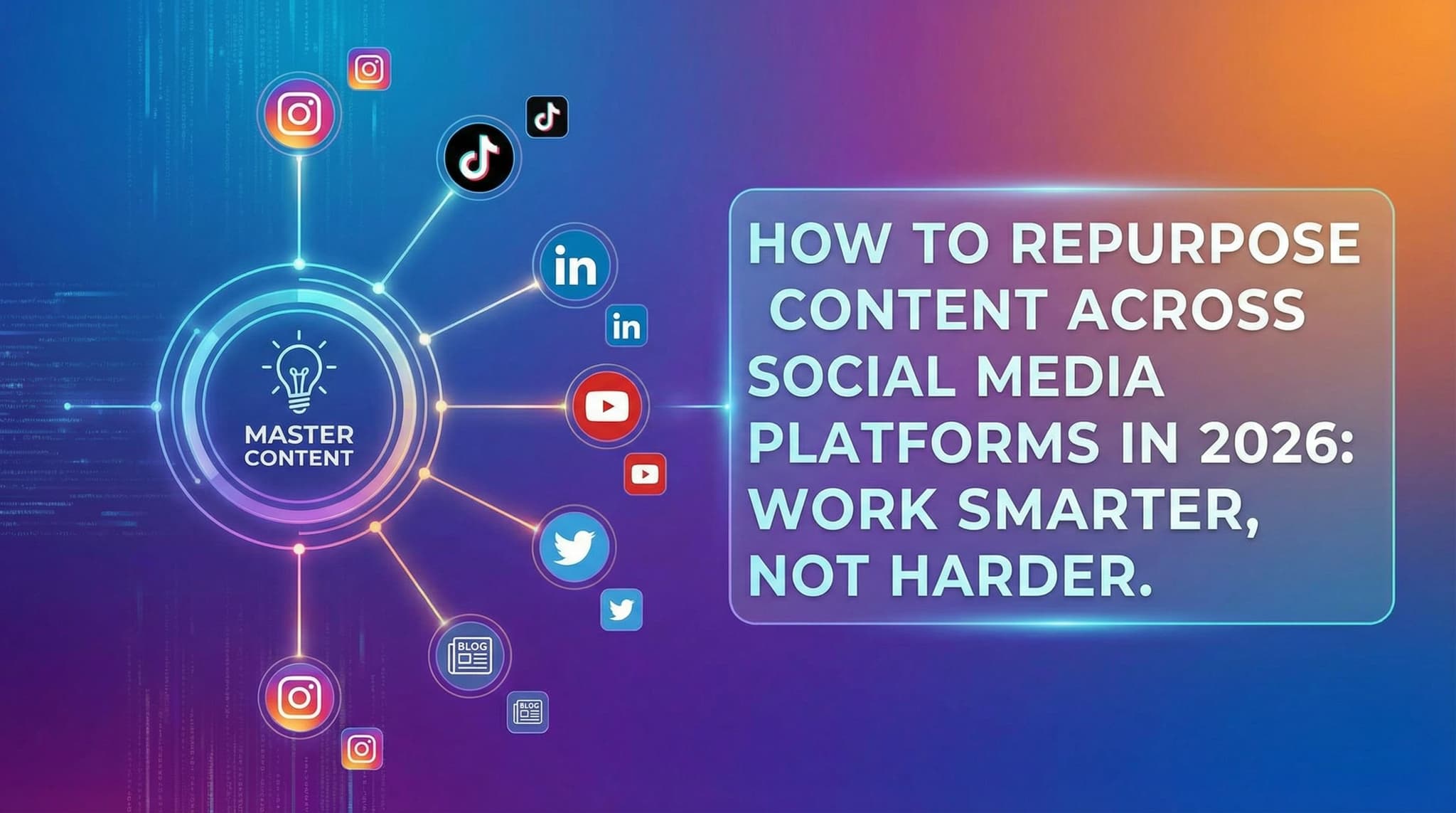
How to Repurpose Content Across Social Media Platforms in 2026: Work Smarter, Not Harder
Stop wasting hours creating separate content for every social platform. Learn the content atomization framework that transforms one pillar piece into multiple platform-optimized assets—saving you 70% of your content creation time while boosting engagement across channels. This comprehensive guide walks you through understanding platform-specific behaviors, building a repurposing workflow, and measuring what actually works. Perfect for busy creators and solopreneurs who want maximum reach without the burnout.
Jan 30, 2026
Read moreReady to never miss a post again?
Tell Aidelly what to post. It drafts, schedules, and publishes across 9 platforms while you focus on your business.