Social Media Storytelling: A Beginner's Guide to Captivating Your Audience in 2026
You know that feeling when you're scrolling through social media and suddenly stop because something just grabbed you? Maybe it was a video that made you laugh, a carousel that felt like it was written just for you, or a story that left you thinking about it hours later. That's not luck. That's storytelling.
Here's the thing nobody tells you when you're starting out: you don't need a massive budget, professional equipment, or years of marketing experience to tell stories that captivate people. What you need is to understand the fundamental human truth that we're all hardwired to respond to narratives. Stories aren't a marketing tactic—they're how we make sense of the world, and they're the most powerful tool you have to build genuine connections with your audience.
Whether you're a small business owner wondering how to compete with bigger brands, a content creator struggling to grow beyond a handful of followers, or a social media manager tasked with breathing life into your company's feed, this guide is built for you. We're going to strip away the jargon, skip the fluff, and focus on what actually works. By the end of this article, you'll have concrete frameworks, real examples from people just like you, and the confidence to start telling stories that your audience can't ignore.
Section 1: The Foundation of Storytelling—Structure, Authenticity, and Emotional Connection
Before we talk about platforms, analytics, or design tricks, we need to talk about the skeleton of every story that works. There's a reason certain stories stick with us while others disappear the moment we scroll past. It comes down to structure, authenticity, and emotional resonance—the holy trinity of storytelling that transcends every platform and every audience.
Think about the last time someone told you a story that genuinely moved you. Whether it was a friend sharing how they overcame a challenge, a business owner talking about their origin story, or a creator showing their behind-the-scenes mess, something in that narrative hit differently. That's because effective stories aren't random collections of moments—they follow an invisible architecture that our brains recognize and respond to.
The magic happens when you combine this structure with raw, unfiltered authenticity. In 2026, audiences have developed an almost supernatural ability to detect inauthenticity. They can smell corporate-speak from a mile away. What they're actually hungry for is the real stuff—the messy middle parts, the failures, the vulnerabilities, and the genuine moments that make you human. When you combine a solid narrative structure with authentic vulnerability, you create something that doesn't just get views; it builds actual relationships with your audience.
1.1: Understanding Narrative Structure—Beginning, Middle, and End for Social Media Stories
Let's demystify story structure. At its core, every story that works—whether it's a 15-second TikTok or a LinkedIn carousel—follows the same basic pattern: setup, conflict, resolution. Think of it as the beginning, middle, and end.
The Beginning (Setup): This is where you introduce your audience to a situation or character. The key here is to make them care quickly. You don't have time for lengthy introductions. A coffee shop owner might start with "I was about to close my business" or "I made the worst decision possible yesterday." You're setting the stage and creating curiosity.
The Middle (Conflict): This is where tension lives. It's the problem, the struggle, the moment of doubt. For social media, this is your hook. People keep watching because they want to know what happens next. The middle is where you show the struggle—the failed experiment, the customer complaint that changed everything, the personal moment that shifted your perspective. This is where vulnerability shines. Don't skip this part or rush through it.
The End (Resolution): This is where you land the plane. It doesn't always have to be a happy ending, but it should provide insight, learning, or transformation. Maybe you solved the problem, or maybe you learned something valuable from failing. The resolution is the payoff that makes the entire story worth telling.
Here's a practical template you can use right now: "I thought [beginning], but then [conflict happened], and here's what I learned [resolution]." That's it. That's the formula that works across every platform. A bakery owner might say: "I thought my sourdough was perfect, but then a customer told me it was too dense, and that feedback led me to completely change my process—and now I have a waiting list." Beginning, middle, end. Boom. Story told.
1.2: Authenticity and Vulnerability as Key Drivers of Audience Engagement and Connection
Here's what separates stories that get engagement from stories that get genuine loyalty: vulnerability. And I'm not talking about oversharing or airing dirty laundry for attention. I'm talking about the strategic choice to be real.
When you show up as your actual self—with doubts, failures, learning moments, and imperfections—something shifts in how your audience perceives you. They stop seeing you as a brand or a persona and start seeing you as a person. And people follow people, not corporations.
The research backs this up. Studies on parasocial relationships (the connections audiences feel with creators) show that vulnerability increases trust and emotional investment more than any polished, perfect presentation ever could. When a small business owner admits they almost went bankrupt, or when a content creator shows their failed attempts before the successful one, the audience feels seen. They think, "Okay, this person is real. They're not pretending to have it all figured out."
Here's the practical application: In your next story, show something imperfect. Show a failed product launch and what you learned. Show yourself on a day when you didn't feel like creating. Show a customer interaction that humbled you. The key is that this vulnerability should serve a purpose in your narrative—it should move the story forward or reveal something meaningful, not just be vulnerability for its own sake.
One micro-influencer in the fitness space started sharing her "rest days" where she didn't work out, explaining her mental health struggles with consistency. Her engagement doubled because suddenly she wasn't selling an impossible standard—she was selling real life. That's the power of vulnerability in storytelling.
1.3: Creating Emotional Resonance Through Relatable Characters, Conflicts, and Resolutions
Emotional resonance is what transforms a story from "interesting" to "I can't stop thinking about this." It's created through three key elements: characters your audience recognizes themselves in, conflicts that feel real, and resolutions that matter.
The character doesn't have to be you, though it often is. It could be a customer, an employee, or a fictional representation of your ideal audience member. The magic is in making them relatable. Give them a specific detail that grounds them in reality. Not just "a small business owner" but "a mom who started a business in her garage while homeschooling two kids." That specificity makes people think, "That could be me."
The conflict needs to be something your audience actually cares about. If you sell project management software, don't tell a story about someone struggling with spreadsheets—everyone gets that. But tell the story of the overwhelmed manager who missed her son's soccer game because she was drowning in administrative work, and suddenly you're not just solving a business problem; you're solving a life problem.
The resolution should feel earned, not miraculous. People don't believe in overnight transformations. They believe in progress, effort, and realistic change. "I went from chaos to perfect organization" feels fake. "I went from working 60 hours a week to 45 hours a week, which means I actually see my family" feels true.
A clothing brand that works with sustainable materials tells stories of real customers—a teacher who felt guilty about her fashion consumption, a teenager worried about environmental impact—and shows how choosing their brand aligned their purchases with their values. That's emotional resonance. The character, conflict, and resolution all connect to something the audience genuinely cares about.
Section 2: Platform-Specific Strategies and Visual Storytelling Mastery
Here's where most beginners get stuck: they create one story and try to push it across every platform. That doesn't work. Instagram Stories move fast and vertical. TikTok rewards personality and trend participation. LinkedIn values professional insight and career development. Facebook works best with community and longer narratives. Each platform has its own language, and you need to speak that language if you want your stories to land.
The good news? You don't need to become an expert in each platform overnight. You need to understand the core principles of how each one works and adapt your story accordingly. Think of it like telling the same story to different audiences—you'd tell it differently at a professional conference than you would at a casual dinner with friends, right? Same story, different delivery.
Beyond platform mechanics, the visual presentation of your story matters enormously. This isn't about having expensive design skills or fancy tools. It's about understanding basic principles of visual hierarchy, color psychology, and design that make your story easier to consume and more memorable. When done right, visuals don't just make your story pretty—they amplify your message and make it stick.
2.1: Platform-Specific Storytelling Techniques for Instagram Stories, TikTok, LinkedIn, and Facebook
Instagram Stories: Instagram Stories are designed for speed and visual impact. You have 24 hours before they disappear, which creates urgency. The format is vertical, full-screen, and intimate. People view Instagram Stories in a very specific context—they're often in a quick scrolling mindset, so your opening frame needs to stop them immediately.
The best Instagram Stories use text strategically (not paragraphs, but punchy phrases), leverage the sticker features for interaction (polls, questions, quizzes), and maintain visual consistency with your brand colors and filters. A fitness coach might use the countdown sticker to build anticipation for a challenge. A product-based business might use the "swipe up" feature (if they have it) to direct traffic. The narrative here is often shorter and snappier—think of it as the "highlight reel" version of your story, not the full narrative.
TikTok: TikTok is where personality reigns supreme. The algorithm rewards watch time and completion rate, which means your first three seconds need to be absolutely magnetic. TikTok audiences appreciate trends, humor, and authenticity over polish. They'd rather see you in your natural environment than in a perfectly staged setup.
TikTok storytelling often uses the "hook, story, payoff" formula even more intensely than other platforms. You need an immediate visual or statement that makes people stop scrolling. Then you tell your story quickly, usually with text overlays and trending sounds or music. The platform rewards creators who participate in trends while adding their unique spin. A business owner might use a trending sound to tell a story about their industry or create a "day in the life" series that shows the reality behind their business.
LinkedIn: LinkedIn is the professional storyteller's playground. The algorithm actually favors longer-form content and genuine engagement. People on LinkedIn are in a learning mindset—they want insights, lessons, and professional development. Stories here are often about career pivots, lessons learned from failures, or observations about industry trends.
LinkedIn stories work best when they include a specific insight or lesson. A social media manager might share their journey of building their first client's account from 100 followers to 10,000, breaking down the exact strategies that worked. The narrative should feel personal but professional—you're sharing wisdom, not just updates. Comments and discussions are more important on LinkedIn than on other platforms, so your story should invite conversation and perspective-sharing.
Facebook: Facebook's storytelling style is more narrative-driven and community-focused. People come to Facebook to feel connected, to engage in discussions, and to be part of groups. Stories on Facebook can be longer and more detailed than on Instagram or TikTok. The platform rewards posts that spark conversation.
Facebook stories often work best when they're tied to community, shared values, or larger movements. A small business might share the story of how they started, inviting community members to share their own stories. A nonprofit might tell the story of someone they've helped, creating emotional connection and inspiring support. Facebook also allows for longer captions, so you can include more narrative depth and context.
2.2: Using Visual Hierarchy, Color Psychology, and Design Principles to Enhance Story Impact
You don't need to be a designer to make your stories visually compelling. You need to understand three basic principles: visual hierarchy, color psychology, and white space.
Visual Hierarchy is simply the arrangement of elements to guide the viewer's eye to the most important information first. In a story, what do you want people to see first? Make that biggest or brightest. A coffee shop sharing a story about their new menu might put a beautiful photo of the drink front and center, then add supporting text below. The eye naturally goes to the largest element first, then follows a path through the rest of the story.
Color Psychology is the idea that colors evoke emotional responses. Red creates urgency and energy. Blue feels calm and trustworthy. Green represents growth and health. Yellow feels optimistic. You don't need to overthink this—just be intentional. If you're telling a story about overcoming challenges, you might use warm colors (orange, gold) to represent warmth and progress. If you're telling a story about calm and balance, cool colors (blues, teals) work better.
Here's the practical part: most social media platforms offer built-in color filters and themes. Use them consistently. Pick 3-4 colors that represent your brand and use them repeatedly. This creates visual consistency that trains your audience to recognize your stories instantly. A sustainable fashion brand might consistently use earth tones (terracotta, sage green, cream) across all their stories, creating a cohesive visual identity.
White Space (or negative space) is your friend. Don't fill every pixel. Breathing room makes stories easier to read and less overwhelming. If you're using text, don't make it cover the entire frame. Leave margins. Let the image breathe. This is especially important on mobile, where people are viewing your stories on small screens.
One more design principle: contrast. Make sure your text stands out from your background. Dark text on a dark image? Unreadable. Add a semi-transparent overlay behind text if needed. A simple shadow or outline around text makes it readable over any background. These aren't fancy design tricks—they're basic accessibility and readability principles that make your story actually viewable.
2.3: Leveraging User-Generated Content and Audience Participation in Storytelling
One of the most underutilized storytelling tools is letting your audience be part of the narrative. User-generated content (UGC) does two things simultaneously: it provides you with authentic material and it makes your audience feel invested in your story because they're literally part of it.
This can be as simple as asking your followers to share their experience with your product or service and then featuring their stories in your content. A fitness brand might ask followers to share their workout environment—and then create a story that stitches together multiple responses, celebrating the diversity of how people get fit. A service-based business might ask clients to share their before-and-after experiences, then feature those stories with permission.
The magic here is twofold. First, you get authentic material that feels more genuine than anything you could create alone. Second, the person whose content you featured becomes an advocate. They're going to share your story with their network because you featured them. That's free, organic reach powered by genuine enthusiasm.
Interactive features on each platform amplify this. Instagram's "questions" sticker and "polls" encourage audience participation. TikTok's duets and stitches let people respond to your story with their own. LinkedIn polls and comment-prompting posts invite discussion. Facebook's question posts and comment threads create community conversation.
Here's how to implement this: Create a story, then ask your audience to respond in a specific way. "Reply with your biggest productivity hack." "Comment with how you use this product." "Share your version of this challenge." Then, in your next story or post, feature the best responses. Give credit. Tag the people who participated. This creates a storytelling loop where your audience becomes co-creators of your narrative.
A small business owner selling handmade jewelry might ask followers to share photos of themselves wearing their pieces in real life. They then create a story gallery featuring these photos, celebrating their customers and creating social proof simultaneously. That's storytelling that scales because it's powered by your audience.
Section 3: Consistency, Performance, and Building Your Unique Narrative Voice
Creating one great story is wonderful. Creating stories consistently is what builds an audience. And measuring what works is what transforms storytelling from an art into a sustainable practice that actually serves your business or creative goals.
This section is where storytelling becomes strategic without losing its soul. We're talking about the behind-the-scenes mechanics that turn casual storytellers into people who build real communities. It's about understanding when to post, how often, and how to know if what you're doing is actually working. It's also about discovering your unique voice—the narrative themes and personality that make your stories distinctly yours, not a pale imitation of someone else's approach.
The beautiful thing about social media in 2026 is that you have access to data that tells you exactly what your audience responds to. Most beginners either ignore this data entirely or become so obsessed with metrics that they lose the authenticity that makes stories work in the first place. The balance is understanding what works without letting the numbers dictate your authenticity.
3.1: Timing, Frequency, and Consistency in Posting Stories to Maximize Reach
Let's talk about the unsexy but crucial stuff: when and how often you should post.
Frequency: There's no universal "right" number, but research consistently shows that consistency matters more than volume. Posting once a day consistently beats posting three times a day sporadically. Why? Because your audience learns when to expect you. If you post every morning at 9 AM, people start checking your stories at 9 AM. If you post randomly, they might miss you.
For most small businesses and content creators, one to three stories per day is sustainable. For Instagram and Facebook, that's typically 1-2 times daily. For TikTok, if you're building an audience, 3-5 times per week is a solid baseline, though daily posting accelerates growth. LinkedIn works best with 3-5 posts per week, quality over quantity. The key is choosing a frequency you can maintain consistently for months, not one you'll burn out on in three weeks.
Timing: When you post matters because it affects how many people see your story before it gets buried. Generally, posting when your audience is most active performs better. For most audiences, this is typically morning commute times (7-9 AM), lunch breaks (12-1 PM), or evening wind-down (5-7 PM). But here's the thing—your audience might be different.
Most platforms provide analytics that show when your audience is most active. Check your insights. If you're a B2B business, your audience is probably most active during business hours. If you're a consumer brand targeting parents, they might be most active early morning or late evening. If you're targeting Gen Z, they might be active late at night. Use the data your platform provides.
Consistency: This is where the real magic happens. Your audience needs to know they can rely on you. If you post sporadically, you're fighting against the algorithm and against human psychology. Consistency builds trust and habit. "I check Sarah's stories every morning" becomes a routine for your audience. That routine is gold.
Here's a practical approach: Pick a posting schedule and commit to it for 30 days. Maybe it's one story every weekday morning at 8 AM. Maybe it's three TikToks on Monday, Wednesday, and Friday. Maybe it's a LinkedIn post every Thursday. Write it down. Set reminders. Make it a non-negotiable part of your routine. After 30 days, look at your analytics and adjust if needed. But the point is to establish a pattern your audience can rely on.
One more thing: consistency includes consistency in quality and style. Your audience should be able to recognize your stories from a visual standpoint. Use the same filters, color palette, and design approach. This doesn't mean boring—it means recognizable. Think of it like a TV show. Every episode looks different, but you know it's the same show because of consistent opening credits, visual style, and tone.
3.2: Measuring Story Performance Through Analytics and Adjusting Strategy Accordingly
Okay, analytics can feel dry and overwhelming, but here's the truth: your analytics are a conversation with your audience. They're telling you what resonates and what doesn't. You just need to know how to listen.
Key Metrics to Track: Every platform provides different analytics, but here are the universal ones that matter:
Views/Impressions: How many people saw your story? This tells you if your posting time is good and if the thumbnail (the preview image) is catching attention.
Completion Rate: What percentage of people who started watching finished watching? This is huge. If 80% of people who click your story watch to the end, you're doing something right. If it's 20%, people are bailing early, which means your hook isn't strong enough or your pacing is off.
Engagement: Clicks, replies, shares, reactions—how are people interacting? More engagement means your story resonated emotionally.
Click-Through Rate (CTR): If you have links or calls-to-action, what percentage of people actually clicked? This tells you if your CTA is compelling and well-placed.
Saves/Shares: This is the holy grail. If people are saving or sharing your story, it means they found it valuable enough to come back to or share with others. This is a sign of real resonance.
Here's how to use this data without becoming obsessed with metrics: Every week, look at your top three performing stories. What do they have in common? Was it the topic? The visual style? The time posted? The type of narrative? Write this down. Then look at your bottom three. What's different? This gives you clues about what your specific audience responds to.
A common mistake is changing everything based on one story's performance. One underperforming story doesn't mean your strategy is wrong. Look for patterns across multiple stories. If stories with vulnerability consistently outperform stories with just product promotions, that's a pattern worth noting. If behind-the-scenes content gets 2x the engagement of polished content, adjust accordingly.
Also important: different metrics matter for different goals. If your goal is awareness, views matter most. If your goal is engagement and community building, completion rate and shares matter more. If your goal is driving traffic or sales, CTR and conversions matter most. Align your metrics to your goals, not the other way around.
3.3: Building Brand Voice and Personality Through Consistent Narrative Themes and Strategic CTAs
Building Your Unique Narrative Voice: Your brand voice is the personality that comes through in your stories. It's not something you decide once and forget about—it's built through repeated narrative choices and consistent themes over time.
Think about the storytellers you follow and actually remember. They have a distinctive voice. Maybe they always include humor, or maybe they're deeply vulnerable. Maybe they tell stories about failure, or maybe they focus on celebration and wins. Maybe they use lots of metaphors, or maybe they're straightforward and direct. This voice is built through consistency, not through one viral story.
To develop your voice, ask yourself: What do I naturally talk about? What themes keep coming up? What's my perspective on my industry or craft? If you're a business coach, maybe your narrative voice is all about the messy middle of building—the unglamorous reality between startup and success. If you're a creative, maybe your voice is about the vulnerability of sharing your work. If you're in service-based business, maybe your voice is about the human transformations that happen, not just the service delivery.
Once you identify your narrative themes, lean into them. Repeat them. A real estate agent who tells stories about families finding their dream homes is building a consistent narrative theme. A therapist who tells stories about breakthrough moments in therapy is building a consistent voice. Over time, when people think of you, they think of this voice. That's brand recognition built on narrative.
Incorporating Calls-to-Action Strategically Within Story Arcs: This is where a lot of beginners stumble. They create a beautiful story and then slap a "Buy Now" CTA at the end, which feels jarring and salesy. Strategic CTAs are woven into the narrative naturally.
There are three types of CTAs: business CTAs (buy, sign up, visit website), engagement CTAs (reply, comment, share), and community CTAs (join our group, follow for more). The best CTAs match the narrative you've just told.
If you just told a vulnerable story about struggling with consistency, asking people to "buy my course" feels tone-deaf. But asking "What's your biggest struggle with consistency? Reply in the comments" feels natural. If you just showed a transformation story, directing people to learn more about your service feels earned. If you just told a funny behind-the-scenes story, asking people to share their own funny moments creates community.
Here's the formula: the CTA should feel like the natural next step in the conversation you've started with your story. A fitness coach tells a story about how one client transformed their life, then says "If you're ready to start your transformation, DM me." The CTA flows from the narrative. A product-based business tells the story of how they source their materials ethically, then says "Shop the collection" or "Learn more about our process." The CTA extends the conversation, not interrupts it.
Also, placement matters. Don't put your CTA right at the beginning when people haven't been pulled into your story yet. Don't bury it so deep that people miss it. Put it at the natural conclusion of your narrative arc, when emotional engagement is highest and people are most likely to take action. On Instagram Stories, this might be the last frame. On TikTok, it might be a text overlay at the end. On LinkedIn, it might be the final line of your caption. On Facebook, it might be in the comments where you can respond to engagement.
One final thought on CTAs: not every story needs one. Sometimes the CTA is simply "keep following for more stories like this." Sometimes the CTA is just the emotional resonance itself, which builds loyalty over time. The strongest CTAs are the ones that feel like an invitation, not a demand. They're a natural extension of the story you've told and the connection you've built.
Storytelling isn't a skill you need years to develop—it's a human ability that's been inside you all along. The difference between stories that disappear and stories that build real communities comes down to understanding structure, embracing authenticity, and showing up consistently with intention. The frameworks, templates, and platform-specific strategies we've covered here aren't complicated. They're designed to demystify storytelling so you can focus on what actually matters: connecting with your audience on a human level.
As you start implementing these strategies, remember that the best storytellers aren't the ones with the biggest budgets or the most experience—they're the ones who show up authentically and consistently over time. Start with the narrative structure template. Pick one platform and master it before expanding. Track what works and adjust. Build your voice through repeated storytelling. The data will guide your strategy, but your authenticity will build your community.
The social media landscape in 2026 rewards creators and businesses who tell genuine stories. You have everything you need to start right now. Your story matters, your voice is unique, and your audience is waiting to connect with the real you. The only thing left is to press publish and see how your stories transform not just your reach, but your relationships with the people who follow you.
If you want a low-lift way to apply these ideas, Aidelly helps you keep your social content consistent without extra busywork. Now that you understand the power of emotional storytelling and have the frameworks to craft compelling narratives, the real challenge becomes bringing it all together consistently across multiple platforms—and that's where things can get overwhelming for solo creators and small business owners juggling content creation alongside everything else. Aidelly makes it simple to plan, create, and schedule your stories across Instagram, TikTok, LinkedIn, and Facebook all in one place, so you can maintain that authentic brand voice and posting consistency we talked about without the daily stress of managing each platform separately. If you're ready to transform your storytelling from something that feels like a chore into a sustainable part of your content strategy, we'd love to have you join us—get started at aidelly.ai.Compare Social Scheduling Tools
Evaluating software for your content workflow? Use our buyer guides and comparisons to compare scheduling, approvals, analytics, and AI workflow fit.
Share this article
Related Articles
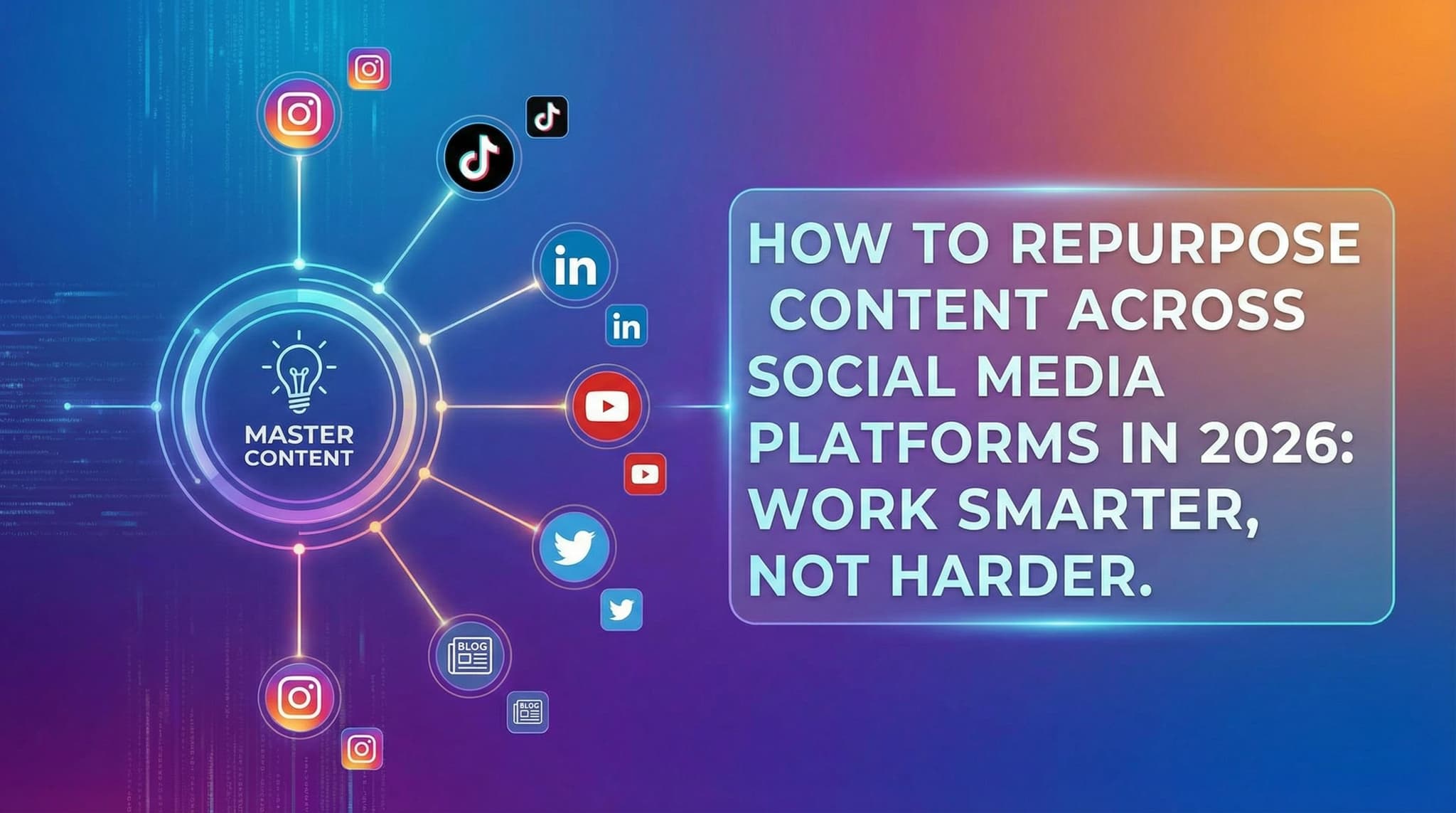
How to Repurpose Content Across Social Media Platforms in 2026: Work Smarter, Not Harder
Stop wasting hours creating separate content for every social platform. Learn the content atomization framework that transforms one pillar piece into multiple platform-optimized assets—saving you 70% of your content creation time while boosting engagement across channels. This comprehensive guide walks you through understanding platform-specific behaviors, building a repurposing workflow, and measuring what actually works. Perfect for busy creators and solopreneurs who want maximum reach without the burnout.
Jan 30, 2026
Read more
The Beginner-to-Beginner Partnership Playbook: How to Collaborate and Grow on Social Media in 2026
You don't need 100K followers to start collaborating on social media. In fact, some of the most powerful growth happens between creators at similar levels who understand each other's challenges. This comprehensive guide walks you through identifying the right collaboration partners, crafting pitches that actually get responses, executing authentic partnerships, and measuring what actually works. Whether you're just starting out or stuck in a plateau, discover how strategic collaborations with peers can accelerate your growth exponentially—without needing to chase big influencers or feel like you have nothing to offer.
Jan 31, 2026
Read more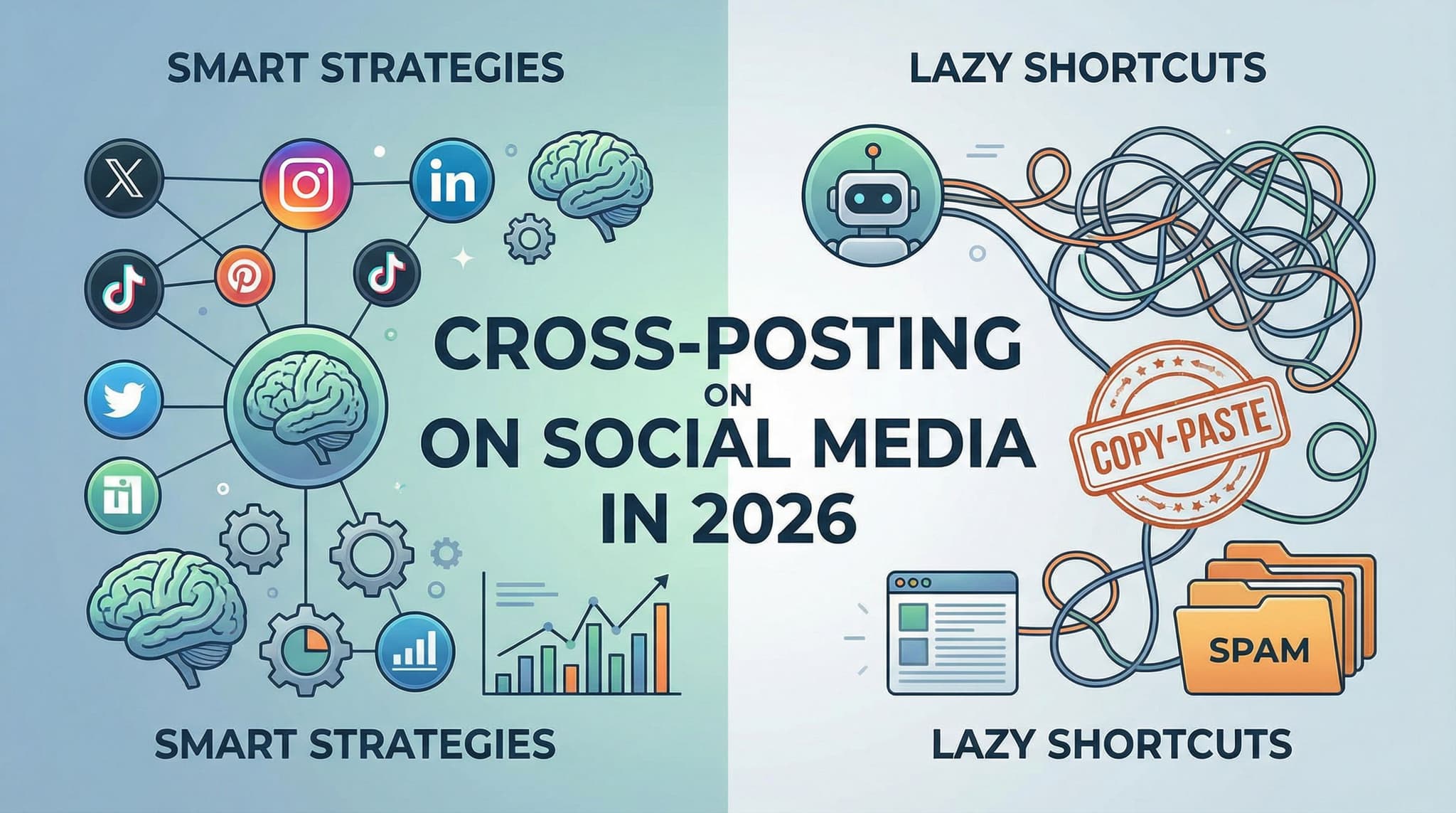
Cross-Posting on Social Media in 2026: Smart Strategies vs. Lazy Shortcuts for Beginners
Cross-posting sounds like a dream solution for busy entrepreneurs: post once, reach everywhere. But here's the uncomfortable truth that most social media guides won't tell you—dumping identical content across LinkedIn, Instagram, TikTok, and Twitter is a fast track to mediocre engagement and wasted potential. In this practical guide, we'll walk you through the difference between smart cross-posting (strategic, customized, efficient) and lazy cross-posting (one-size-fits-all disaster), complete with platform-specific templates, real-world examples, and a decision matrix to help you determine which content actually deserves to be cross-posted.
Jan 31, 2026
Read moreReady to never miss a post again?
Tell Aidelly what to post. It drafts, schedules, and publishes across 9 platforms while you focus on your business.